
How long a boiler lasts in New Hampshire

Send the form and the search for an installer is over.

Hand it off

A boiler in New Hampshire lasts about 15 to 20 years, longer than most furnaces, because the cast iron or steel heat exchanger inside it doesn't face the same temperature swings a furnace does and corrodes more slowly. Most homes here run on oil heat, and an oil boiler that gets its nozzle, filter and flue cleaned on schedule tends to hold up toward the far end of that range. One that's skipped a few cleanings, or has been quietly leaking pressure through a failing valve, tends to fall short of it. Winters here ask a lot of a boiler for months at a stretch, and age alone won't tell you where yours stands. A boiler past 15 years that needs a repair is usually a candidate for replacement rather than another patch, since the next failure is rarely far behind the last one.

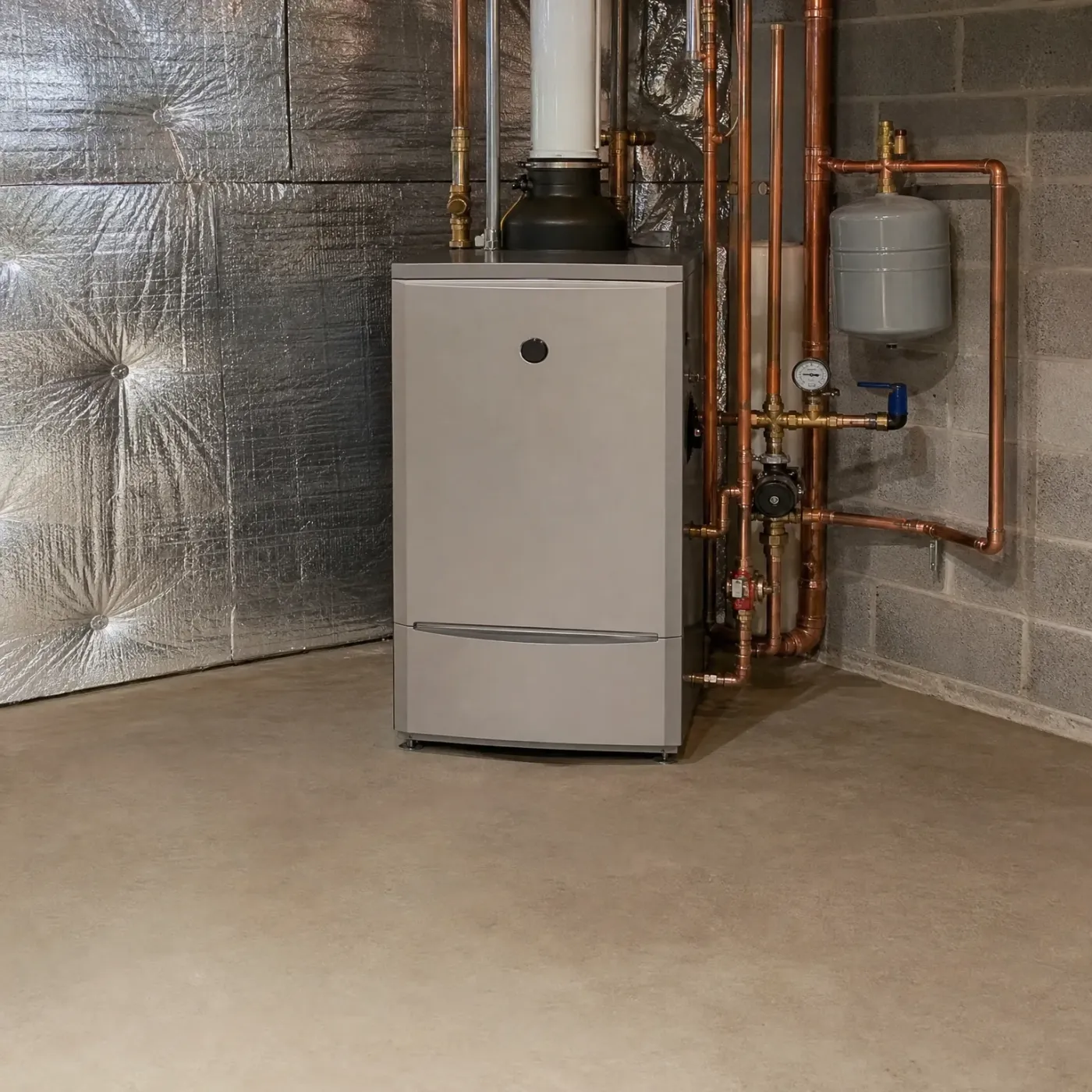
A gray floor-standing boiler on a concrete pad in a basement corner, with copper piping, a circulator pump, a white PVC flue, and a gray expansion tank mounted on the wall.

A boiler that's still doing its job

Copper lines run clean to the pump and expansion tank, no rust at the fittings, pressure steady on the gauge. A boiler like this is heating the house the way it did ten years ago, and oil use hasn't started creeping up.
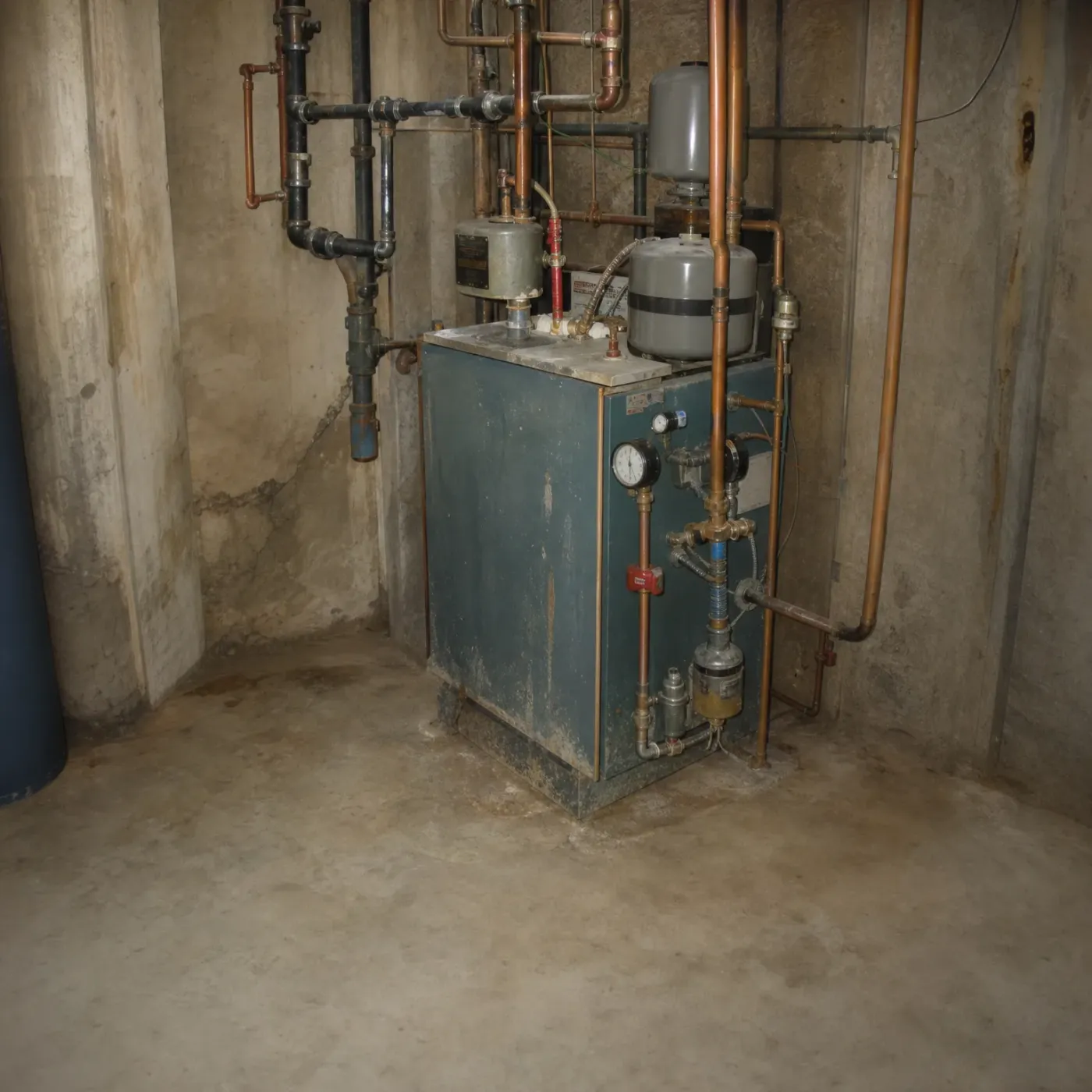

A green metal boiler with pressure gauge stands in a concrete basement corner, surrounded by copper and black iron pipes and two tank-shaped vessels.

A boiler on borrowed time

Cast iron like this was common decades ago, and if it's the one that came with the house, it's old. Watch for a pressure gauge that won't hold, fittings weeping at the joints, or a boiler that short cycles more than it used to.

A man in a blue sweatshirt reclines with closed eyes in a brown leather armchair in a living room with a bookshelf, houseplant, sofa, window, and a side table holding newspapers and a dark mug.
A bearded man in a gray pullover reclines with closed eyes on a brown leather sofa in a sunlit room with a window, framed picture, potted plant, and a wooden cabinet holding papers and a dark mug.
A man in a gray sweater leans back with closed eyes in a brown leather armchair beside a wooden side table holding a dark mug and a folded newspaper, with bookshelves and a window seat behind him.
A man in a green sweater reclines in an armchair with his eyes closed and a slight smile, beside a window with plants, a small table holding a mug and folded newspaper, and bookshelves behind him.

15 to 20 years

That's the span a boiler gets you here before the heat exchanger wears thin. Oil heat and a steady pressure gauge are what keep it running the full stretch.

Hand off the search

Skip the search

No calling oil companies around New Hampshire, no repeating what's wrong to each one. Send the form and a contractor who installs boilers takes it from there.

Hand off the search
A closed silver laptop and a glazed ceramic mug on a wooden table, with a blurred kitchen counter, potted plant, cutting board and window in the background.

What an old boiler costs you before it quits

A boiler near the end of its run doesn't usually fail outright in January. It gets slow to bring the house up to temperature, the burner cycles more than it used to, and your oil deliveries start coming closer together. You notice it on the bill before you notice it on the gauge. With power in New Hampshire costing what it does, a boiler losing efficiency year over year is money going somewhere you can't see.

If yours is pushing past 20 years, the bigger risk is timing. These things tend to give out in the cold stretch, not the warm one, and that leaves you without heat while you're also trying to find someone who can get to your house. Sending the form means you're not the one calling around oil companies and HVAC outfits, explaining the same problem three or four times, and sorting through quotes on your own. That part of it is off your plate the moment you send it.

A living room corner with a beige sofa and cushion, a round wooden coffee table holding a pale ceramic vase of eucalyptus stems and a wooden bowl, and a curtained window with a potted plant above a latticed radiator cover in the background.
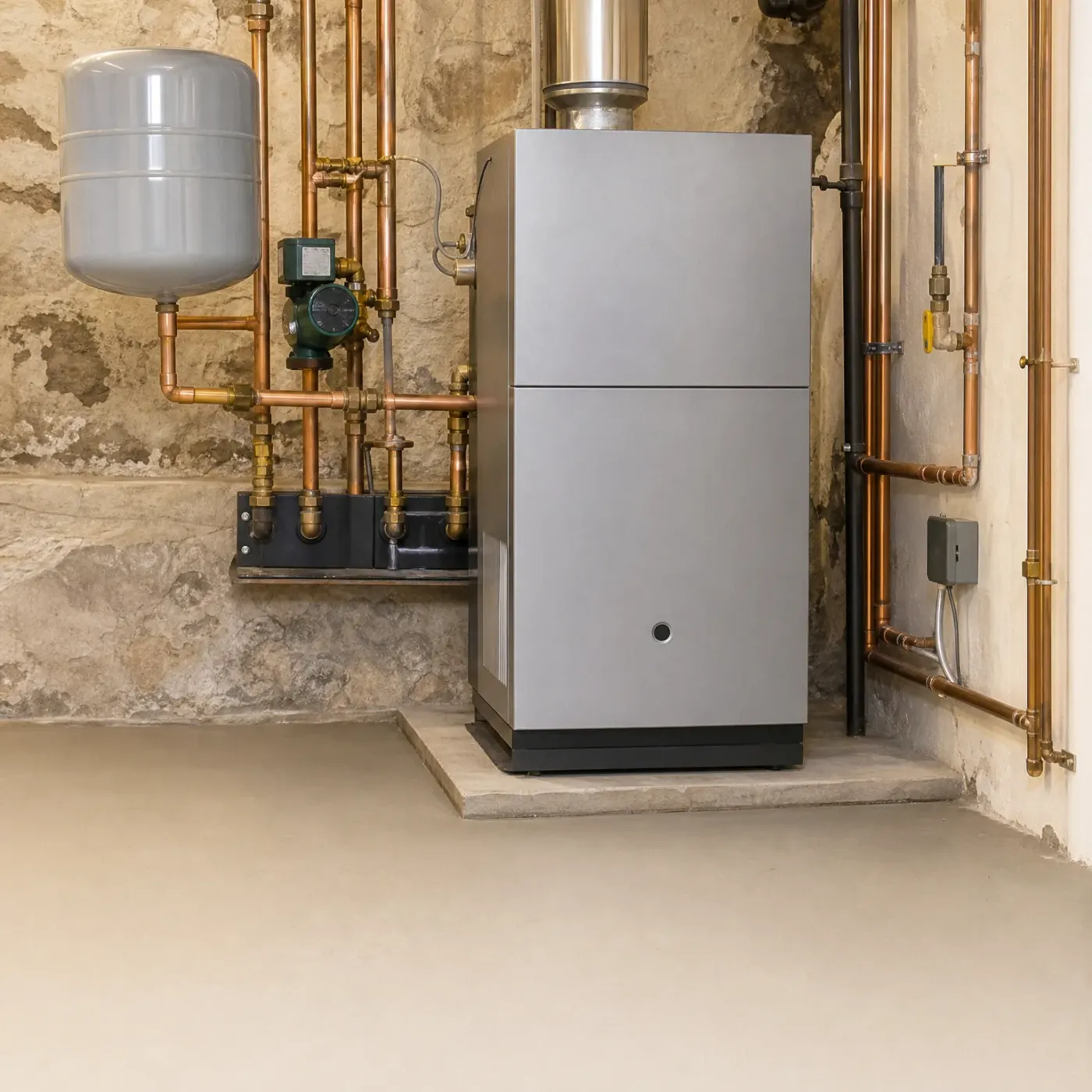
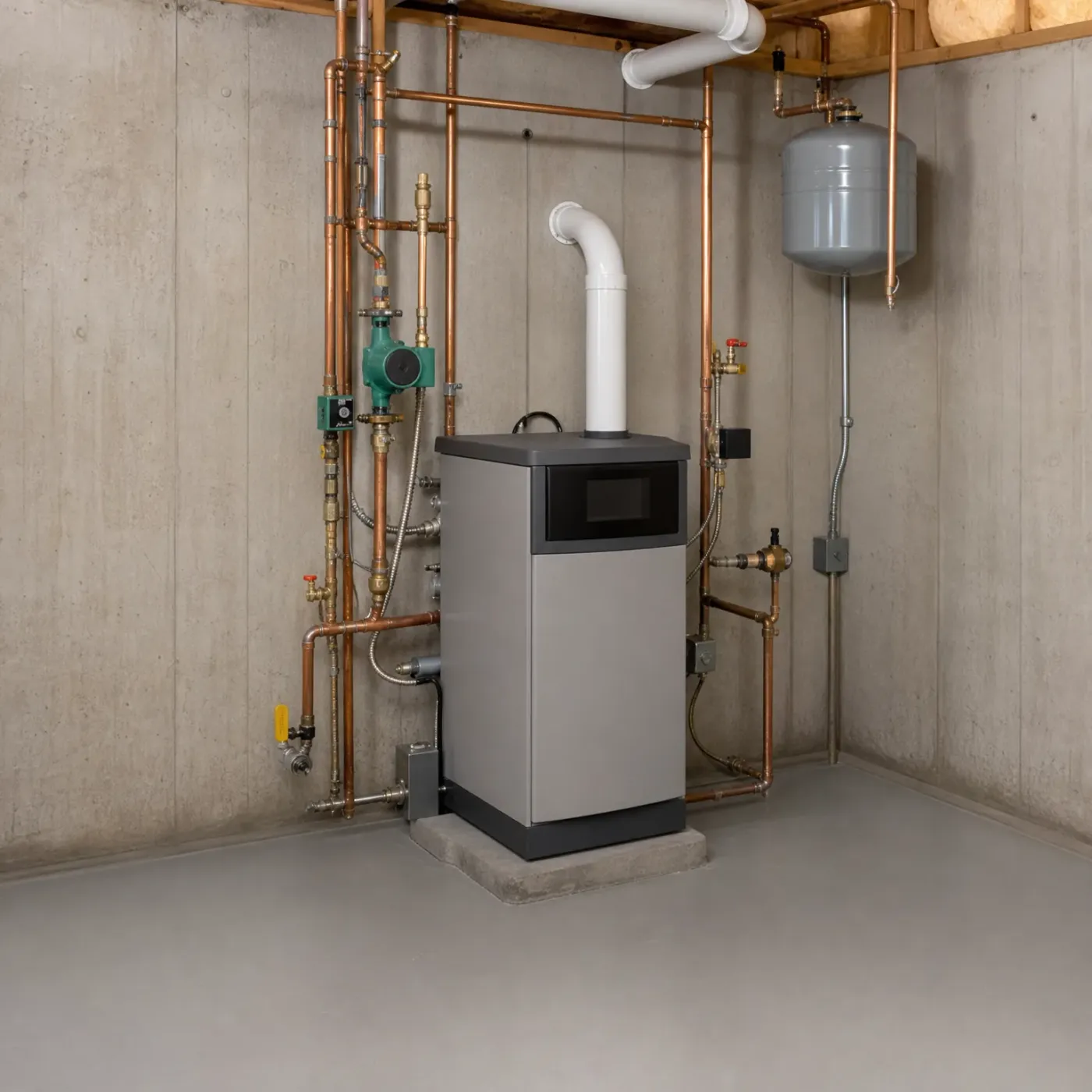
A gray boiler unit with a flue pipe stands on a concrete pad in a basement, surrounded by copper piping, a circulator pump, an expansion tank mounted on a stone wall, and an electrical outlet.

Running clean

A boiler like this sits on a solid pad with the copper lines clean and the expansion tank doing its job. The flue draws right and the pressure gauge holds steady. A boiler in this shape is still getting the oil's heat into your house instead of up the flue, and a season ahead with it looks like the last one did.

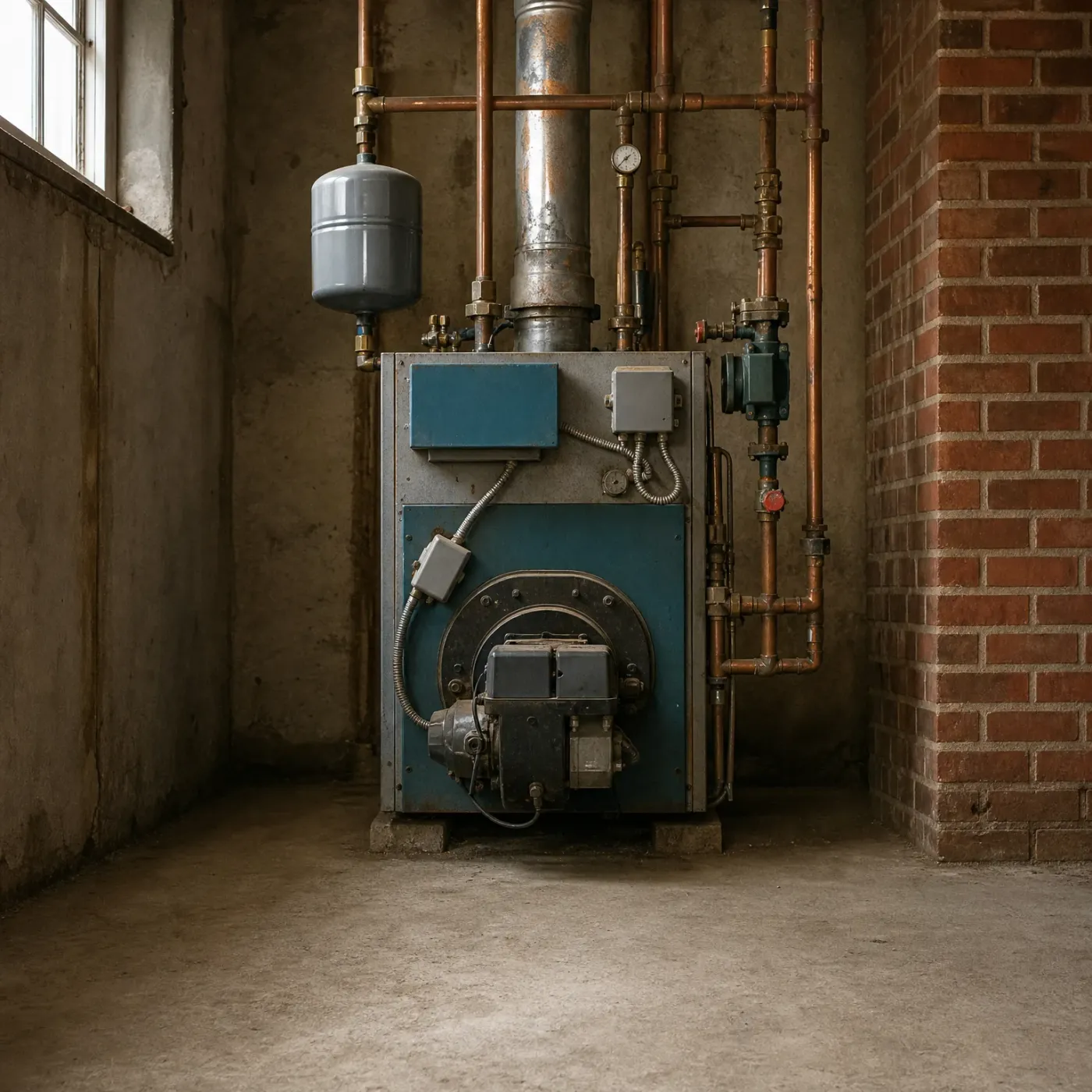
A blue cast-iron boiler with a burner unit, gauges and copper piping stands in a concrete-floored basement room beside a red brick pillar and a window.

Near the end

This is an old unit, bare pipes and a worn pressure gauge in a basement that hasn't seen an upgrade in years. Boilers like this one run longer than they should before anyone notices, cycling more, costing more in oil, until a cold snap finds the part that finally gives out. That's usually when the heat goes first.

A gray-haired man with a beard in a blue button-placket shirt reclines on a couch with his eyes closed, beside a sunlit window with a green plant.
A woman in a cream knit sweater sits in an armchair with her eyes closed near a window showing yellow autumn foliage, with a mug on a round wooden side table beside her.
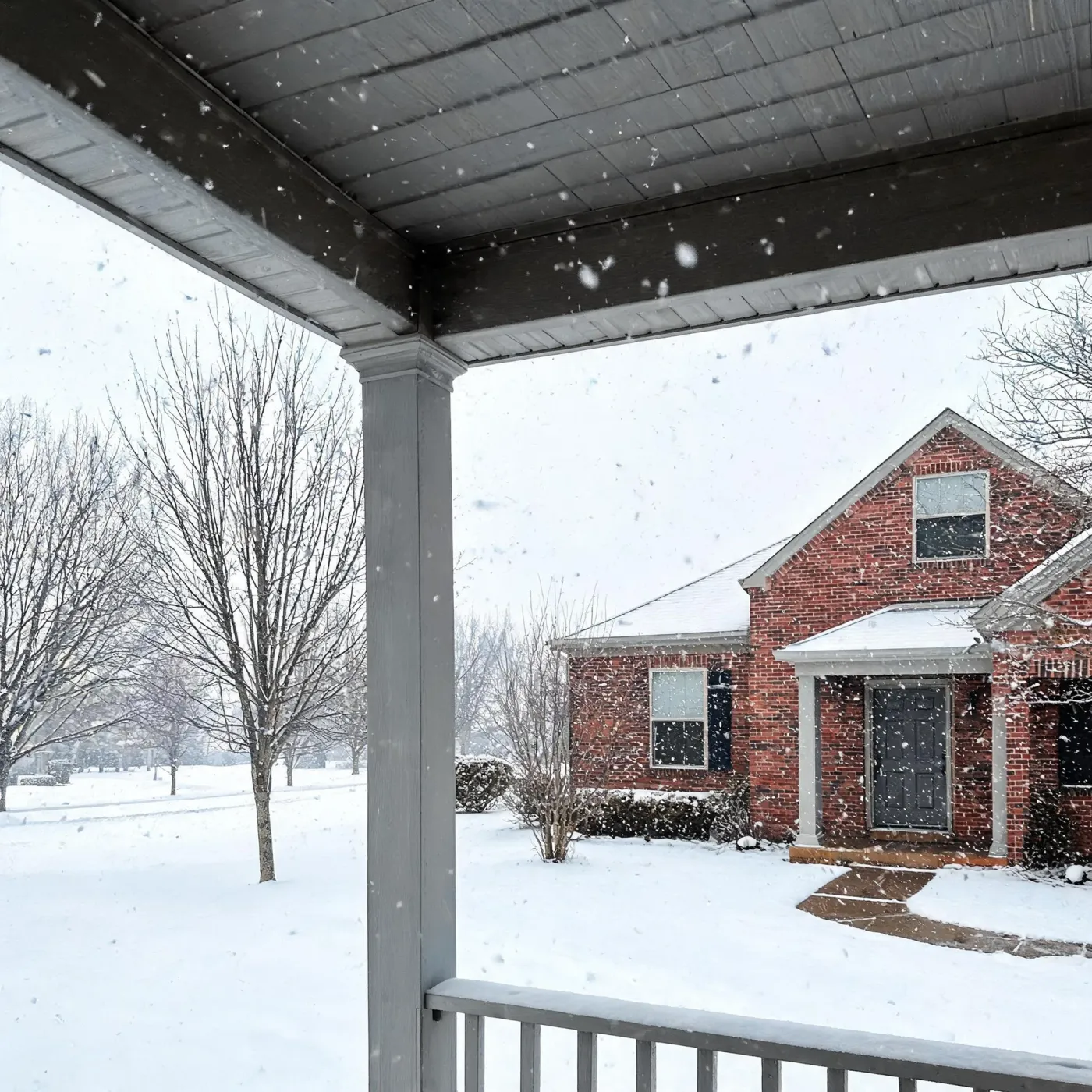
View from a covered porch with a white post and railing toward a red brick house across a snow-covered yard, with falling snow and bare trees.

Winter nights average 15°F statewide, according to NOAA, and that's the number your boiler is working against most nights from December through February. Oil has to burn long enough to cover that gap between 15°F outside and 68°F or so in the house, and on the coldest nights the burner runs longer stretches to hold the temperature where you set it. An aging boiler feels this first. The heat exchanger has lost some of its ability to transfer that heat into the water, so the burner works harder for the same warmth, and oil use climbs. A boiler still in good shape barely notices a 15°F night.

NOAA nClimDiv 1991-2020 county normals weighted by homes

Stop chasing a boiler pro

Describe the project once instead of to every installer.

You only hire the pro if you want to.

Keep feeding the one you have

An older boiler can still run fine on oil if the heat exchanger hasn't started leaking and the burner lights clean. You'll pay more to run it than a newer unit would cost, and a cracked exchanger doesn't announce itself until pressure won't hold or the basement smells of oil. Keeping it going means watching the gauge and the oil bill a little closer each winter, and accepting that a cold snap in January is a bad time to find out it's done. If it's still holding pressure and heating the house on schedule, there's no reason to replace it yet.

Replace before it fails

Putting in a new boiler before the old one quits means you pick the week it happens instead of a January night at 15°F deciding for you. It also means skipping the scramble: calling around to oil companies and contractors across New Hampshire, explaining the same symptoms to each one, and sorting through quotes while the house gets cold. Power here costs enough that most homeowners stick with oil heat for the new unit too. The install itself still takes planning and isn't quick or cheap, but once the form's in, finding who does the work stops being something you have to handle.

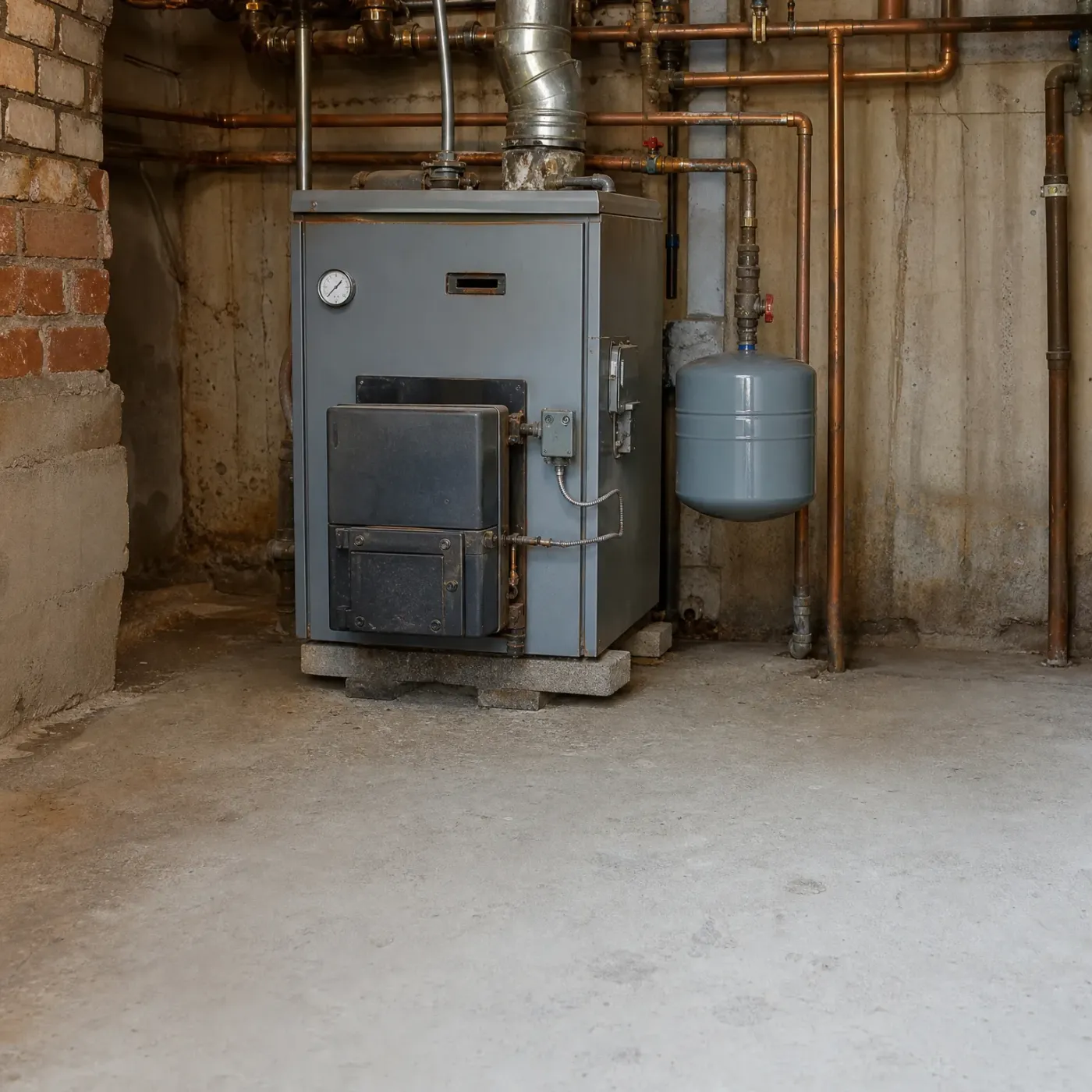
A gray boiler on a concrete block base in a basement, with copper piping, a metal flue, and a gray expansion tank mounted beside it against a concrete wall.
Before you get your boiler installation
A gray residential boiler in a basement corner with copper piping, a circulator pump, pressure gauge, blue-handled valve and gray expansion tank against a concrete block wall, next to a foil-insulated wall.
After you get your boiler installation

Winter nights average 15°F statewide

At 15°F, your boiler is holding the house at 68°F against a 53 degree gap, every night, for three months straight. That's the load an aging heat exchanger has to answer. A unit near the end of its run starts falling behind on nights like these before it does anywhere else.

NOAA nClimDiv 1991-2020 county normals weighted by homes

What you know now

  • A boiler in New Hampshire runs 15 to 20 years on oil heat before the heat exchanger wears thin enough to matter.
  • A steady pressure gauge and clean copper lines mean the boiler is still carrying its share of the heat load.
  • Slower warm-ups, more frequent burner cycles, and oil deliveries creeping closer together mark the last stretch before it quits.
  • Winter nights averaging 15°F put a 53 degree gap on the boiler for three straight months, and that's the load that wears it down.
  • Finding a licensed installer in New Hampshire means calling around to oil companies and contractors, then explaining the same boiler history to each one.
  • Sending the form once replaces that search, the calls, and the back and forth of comparing quotes yourself.

A boiler here lasts 15 to 20 years on oil heat, and the gauge and the lines tell you where yours stands in that stretch. Clean copper, steady pressure, no rust at the fittings, that's a boiler still carrying the load those 15°F nights put on it. Slower warm-ups and a burner that cycles more than it used to mean the heat exchanger is losing the fight against that 53 degree gap. Oil deliveries landing closer together say the same thing a different way. None of that means the boiler quits on the spot. It means the stretch left on it is shorter than the stretch behind it, and the decision about replacing it stops being optional on your schedule and starts being optional on its own.

What usually eats the time isn't deciding the boiler needs replacing. It's finding someone to do it. That means calling oil companies around the state, getting put on hold, telling each one the same thing about the age of the unit and what the pressure gauge is doing, then sitting with a stack of quotes trying to tell a fair one from the rest. Sending the form once is what skips that part. It doesn't make the installation faster or cheaper than it would otherwise be. It means you stop being the one who has to track down who's available, who's licensed, and who'll actually call back.

A single-story stucco house at dusk with a lit paver walkway lined by low path lights, desert plants and boulders in front, and distant mountains under an orange and blue sky.

Boiler Installation

Send one request and you're done looking

Step 1 of 3: Equipment
  • A brown leather and wood armchair with a cream knit throw sits in a corner beside a woven basket holding a dark cushion, under a framed mountain photograph, with a wood-trimmed window showing yellow and green foliage.
    • A local installer who puts in boilers gets your project.
    • Get in touch with a local installer about a new boiler.
  • A dark wood dresser against a pale wall holds a ceramic vase of eucalyptus branches, a stack of books with a wooden bowl, and a woven basket, with a framed landscape painting above and a woven basket holding a knit blanket on the floor beside a window.
    • One request and the search for a pro is handled.
    • Send it once and finding someone is no longer on you.
  • A window seat with beige linen and brown textured cushions, a chunky knit blanket, and an open book, beside a window showing blurred yellow autumn foliage.
    • Answer a few questions instead of calling shop after shop.
    • Describe your boiler job once, to one pro.
  • A cream upholstered armchair with a rust-colored pillow and knit fringed throw sits beside a window with a ceramic vase of orange-leafed branches on the sill, overlooking autumn trees and leaf-covered ground.
    • One installer gets your project, so there's no bidding war over it.
    • Your request goes to one pro, not a list of companies.