
How to bleed radiators before a New Hampshire winter

Describe your boiler job, and a local pro who handles it gets in touch.

Get matched

How do I bleed my radiators before winter hits in New Hampshire?

You've got a boiler and radiators, and with oil heat about to run for the next several months, you want to catch any trapped air now rather than hear it clanking in January. Bleeding them is something you can do yourself with a key or screwdriver, but the timing and the order matter if you want it done right before the cold sets in.

Bleed each radiator from the bottom floor up, before you turn the heat on for the season

Open the bleed valve on each radiator with the system cold and the boiler off, starting with the lowest floor and working up. Hold a cup under the valve, turn it with the key until water runs out steady with no sputtering, then close it. Air gets trapped in radiators over the summer and it blocks hot water from filling the whole unit, so you get a radiator that's warm at the bottom and cold at the top. Catching this before the first cold snap means the boiler isn't working harder than it needs to from day one, which matters with oil prices and electric rates both high here. Do every radiator in the house, not just the ones that feel off.


A woman in a cream knit sweater sits in an armchair with her eyes closed and a slight smile, beside an open window showing orange autumn foliage, with a mug, books and a lit candle on a small side table.
An older man with gray hair and a beard leans back on a beige sofa with his eyes closed, in a sunlit room with potted plants, a wicker chair and large windows behind him.

One valve, one key, five minutes a radiator

Most bleed valves take a radiator key or a flathead screwdriver. Open it slowly until water runs steady with no hiss, then close it. That's the whole job.

Find a boiler pro

Cold at the top, warm at the bottom

That's trapped air, not a dying boiler. Bleed that radiator before the cold nights set in, and oil doesn't go toward heat that never leaves the pipes.


Find a boiler pro
A woman with long gray hair wrapped in a checked blanket sits on a sofa by a window with yellow autumn foliage outside, with a lamp, framed picture and plant in the background.
An older woman in a cream knit sweater sits on a sofa by a window, looking out at sunlit trees with yellow and orange autumn leaves, with a bookshelf and lamp behind her.
A woman with gray shoulder-length hair in a dark knit sweater sits on a cushioned seat by a window, looking out at yellow autumn foliage, with a living room, armchair, houseplant and framed picture behind her.
An older woman with gray hair in a bun, wearing a cream knit sweater, sits on a sofa with a gray blanket and looks out a large window toward yellow-green autumn trees, with a lit table lamp and dark armchair behind her.
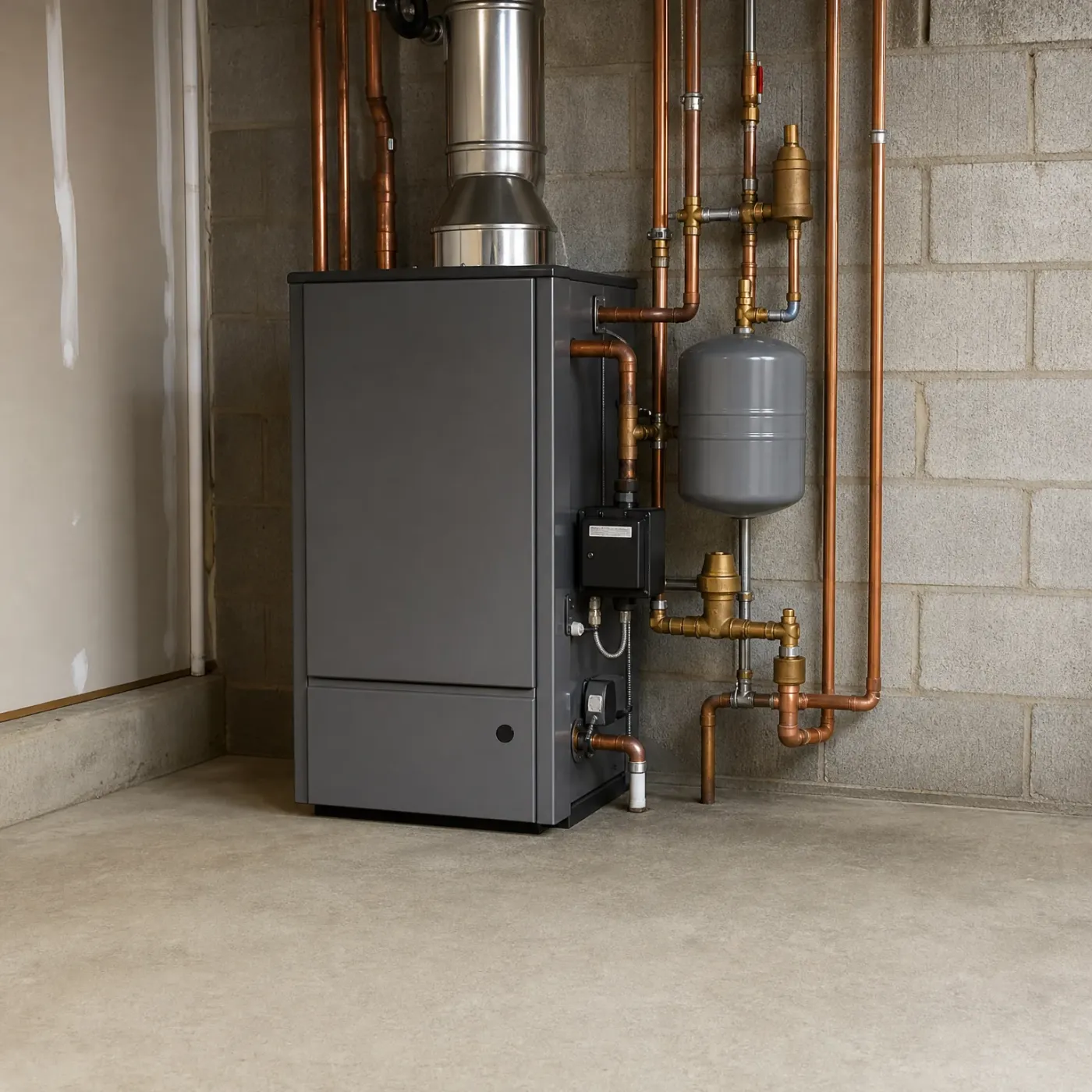
A gray floor-standing boiler with a metal flue stands against a concrete block wall, connected to copper pipes, brass valves and a gray expansion tank, on a bare concrete floor.

Every radiator heating evenly

Bleed each radiator and the pipes and fittings do their job without a fight. Heat moves straight from the boiler to the room, no air pocket making one end of a radiator cold while the other end burns hot.
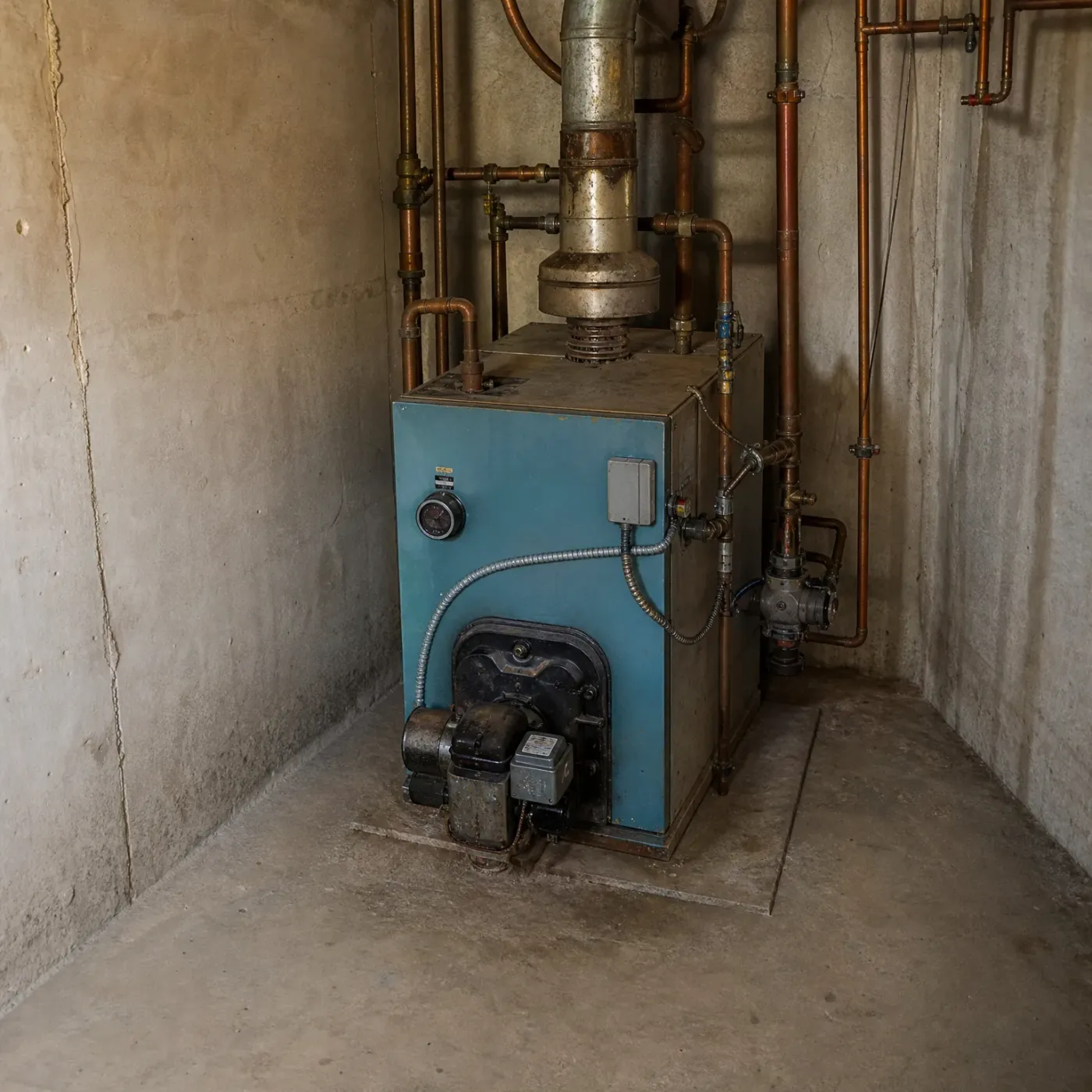
A blue oil-fired boiler with a burner unit and pressure gauge stands in a concrete basement corner, connected to copper pipes and a metal flue.

A boiler working harder than it should

Trapped air left in the system means the boiler runs longer to heat the same rooms. On oil, with power costing what it does here, that's fuel and electricity spent pushing water past air that a few minutes with a radiator key would've cleared.
Bleed them yourself or get it checked

Bleed them yourself

  • A radiator key costs little and fits most valves, so there's no appointment to wait on before the cold sets in.
  • You control the order, room by room, and can recheck a stubborn one the next day without calling anyone back.
  • If a valve is seized or starts dripping instead of shutting off clean, you're now looking at a part you can't source or fix tonight.
  • Oil boilers run on pressure and water level that a bleed can throw off, and you won't always know to check that afterward.
  • Missing just one radiator means that room stays cold all winter and you may not trace it back to air in the line.

Have it checked before winter

  • A contractor who works on boilers all season knows which valves in older New Hampshire homes tend to seize or corrode shut.
  • They'll bleed every radiator and confirm the boiler's pressure and water level are right afterward, not just the air out of the pipes.
  • A local contractor can look at the boiler itself while there, since trapped air sometimes points to a problem the bleed alone won't fix.
  • You get matched with one contractor local to you, not a list of companies competing for the job.
  • With oil running the heat for months once winter sets in, having someone who knows this equipment catch a problem now costs you less in missed heat than finding it in January.
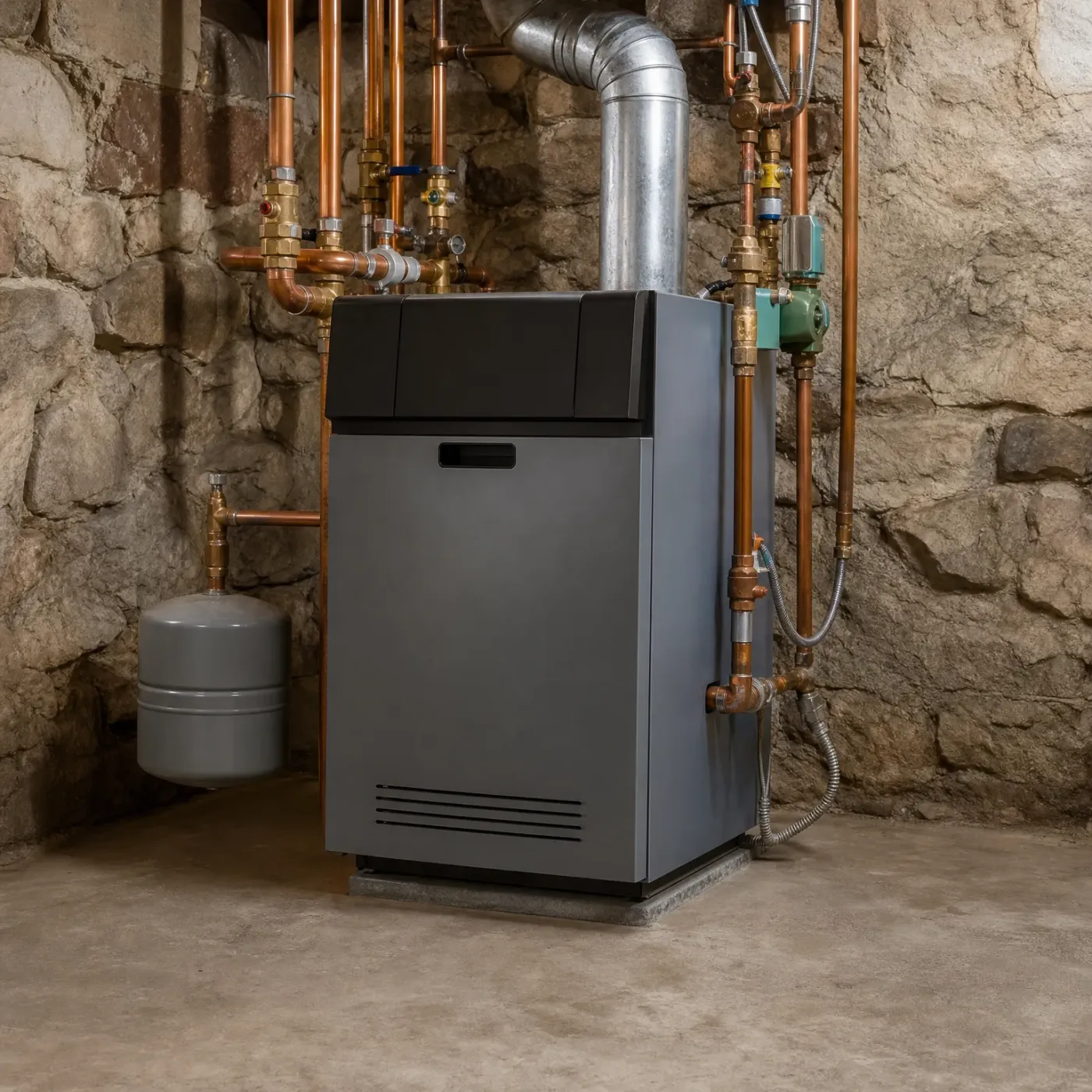
A gray residential boiler on a concrete pad in a basement with stone walls, connected to copper piping, brass valves, a circulator pump, an expansion tank, and a metal flue duct.

Boiler running as it should

Water moves through every pipe and valve without a pocket of air anywhere in the loop. The pump doesn't have to push against trapped gas, and the burner cycles off when the rooms call for it instead of running longer to make up for radiators that never got fully warm.
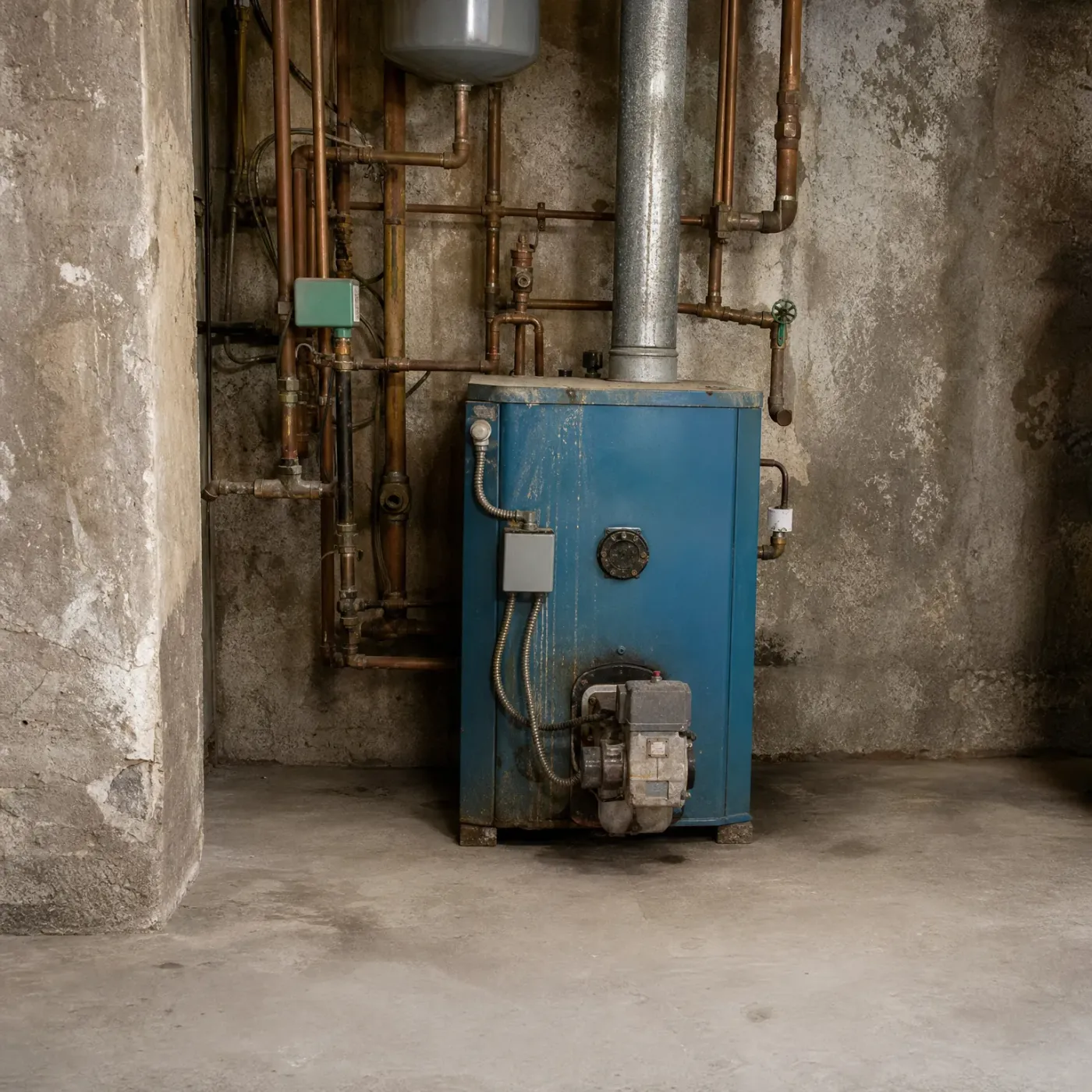
A blue cabinet boiler with a metal flue pipe and copper piping stands against a bare concrete wall in a basement with a concrete floor.

Boiler fighting trapped air

Air sits in the high points of the system and blocks water from filling the radiator all the way. The burner fires more often trying to reach the thermostat's setting, and the flue carries off heat from fuel that never made it into the house as warmth.
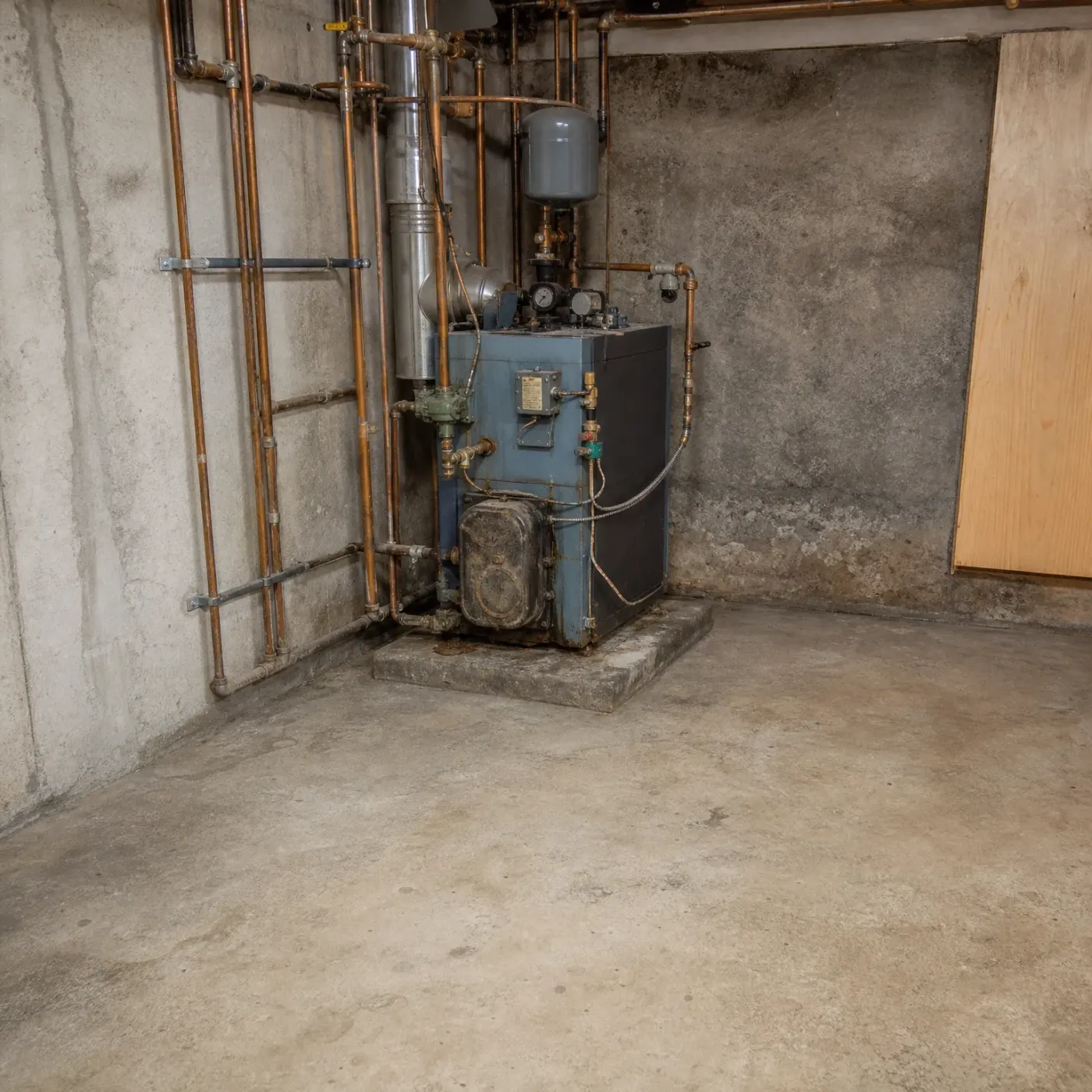
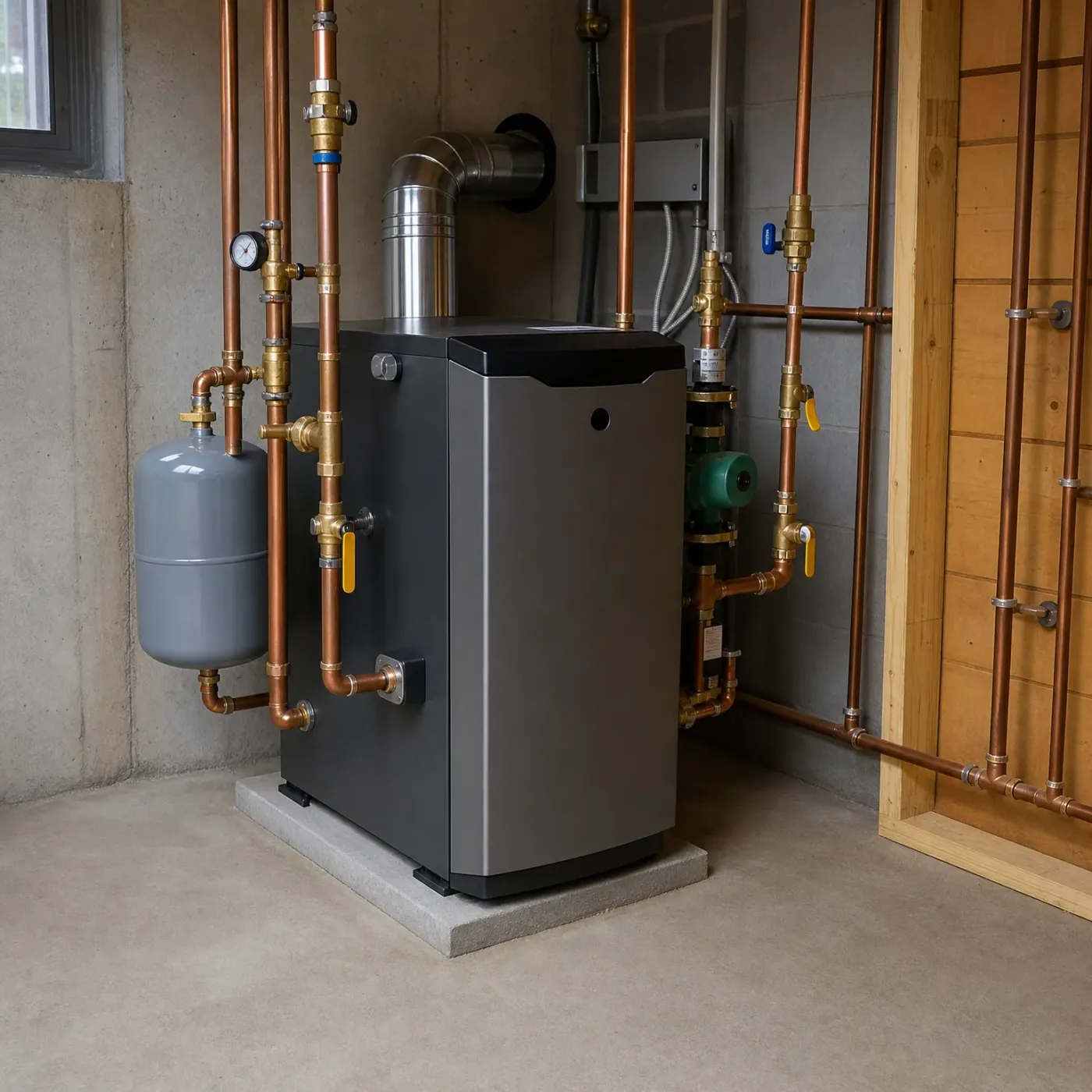
A blue boiler on a raised concrete pad in a basement corner, with copper and steel pipes, a gauge cluster, an expansion tank, and a metal flue running up the bare concrete walls.
Before you get your boiler maintenance
A dark gray floor-standing boiler on a concrete pad in a basement, surrounded by copper piping, brass valves, a gray expansion tank, a circulator pump, and a metal flue pipe against concrete block walls.
After you get your boiler maintenance

Get the right pro for your boiler

Your request stays with one local pro.

No charge to send it. You decide if you hire them.

Why bleeding works the way it does

  • Water sits higher in the system than the air, so bleeding draws from the top of each radiator, not the bottom.
  • A boiler loop is sealed, and the expansion tank is what lets you remove air without draining the whole system dry.
  • Start with the radiator farthest from the boiler and work back toward it, since gravity and piping tend to trap air there first.
  • Check the boiler's pressure gauge after bleeding, since letting air out drops system pressure and most boilers need it back around 12 to 15 psi.
  • If you have to add water to bring pressure back up more than once or twice, that points to a leak somewhere else in the loop.
  • A radiator that stays cold even after bleeding usually has a stuck valve, not air, since a working valve hisses before the water runs steady.

A boiler system is sealed, so you're not draining anything when you bleed a radiator. You're letting out air that's gotten trapped at the top, in a spot the water can't push past on its own. The expansion tank is what makes this possible. It gives the system room to lose a little pressure without needing a refill every time. That's why the order matters too. The radiator farthest from the boiler is usually the one that collects air first, since it's at the end of the longest run of pipe, so work that one first and move back toward the boiler room by room. Once you've bled a few radiators, check the pressure gauge on the boiler itself. Letting air out drops the pressure, and most boilers want to sit around 12 to 15 psi to run right. If it's low, there's usually a feed valve to bring it back up. If you find yourself doing that more than once or twice this season, that's not normal, and it usually means there's a leak somewhere in the loop that's letting water out faster than air alone would explain. One more thing worth knowing: if a radiator is still cold after you bleed it, the problem probably isn't air at all. A working bleed valve hisses as air escapes, then runs steady with water. If it never hisses and the radiator stays cold, the valve itself is likely stuck, which is a different fix than bleeding.
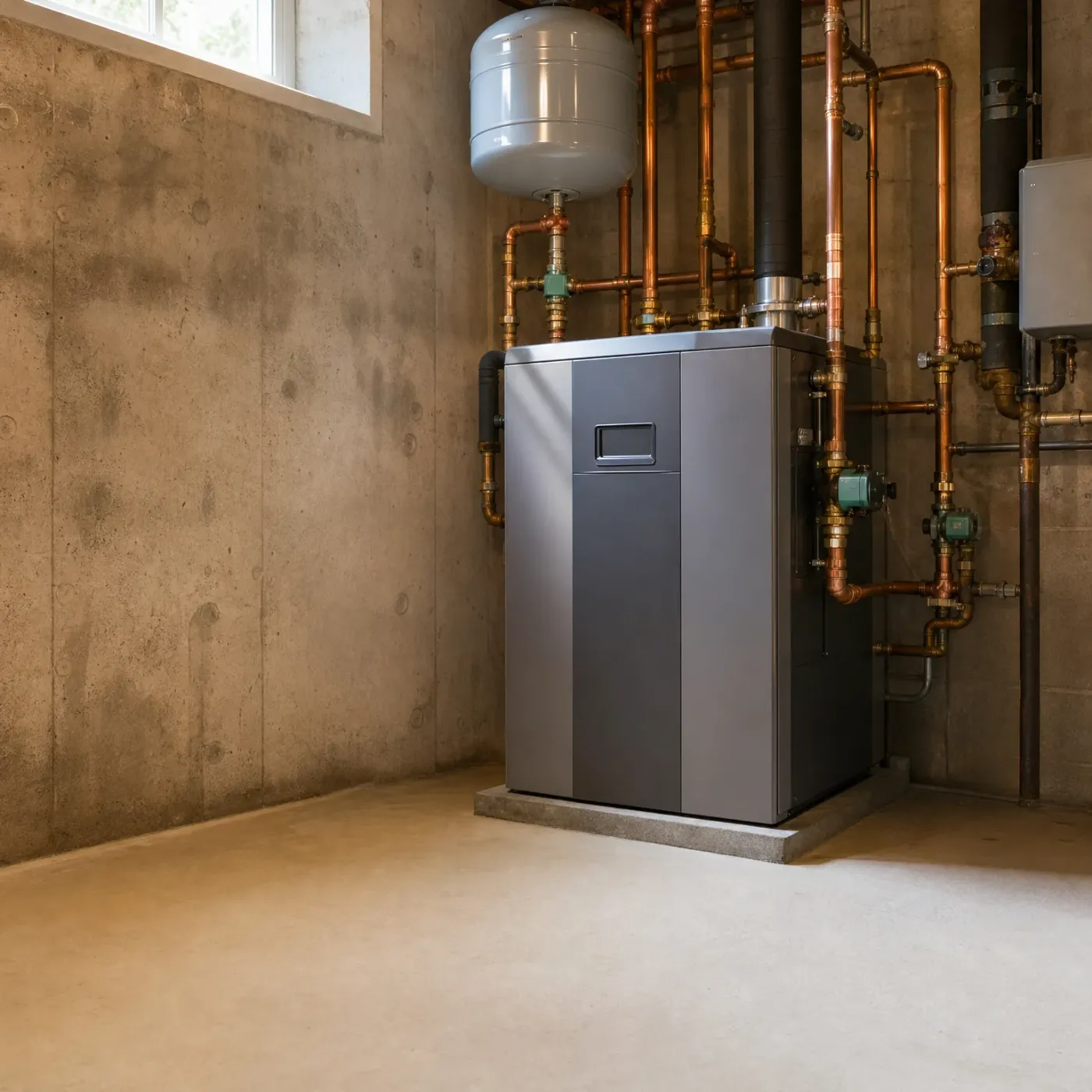
A gray boiler unit on a concrete pad in a basement corner, connected to copper piping, circulator pumps, and a ceiling-mounted expansion tank against bare concrete walls.
A boiler with no trapped air keeps its pumps and fittings doing the job they were built for, pushing water through every pipe without resistance.
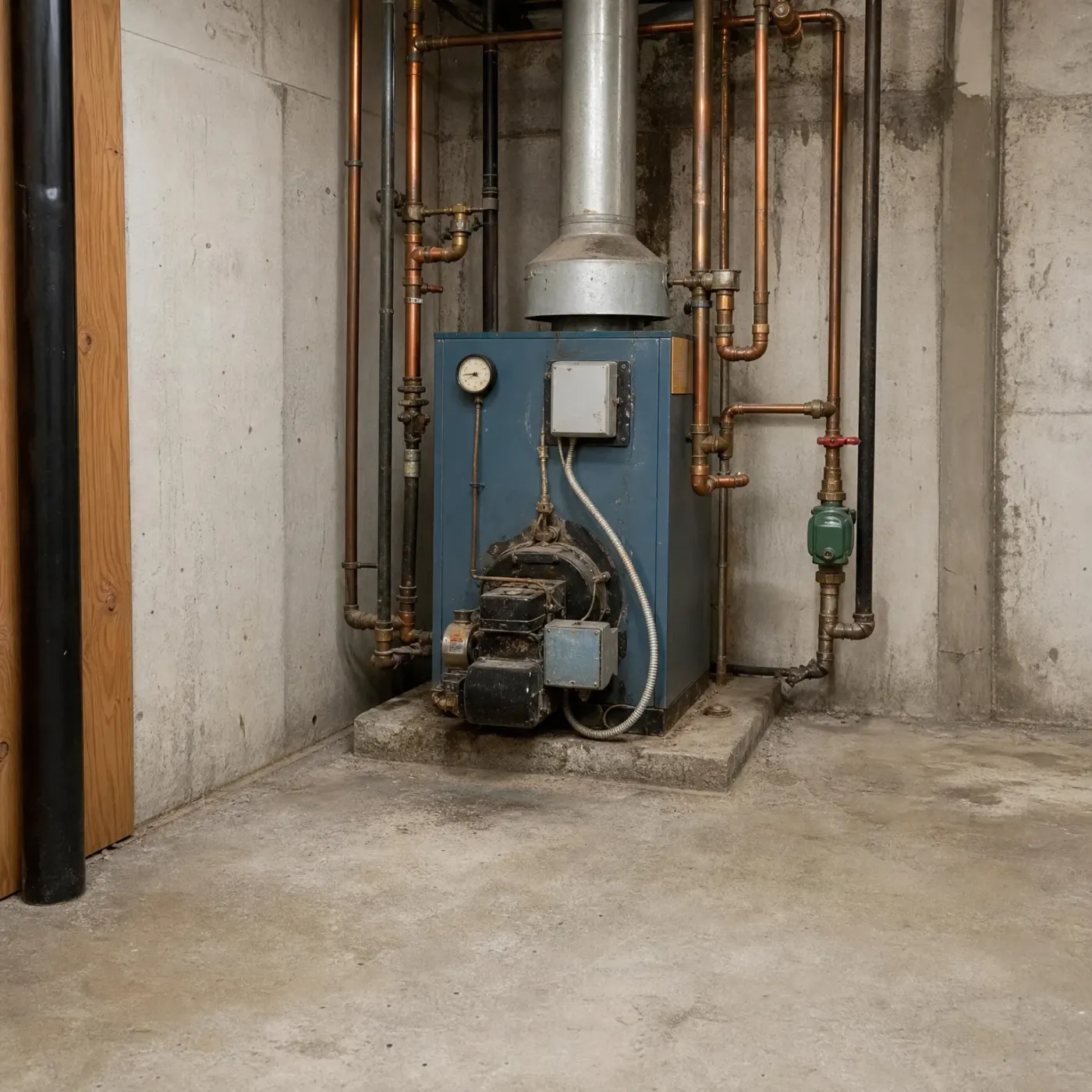
A blue oil-fired boiler with a pressure gauge, burner unit and metal flue sits on a concrete pad in a basement corner, surrounded by copper and black pipes against bare concrete walls.
A boiler fighting air pockets runs its burner longer than it should, and that pressure gauge is one of the first places it shows.
  1. Shut off the boiler, or your pump keeps pushing water while you work.

  2. Start with the radiator farthest from the boiler, then work closer.

  3. Hold a cloth and small container under the valve before you open it.

  4. Turn the key slowly until air hisses out, then stops.

Winter nights average 15°F statewide

Overnight lows average 15°F across December, January and February here. At that temperature your boiler is cycling on for hours at a stretch, and a radiator with trapped air just makes it work harder to keep the room where you set it.

NOAA nClimDiv 1991-2020 county normals weighted by homes

Bleeding your radiators is a job you can do yourself with a key and a cloth, and doing it now means no cold spots and no extra strain on the boiler once the oil burner is running for the winter. If you get partway through and one valve won't budge, or the pressure gauge looks off once you're done, that's worth having a local boiler contractor look at before the cold really sets in. You'll be matched with one contractor, someone who works on boilers like yours all winter and knows which valves seize up and which pressure readings mean something's actually wrong, rather than a handful of companies competing for your callback. Whether you bleed every radiator yourself or just want someone to check your work, you'll know where you stand with your heat before the first hard freeze.
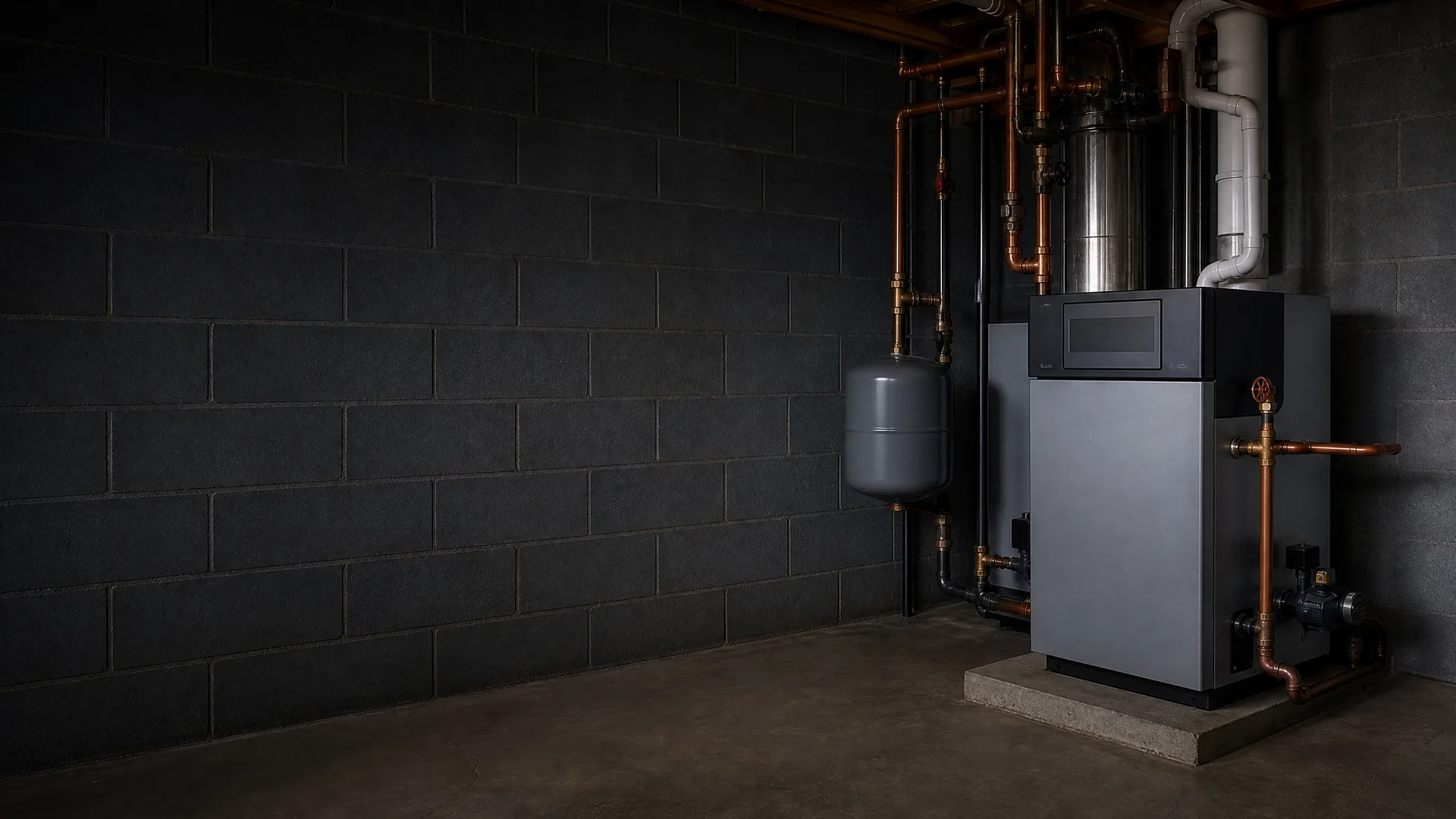
A gray boiler unit with a control panel sits on a concrete pad in a basement room with dark concrete block walls, connected to copper and metal piping, a gray expansion tank, and an insulated flue.

A pro who works on boilers

A licensed local pro takes the request for your boiler tune-up.

Step 1 of 3: Equipment