NH Boiler Directory
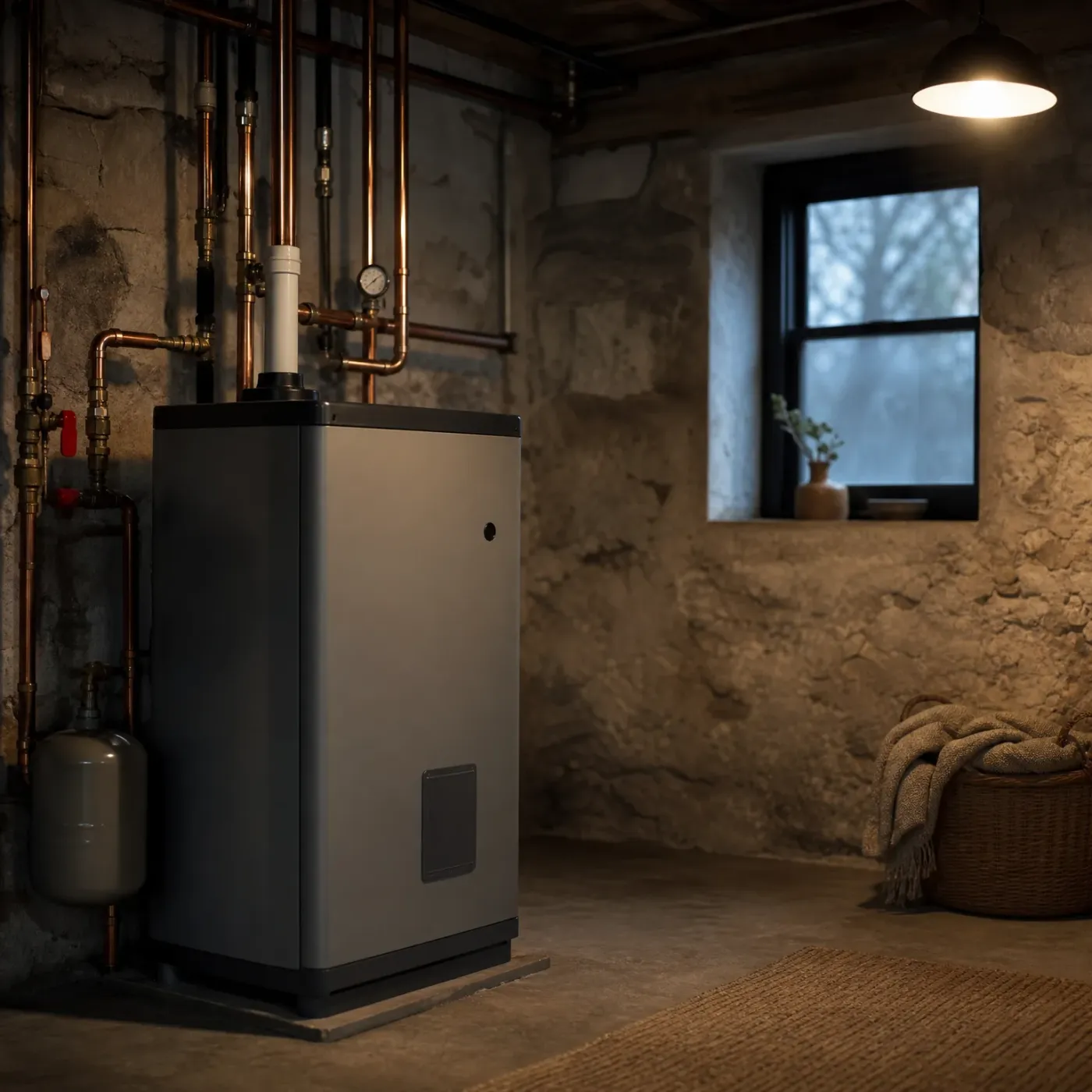
A gray floor-standing boiler with copper pipework, valves and a pressure gauge in a stone-walled basement, beside a small window and a wicker basket with a blanket.

One request and it's handed off

Is a high-efficiency boiler worth it in New Hampshire

Most boilers in New Hampshire still run on oil, and with power costs here among the highest around, swapping to a high-efficiency model is worth doing the math on. This page gets into what that boiler actually saves you and when it makes sense to switch. Send the form below and the search for who does the install is off your plate.

Hand off my installation

A high-efficiency boiler is worth it for most oil-heated homes in New Hampshire, because of how long and how hard the heating season runs here. An old oil boiler loses a good share of its fuel straight up the flue. A high-efficiency model condenses the exhaust and pulls more heat out of the same gallon of oil before it leaves the house. Over a winter that runs from October into April, that difference shows up every month on the oil bill, not just in a cold snap. It matters more here than in places with mild winters, because the boiler is running for most of the year, and every inefficient hour adds up. Whether it is worth it for your house depends on the boiler you have now and what shape it is in, which is worth having a licensed contractor look at before you decide.

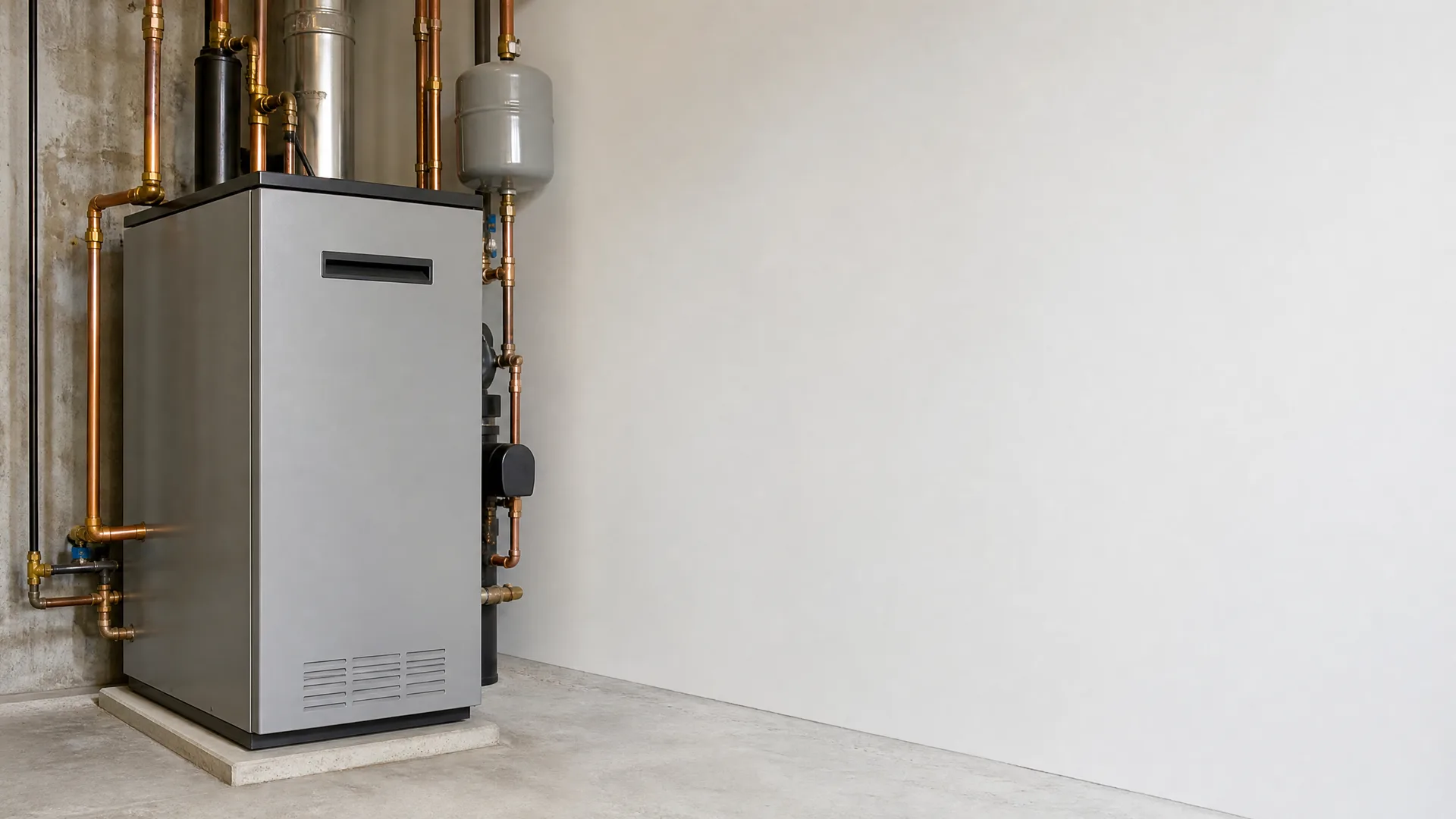
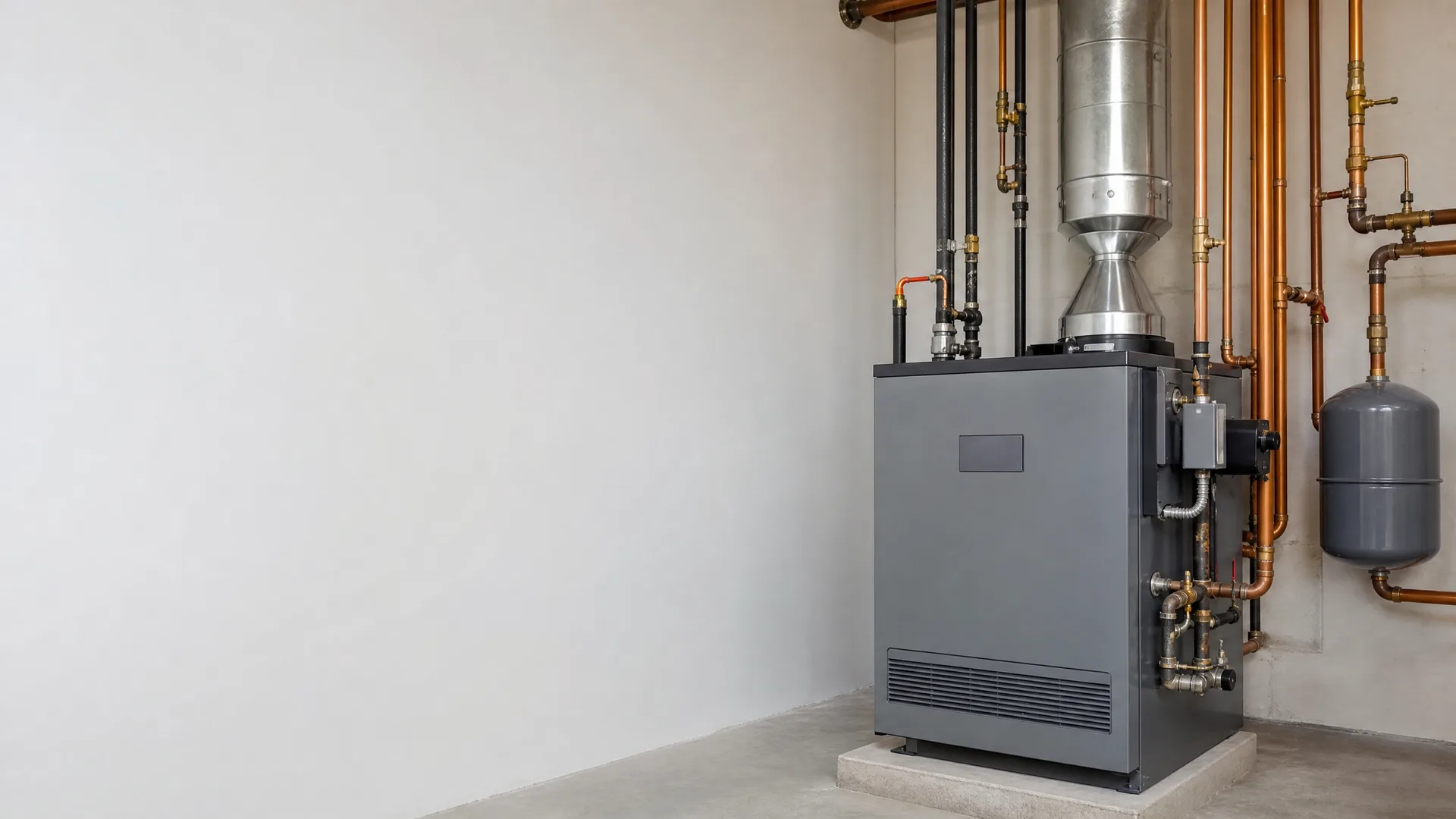
A gray floor-standing boiler on a concrete pad in a bare room, connected to copper pipes and an expansion tank against a plain light wall.

Where the old boiler loses heat

A standard oil boiler sends its exhaust up the flue hot, and a good share of the fuel you paid for goes with it. That gas can run 300 degrees or more leaving the house. A high-efficiency boiler pulls the heat out of that exhaust before it leaves, condensing the moisture in it, and that's the difference between a boiler that wastes fuel and one that uses most of what it burns.

A gray boiler on a concrete pad in a plain room, connected to copper and black pipes and a stainless steel flue.

Why New Hampshire winters matter here

A boiler in New Hampshire isn't idling through a mild season. It's firing for months on end, October into April some years, and every cycle it runs on an old unit is another cycle losing heat up the flue. The longer and colder the winter, the more that lost fuel adds up, which is exactly why the payoff on a high-efficiency model shows up faster here than in a state with a short, easy winter.

Is your oil boiler costing you more than it should

Listen to it run this winter. If it's cycling on and off every few minutes, or running long stretches just to keep the house at temperature, it's working harder than a high-efficiency model would to do the same job. Check the flue pipe where it runs outside. If it feels hot to the touch, that's paid-for heat leaving with the exhaust instead of staying in your radiators or baseboards. An older boiler that short-cycles or runs long also wears out its parts faster, which means more repair calls over the years it has left. None of that shows up as a single big problem. It shows up every month on the oil bill and the power bill both, for as long as the boiler stays in.

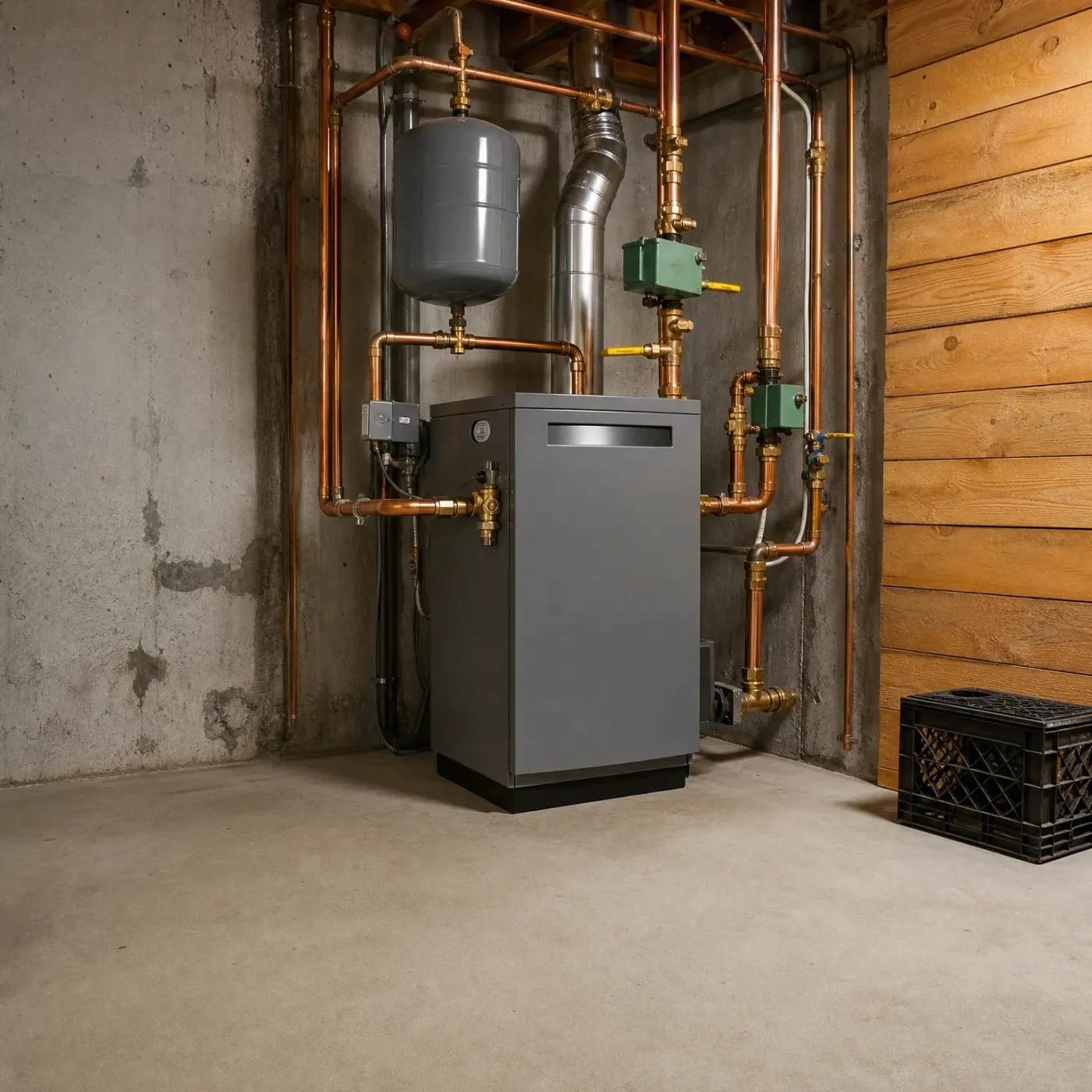
A gray boiler unit in a basement corner with copper piping, brass valves, a gray expansion tank, a metal flue duct, concrete walls and a wood-paneled wall, with a black plastic crate on the floor at right.

A boiler installed right

This is what a clean installation looks like: copper runs supported and square, zone valves labeled, the expansion tank sized to the system. A boiler fitted this way heats evenly room to room and holds up for years without surprises. Whoever installs yours should leave it looking like this.
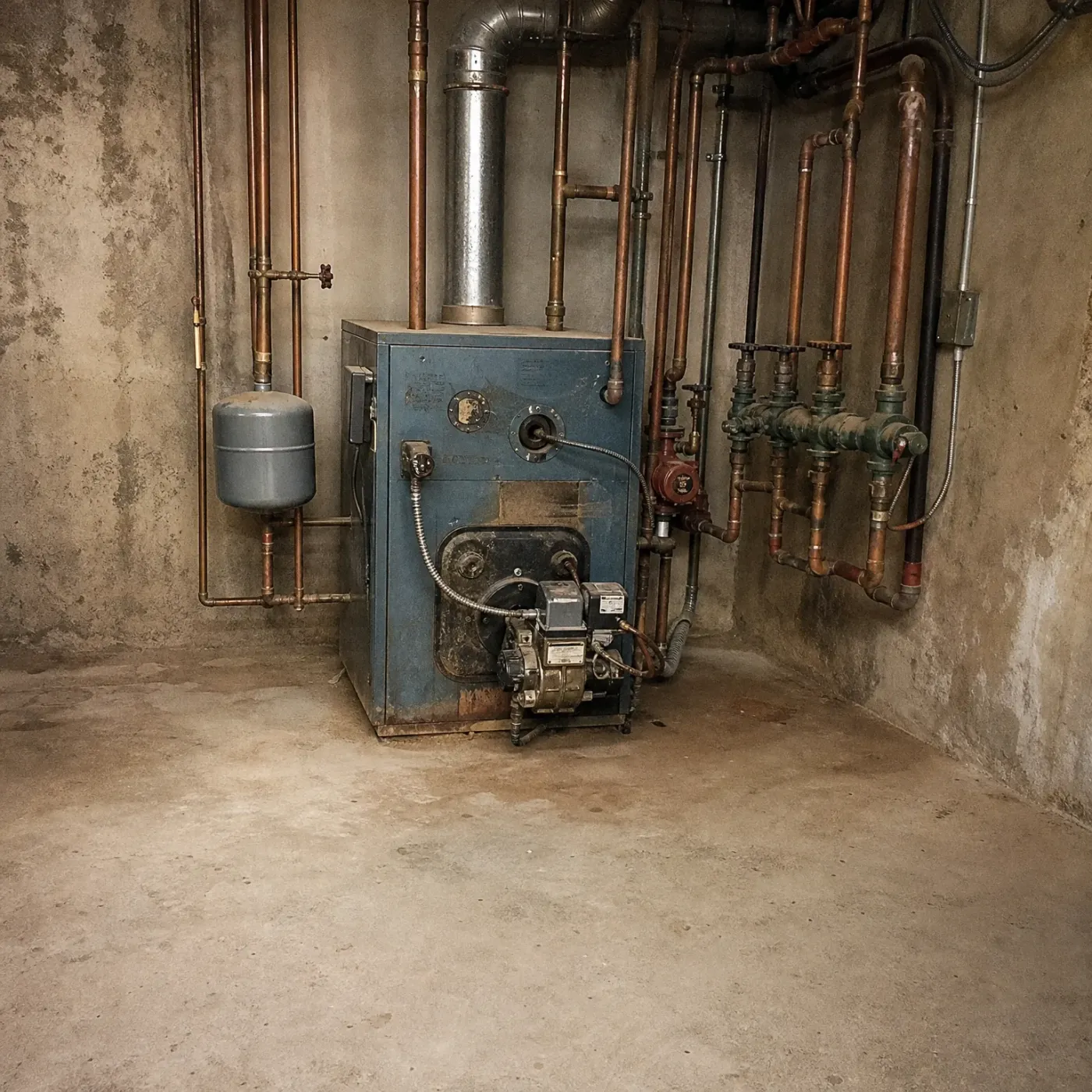
An older blue boiler with a burner unit stands in a concrete basement corner, connected to copper and steel piping, valves and a gray expansion tank on the wall.

An old boiler on its way out

This oil boiler has been patched for years with whatever valve or circulator failed next. The galvanized flue pipe and aging piping are doing their job for now, but a system this old is losing more fuel than it should and getting closer to a repair that isn't worth making.

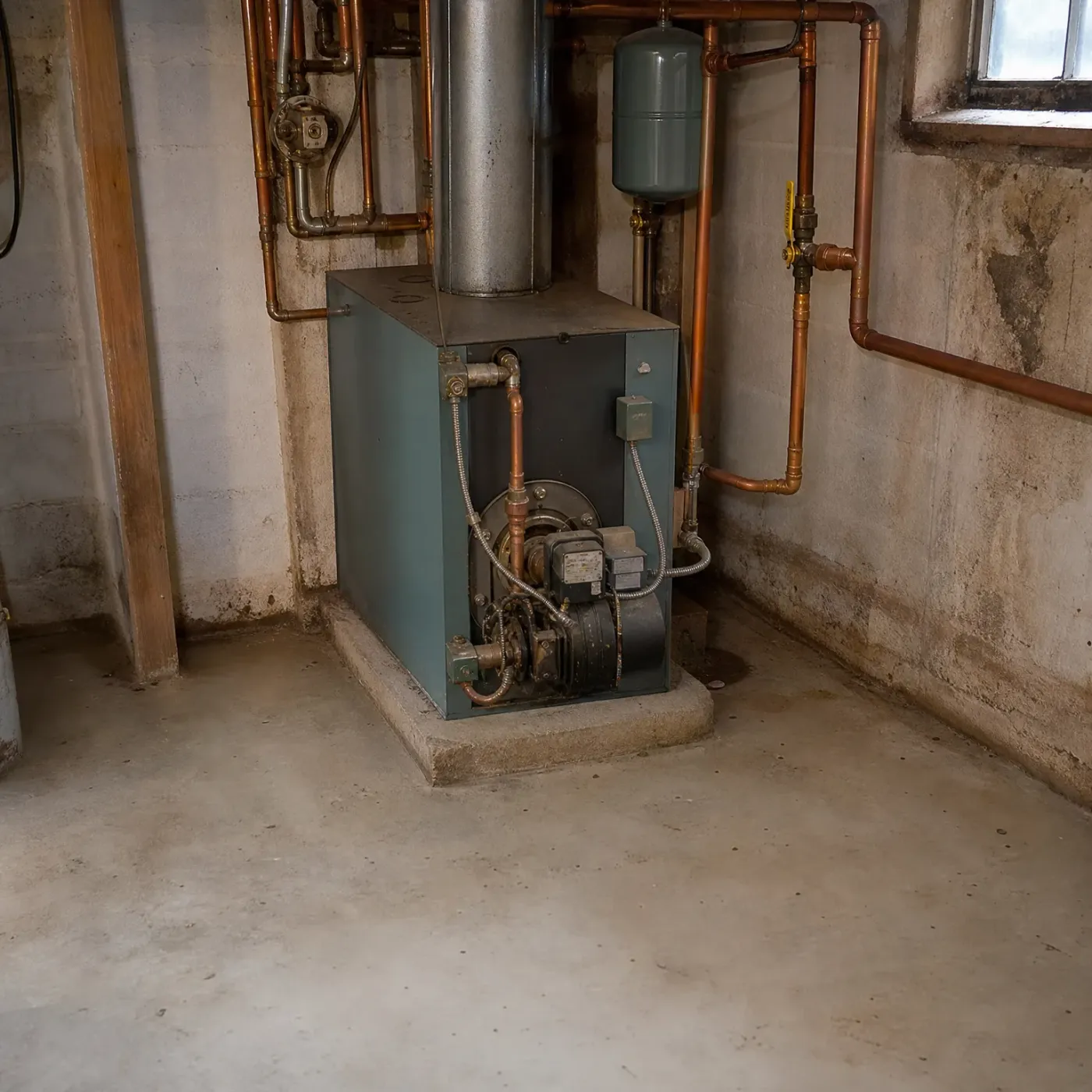
A green oil-fired boiler with a flue pipe, burner and circulator pumps sits on a concrete pad in a basement corner, surrounded by copper piping and an expansion tank against concrete walls.
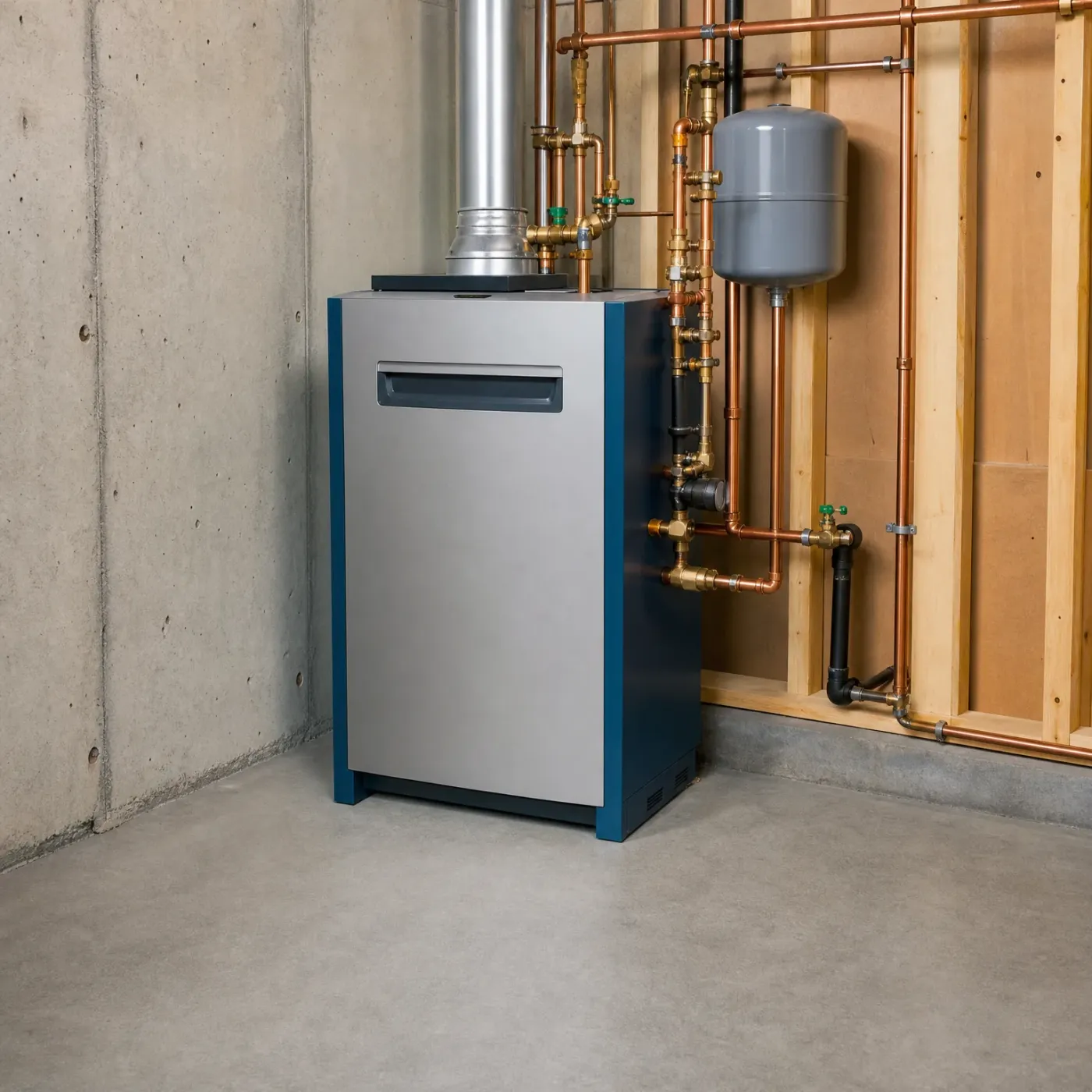
Before you get your boiler installation
A gray and blue floor-standing boiler in a basement corner, with a metal flue pipe and copper and black piping, valves, and a gray expansion tank mounted on an unfinished wood-framed wall beside a concrete wall.
After you get your boiler installation

Done looking for a boiler pro

One installer gets your project, so there's no bidding war over it.

No fee to send it, and nothing to sign.

Keep the old oil boiler running and you know what you're getting: the same bill shape every January, the same flue loss heating the outdoors instead of your house.

Replace it with a high-efficiency model and that heat stays in the house instead of going up the flue, which matters most in a New Hampshire winter that doesn't let up until spring.

A gray-haired bearded man in a dark knit sweater sits on a light gray sofa in a sunlit living room, looking to his left, with a framed artwork, a potted palm, and a curtained glass door behind him.
A middle-aged man in a dark green sweater sits on a light grey sofa looking toward a sunlit window, with a wooden shelving unit, lamp and potted plants in the background.
A man in a dark green sweater sits on a light grey sofa in a sunlit living room, looking to his left, with a shelving unit, houseplants, framed art and a large window behind him.
A gray-haired bearded man in a dark green sweater sits on a light gray sofa in a sunlit living room with a potted plant, framed picture, and dark shelving in the background.

Replacing the whole boiler

A full swap means pulling the old oil boiler out and setting a new high-efficiency unit in its place, sized to your house and piped into your existing zones. It gets you the full gain right away, because the new boiler is condensing the flue gas instead of sending it up the chimney hot. It's more work up front, since the venting changes too. A condensing boiler vents through PVC pipe out a sidewall instead of up a chimney, so that has to be run new. Done right, the zone valves, the expansion tank and the near-boiler piping all get set up for how the new unit actually operates, not just bolted to what was already there.

Patching the one that's failing

Sometimes it's one part going, a circulator pump, an ignition control, a leak at a fitting, and the boiler itself still has life in it. Fixing that part keeps you running through the winter without the cost of a full install. But an old oil boiler that's cycling hard or losing a lot of heat up the flue is going to keep doing that no matter how many parts get swapped. You're not fixing the flue loss by replacing a pump. If the boiler itself is old enough that one part failing is likely to become a pattern, a repair now can mean paying for the same visit again next winter.

Winter nights average 15°F statewide

At 15°F, your boiler isn't cycling for comfort, it's running close to flat out most of the night to hold temperature. That's exactly the load a high-efficiency model is built to carry cheaper, since it's pulling more heat out of the same gallon of oil instead of sending it up the flue.

NOAA nClimDiv 1991-2020 county normals weighted by homes

A woman with shoulder-length graying brown hair in a cream knit cardigan sits in a dark armchair indoors, looking off to the side with a slight smile, with a shelf, window and houseplant blurred behind her.
A woman with her hair in a bun sits wrapped in a beige knitted blanket on a couch, holding a sleeping child against her chest in a warmly lit room with a lamp and houseplant in the background.

Where that leaves you

  • A high-efficiency boiler is worth it for most oil-heated homes in New Hampshire given how long and hard winters run here.
  • The old boiler keeps losing fuel up the flue every night it runs, and that loss doesn't fix itself.
  • A local contractor who works on these systems every winter knows which parts fail first in a New Hampshire boiler and how to size the new one for your zones.
  • Sending the request to one licensed local contractor means you deal with a single qualified installer instead of fielding calls from several companies.
  • Whether you replace the whole boiler or convert it, the gain only shows up once the work is done correctly.
  • Nothing about the cold outside changes until the oil boiler in the basement does.

The math on a high-efficiency boiler holds for most oil-heated homes in New Hampshire, because the winters here are long enough and cold enough to make flue loss expensive every single night. That part doesn't change house to house. What changes is the boiler in your basement, and only someone standing in front of it can tell you what it's actually doing with your oil and whether a full swap or a conversion makes more sense for your zones. That's a judgment call, not a guess, and it's better made by someone who sees this exact make and model fail in this exact climate every winter than by someone working from a chart. When you send the request, it goes to one licensed contractor local to New Hampshire, not a handful of companies competing for the job. That contractor has likely opened up a boiler like yours before, knows which part tends to go first, and can size the replacement to the zones you already have instead of guessing at it. You get one person to talk to, not five voicemails to sort through. None of this changes what's happening outside. The cold still comes in October and stays into April. What it changes is what's happening in the basement, where the old boiler is either still sending a good share of your fuel up the flue or it isn't. That's the whole question this page has been answering, and the answer doesn't improve by waiting through another heating season.

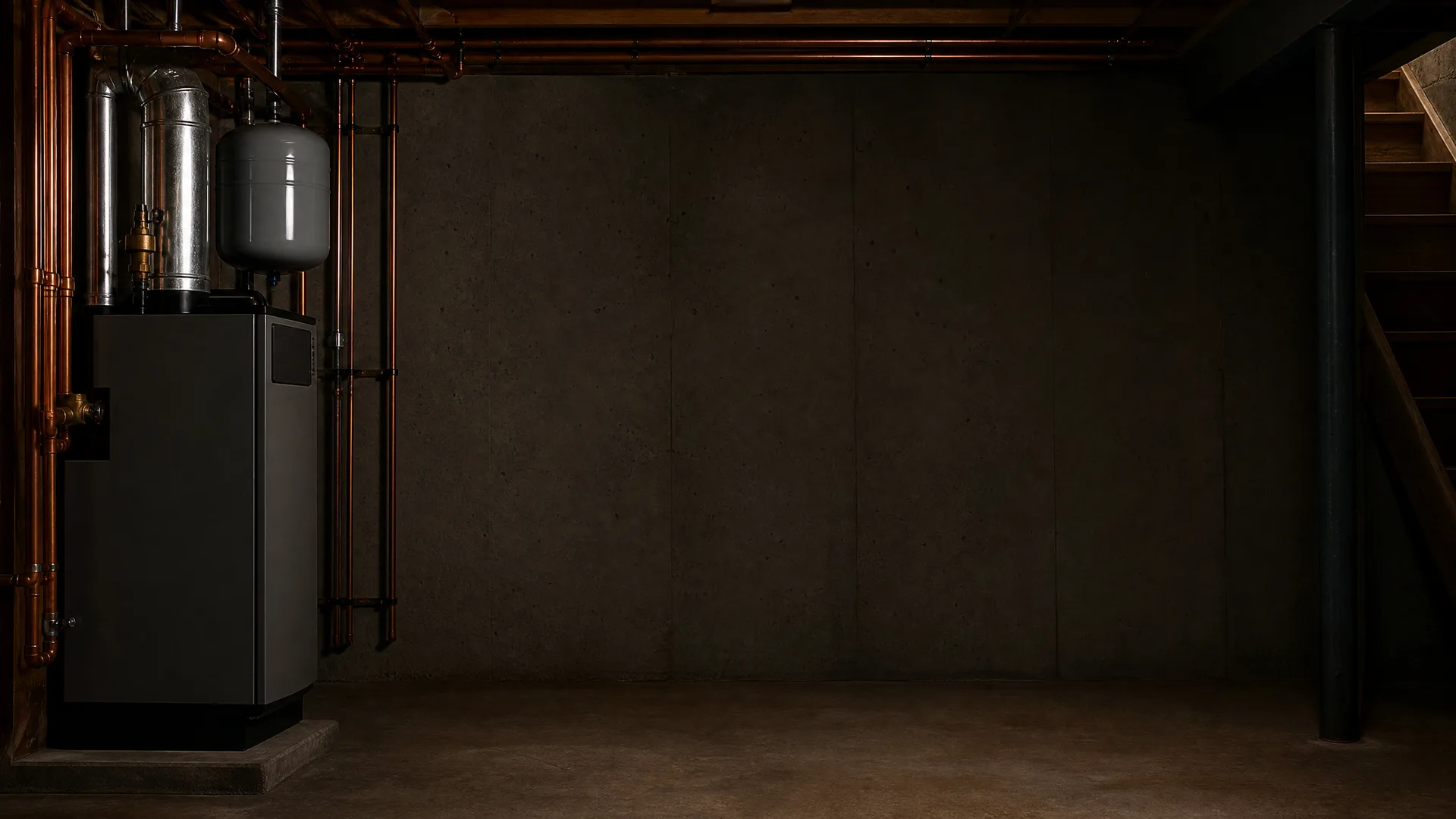
A dark basement with a gray boiler unit, expansion tank, and copper pipes along a concrete wall, with a steel support post and wooden stairs at right.

It's off your list after this

The pro who reaches out is licensed in New Hampshire.

Step 1 of 3: Equipment