Profile view of a bearded man wearing a dark green baseball cap and a dark gray T-shirt against a plain light background.

Signs your boiler won't last a New Hampshire winter

Step 1 of 3: Equipment

What are the signs your boiler won't make it through another New Hampshire winter?

A New Hampshire winter runs long, and most homes here lean on oil heat to get through it. If your boiler has started acting up, the real question isn't whether it needs attention now, it's whether it can hold up once the cold settles in for good. Strange noises, uneven heat, or a spike in your oil or power bill are the kind of signs worth paying attention to before January.

Rust, kettling noises, and short cycling mean your boiler may not last the winter

A boiler that's wearing out tells you before it quits. Rust or white mineral streaks near fittings mean water is escaping somewhere inside. A banging or kettling sound from the tank means scale has built up on the heat exchanger, and it's working harder to move heat through. If it short cycles, turning on and off every few minutes instead of running a steady stretch, the burner or the controls are struggling to keep up. Any one of these gets worse under the kind of steady, heavy demand a New Hampshire winter puts on a boiler. A system that's limping along in October with oil prices already high is not one you want to find out has failed in February.

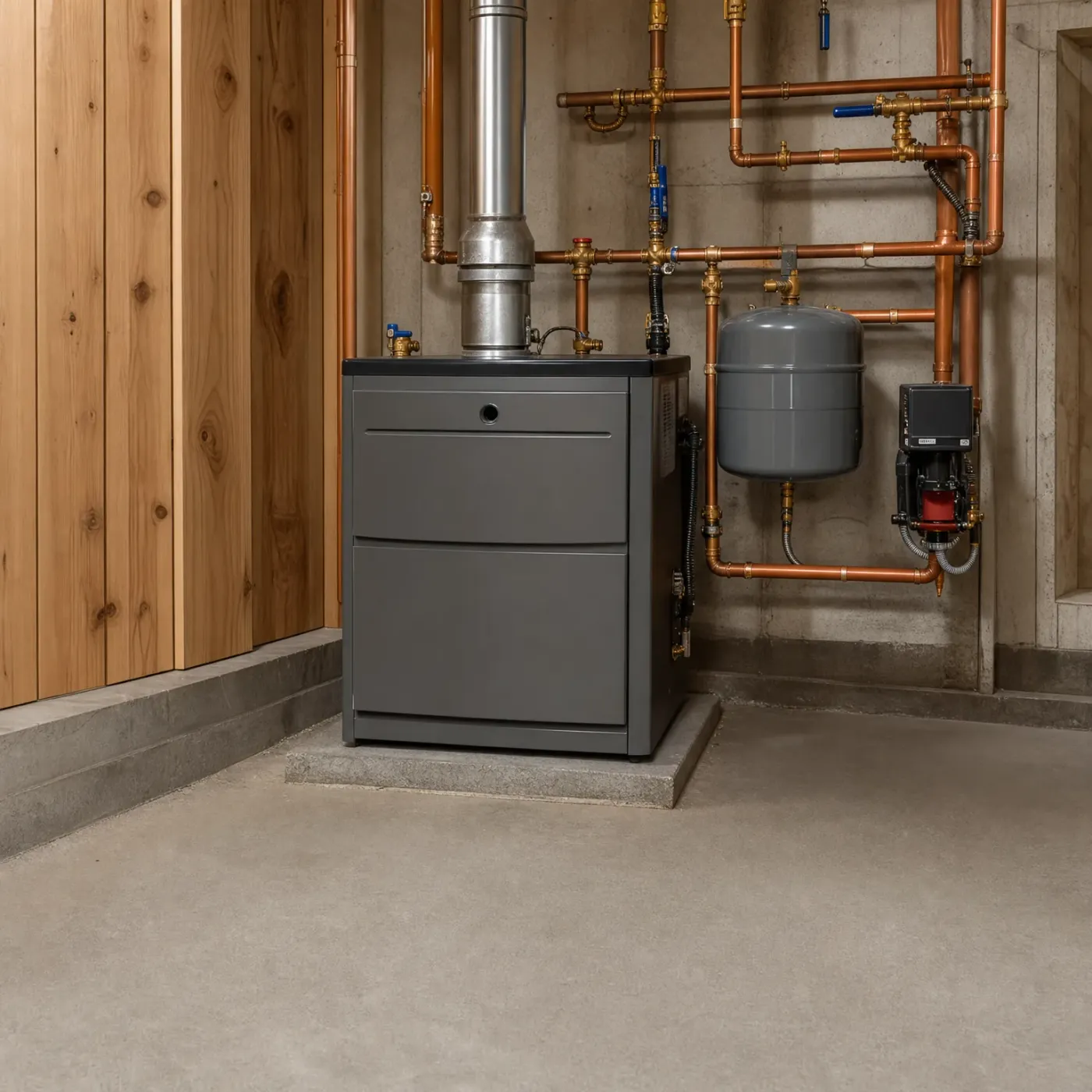
A gray boiler on a concrete pad in a basement, with a metal flue pipe and copper piping, brass valves, a gray expansion tank and a circulator pump mounted on the concrete wall beside wood paneling.

Running the way it should

Heat comes up fast when the thermostat calls, and the boiler shuts off clean without banging or kicking on again a minute later. Pipes and fittings stay dry, the pressure gauge holds steady, and the flue draws without soot around the seams. No oil smell in the mechanical room, no rooms that run cold while others overheat.
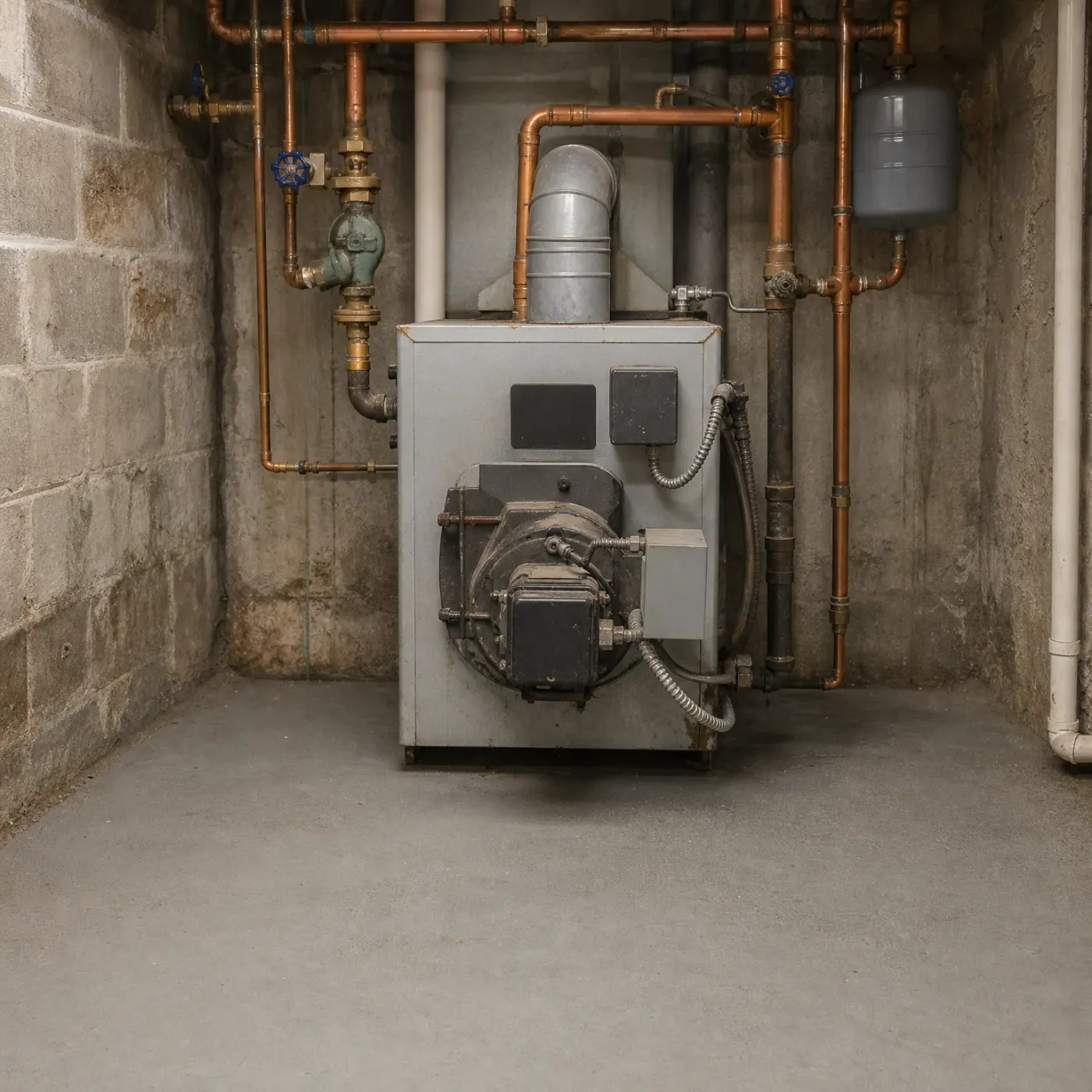

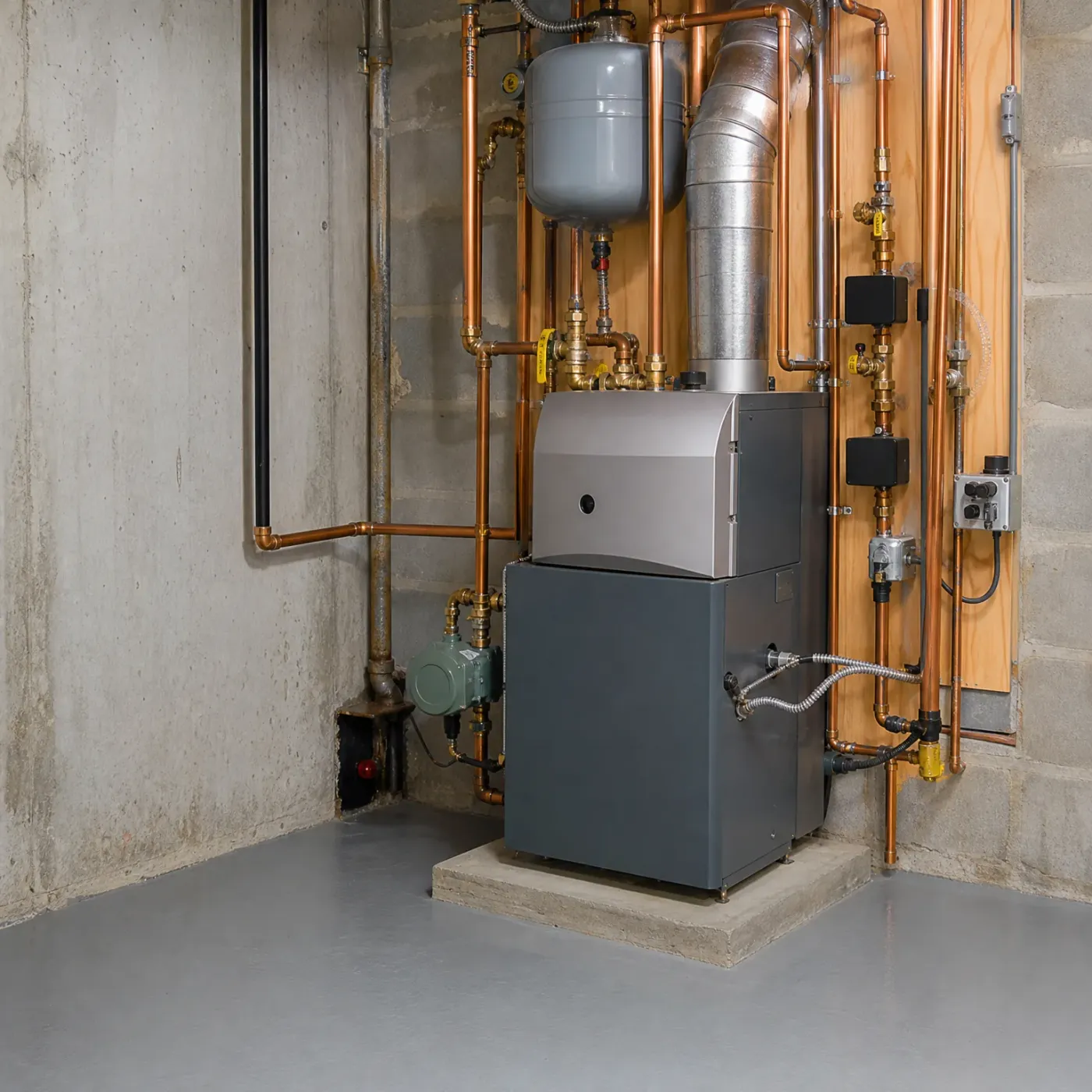
A gray boiler with a flue pipe and burner unit stands against a concrete block basement wall, surrounded by copper and steel piping, valves, and a gray expansion tank, on a bare concrete floor.

Signs it's failing

Short cycling, popping or kettling sounds from inside the tank, and water pooling near fittings or the base all point to a boiler struggling to make it through another winter. Rust around joints, a pilot or igniter that won't hold, and a heating bill that's climbed without a reason are worth having a licensed tech look at before January.

A gray-haired man in a dark sweater sits on a light gray sofa in a living room, looking toward a sunlit window with trees outside.
A gray-haired man in a dark blue sweater sits on a light gray sofa in a sunlit living room, looking off to the side, with a potted plant, shelving unit, and large glass doors behind him.
A bearded man with graying hair in a dark green sweater sits on a sofa in a living room, looking off to the side, with a sliding glass door and a dim kitchen doorway behind him.
A gray-haired man in a dark knit sweater sits on a light gray sofa in a living room, looking toward a sunlit window, with houseplants, a lamp, and framed art in the background.

Why age alone doesn't tell you

A boiler can run twenty years and still be sound, or fail at twelve, depending on the water quality, the venting, and how it was maintained. What matters more than the year on the nameplate is whether it's losing pressure, short cycling, or needs a combustion check every season just to keep it safe. An oil-fired boiler that's been serviced on schedule can outlast one that's been ignored for half that time. Look at how it's been running the past two winters, not just how old it is.

Why a cold snap finds the weak point

A boiler can limp along through a mild stretch and still fail the first night it drops well below freezing, because that's when it runs longest and hardest. A cracked heat exchanger, a failing circulator, or a burner that's lost efficiency all show themselves under sustained demand, not light use. If a unit struggled to keep up during a short cold spell last winter, a long New Hampshire stretch of single digits will ask more of it than it has left to give.

A middle-aged woman with shoulder-length dark hair, wearing a gray cardigan over a cream top, sits in an upholstered armchair and looks toward a sunlit window, with a shelf holding framed pictures and a plant behind her.
A woman with her hair in a bun holds a sleeping young child against her chest, both wrapped in a textured beige knit blanket on a sofa in a dimly lit room with a lamp, framed picture, and bookshelf behind them.

What a failing boiler costs you

An oil boiler that's lost efficiency burns more to make the same heat, and with power and fuel costs what they are in New Hampshire, that shows up fast on a January bill. A boiler short cycling or struggling to hold pressure isn't just annoying, it's working harder for less heat, and that difference adds up over a long heating season. If a room that used to warm up in twenty minutes now takes twice that, you're paying for the gap. Left alone, a boiler under strain doesn't level off. It keeps drawing more fuel to make up for what it's losing, right through the coldest months when you can least afford for it to quit.

What's actually at risk

A boiler that fails outright in February doesn't give you a quiet day to sort it out. Pipes freeze fast once the heat stops, and a burst pipe does more damage than the boiler repair would have. Soot around the flue or a smell of exhaust indoors points to a venting problem, and that's not a comfort issue, it's a safety one. None of this means panic over a strange noise or a pilot light that flickers once. It means paying attention to a pattern: pressure that keeps dropping, a burner that won't stay lit, rooms that stay cold. A boiler that's told you something is wrong usually keeps telling you, louder, until someone looks at it.

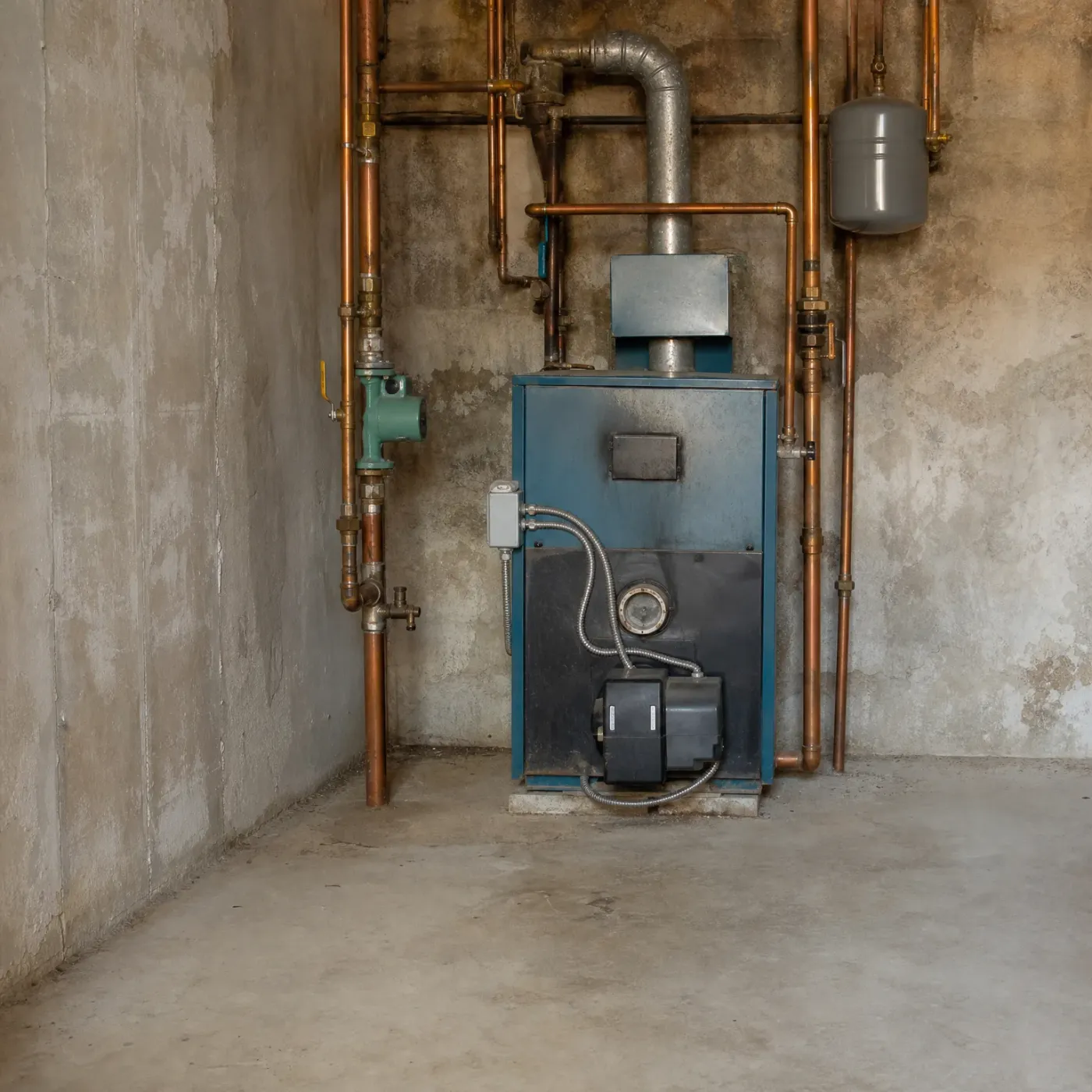
A blue residential boiler with a metal flue, pressure gauge and burner unit stands against a stained concrete basement wall, surrounded by copper pipes, a green circulator pump and a gray expansion tank.
Before you get your boiler repair
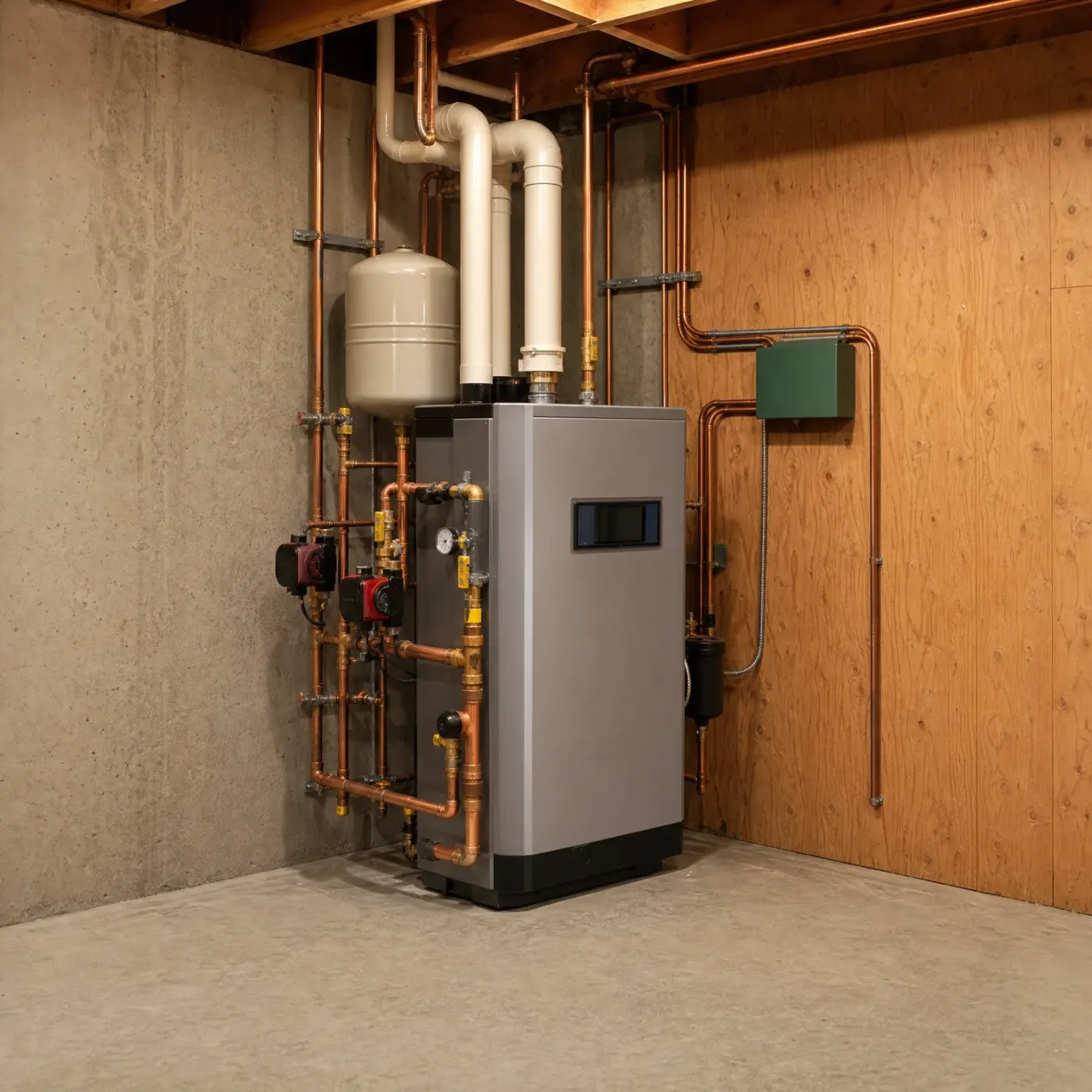
A gray floor-standing boiler in a basement corner with copper piping, two red circulator pumps, a beige expansion tank, white PVC vent pipes, concrete and plywood walls.
After you get your boiler repair
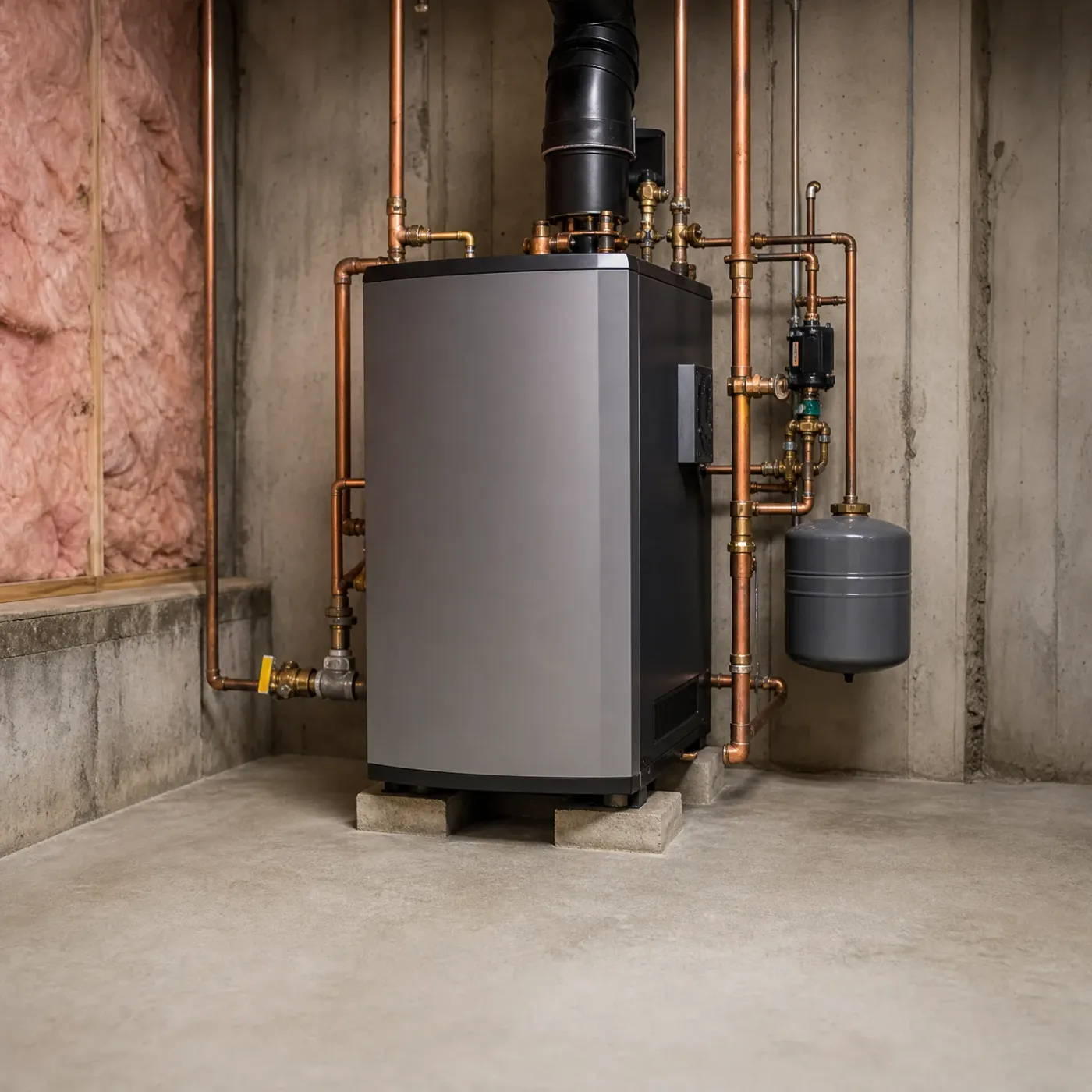
A gray and black boiler unit sits on concrete blocks in a basement corner, connected to copper piping, valves, a black flue duct, and a gray expansion tank, with bare concrete walls and exposed pink insulation at left.

Set up and venting clean

The circulator pump, the valves, and the expansion tank all sit on a solid pad with room to service them. The flue runs straight up through the top of the unit, and the copper piping shows no green corrosion or white buildup at the joints.

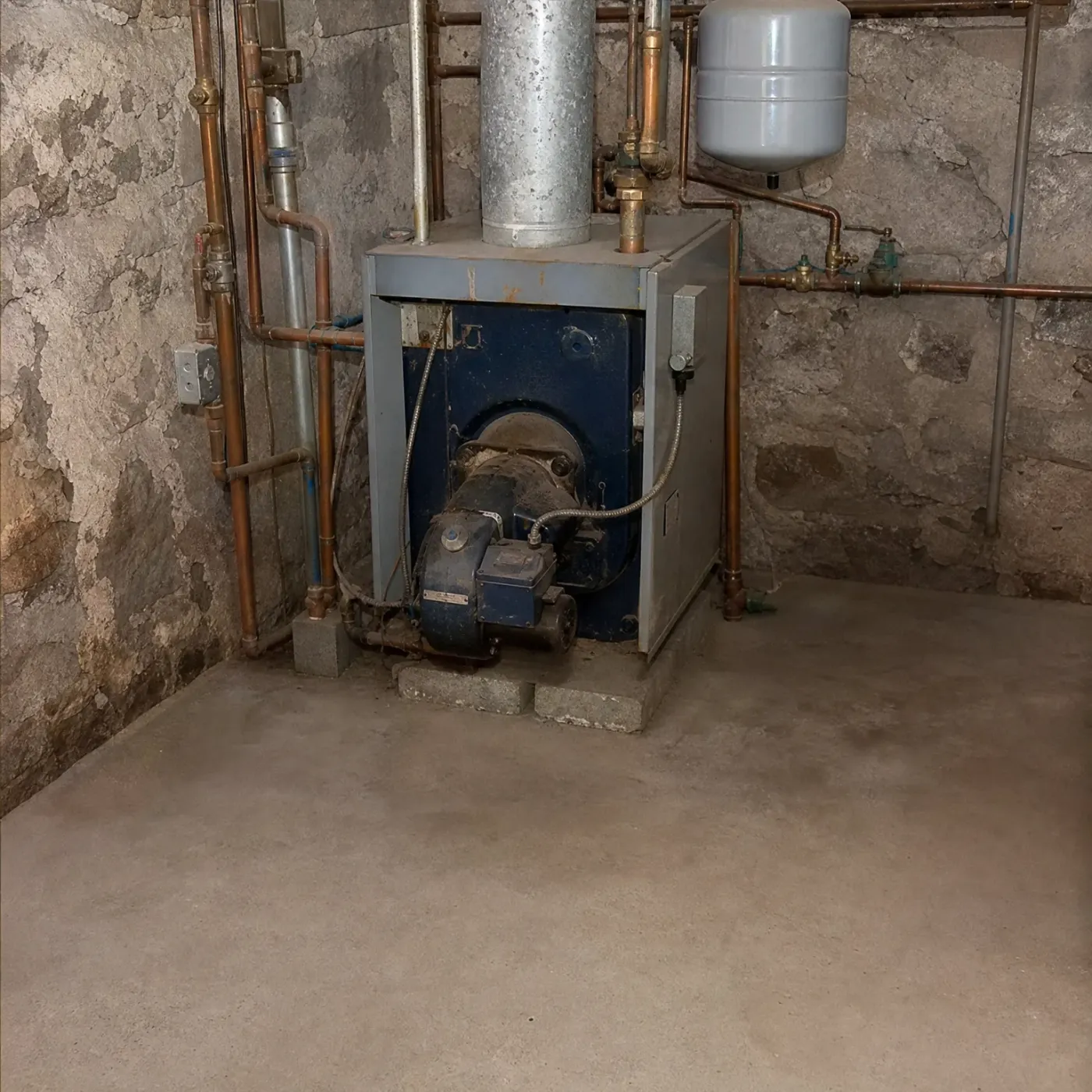
An oil-fired boiler with a blue and gray cabinet and burner sits on concrete blocks in a basement corner with stone walls, connected to copper pipes, a metal flue, and a wall-mounted expansion tank.

Propped up and crowded

This boiler sits raised on concrete blocks against a stone wall, which usually means a past flood or a damp floor underneath it. The galvanized flue pipe and tight corner make it harder to inspect the connections, and a tech working on this one is working around the setup, not just the boiler.

Winter nights average 15°F statewide

At 15°F, your boiler can't take a night off to catch up later. It has to hold that heat for hours at a stretch, and a unit that's already short cycling or losing pressure will struggle to keep the house at temperature until morning.

NOAA nClimDiv 1991-2020 county normals weighted by homes

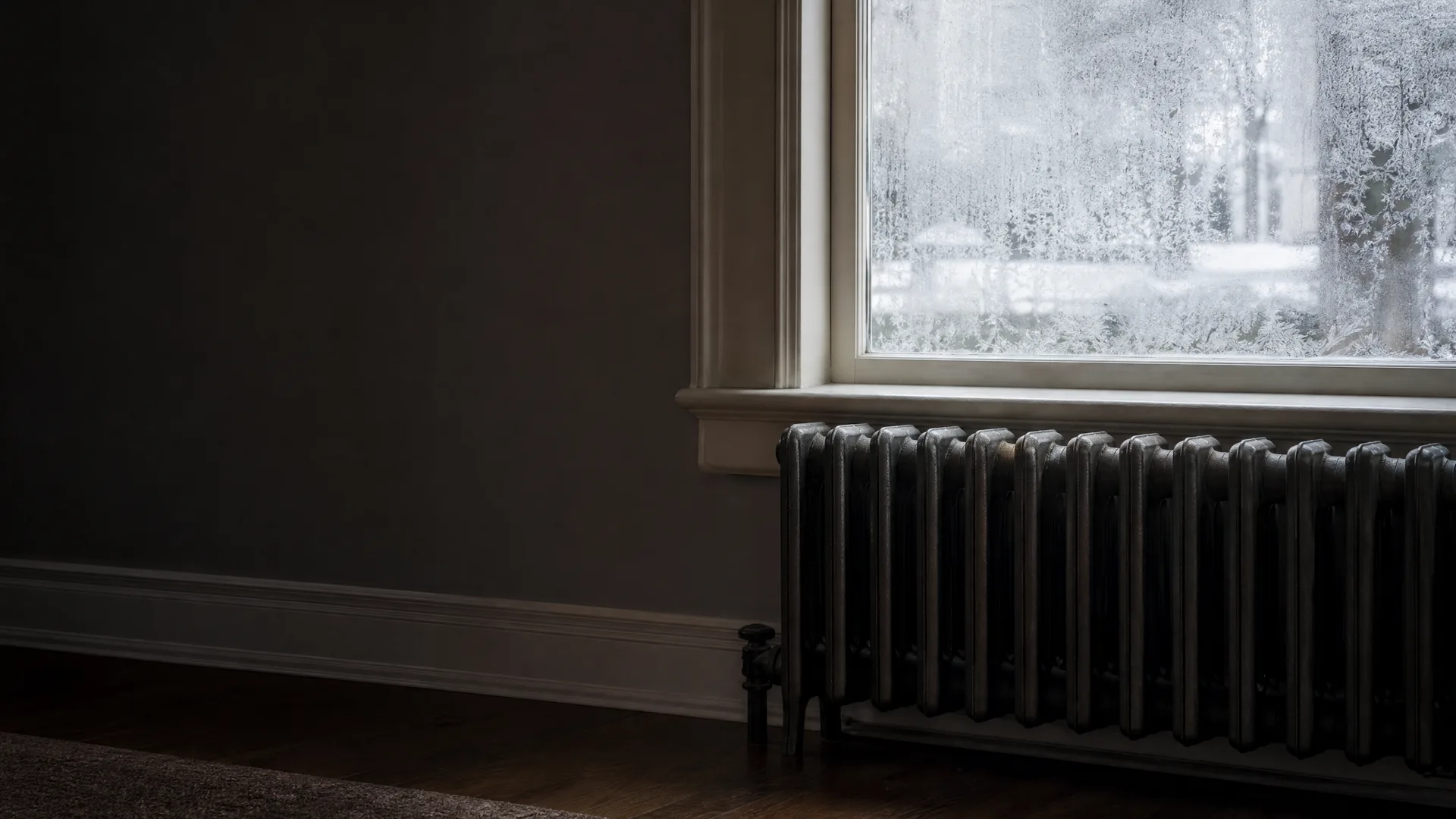
A cast iron column radiator with a valve stands beneath a window with a frosted pane showing snowy trees outside, in a dim room with dark walls and wood flooring.

The clock on the mantel reads six forty. Outside it's 15 degrees and still dark. You come downstairs and the living room is cold enough to see your breath near the window. Ice has crept up the inside of the glass in a thin white layer, and under the sill the cast-iron radiator sits quiet, not even warm to the touch. You put a hand on the thermostat dial and turn it past seventy, listening for the knock and hiss that usually follows. Nothing. Somewhere down in the basement the boiler should have already answered. It didn't, and the house is going to feel this by eight o'clock.

No phone calls to make

Only one pro gets your request, so you hear from one company.

It costs nothing to send, and you don't have to hire anyone.

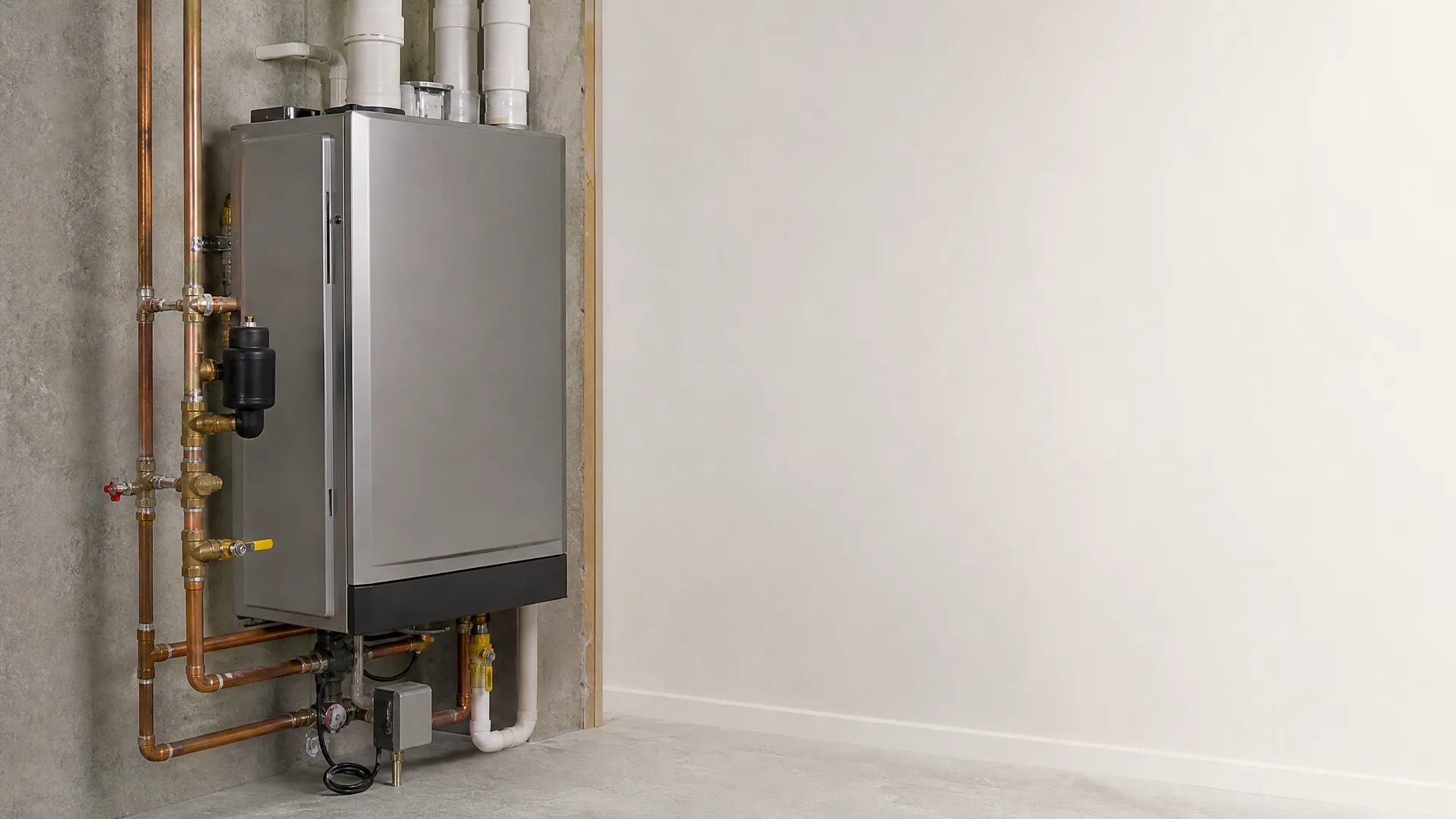
A wall-mounted grey boiler with copper pipework and white flue pipes installed against a concrete wall in an empty room with a plain pale wall to the right.

Riding it out another winter

You keep an eye on the pressure gauge and bleed a radiator when a room runs cold. Some mornings you call the oil company a little early because you're not sure the boiler is keeping up. None of that is a crisis by itself, but it means your attention has become part of how the system runs. A boiler that needs watching like this isn't getting better on its own, and New Hampshire doesn't give you a stretch of mild weather to find out.

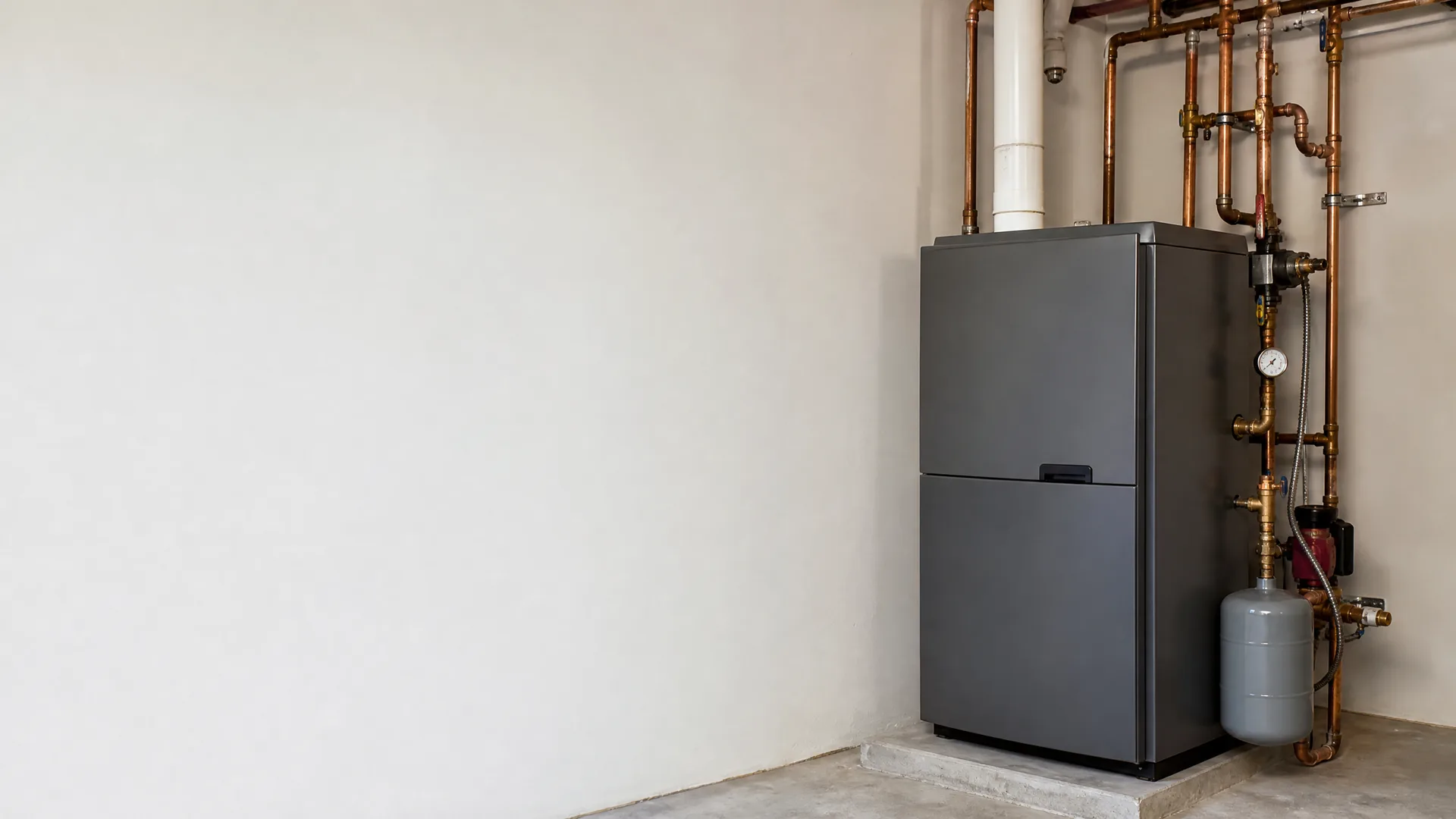
A dark grey boiler unit stands on a concrete pad against a plain light wall, connected to copper pipes, a pressure gauge, a pump and a grey expansion tank.

Getting it looked at now

A licensed heating contractor who works on oil boilers all over New Hampshire can tell you in one visit whether what you're seeing is a worn part or something closer to the end. That saves you from calling around, explaining the banging or the pressure drop more than once, and sorting through a stack of quotes from companies that don't know your house. One contractor comes out, looks at the actual unit, and tells you what it needs before the cold sets in hard.

A closed dark laptop and a ceramic mug of coffee on a wooden dining table, with wooden chairs, a dark kitchen cabinet with cutting boards and a potted plant, and a leafy plant by a window in the background.

How a boiler actually fails

A boiler doesn't usually quit all at once. It loses pressure first, a little at a time, through a fitting or a valve that's started to weep. The automatic feed makes up the difference without telling anyone, so the gauge looks normal even as water is leaving the system somewhere it shouldn't. That's how a leak runs for months before it shows up as a puddle under the unit or rust streaking down a pipe. By the time you see it, the steel around that joint has been wet longer than the leak looks like it has.

Short cycling works the same way, from the other direction. A boiler that fires, runs two minutes, and shuts off, then fires again a few minutes later, is usually responding to a bad aquastat or sediment fouling the heat exchanger, not to the cold outside. Finding which one it is means pulling the jacket and looking, not guessing from the kitchen. That's the kind of thing a local oil tech who services boilers all winter can tell you by the sound of the burner, before he's even opened the panel.

Interior corner with a beige sofa holding a dark green and a light cushion and a textured throw, a potted small-leaved tree beside a white-framed window, and a dark shallow bowl on a wooden coffee table in the foreground.
  1. A fitting or valve starts to weep water slowly.

  2. The automatic feed quietly tops off the lost pressure.

  3. Minerals left behind coat the heat exchanger surfaces.

  4. The boiler fires longer and more often to compensate.

A gray residential boiler on a concrete pad in a basement corner, connected to copper piping, an expansion tank, circulator pumps and insulated flue ducting against concrete and plywood walls.
Clean copper, solid footing, and a dry pad mean this system is still doing its job without strain.
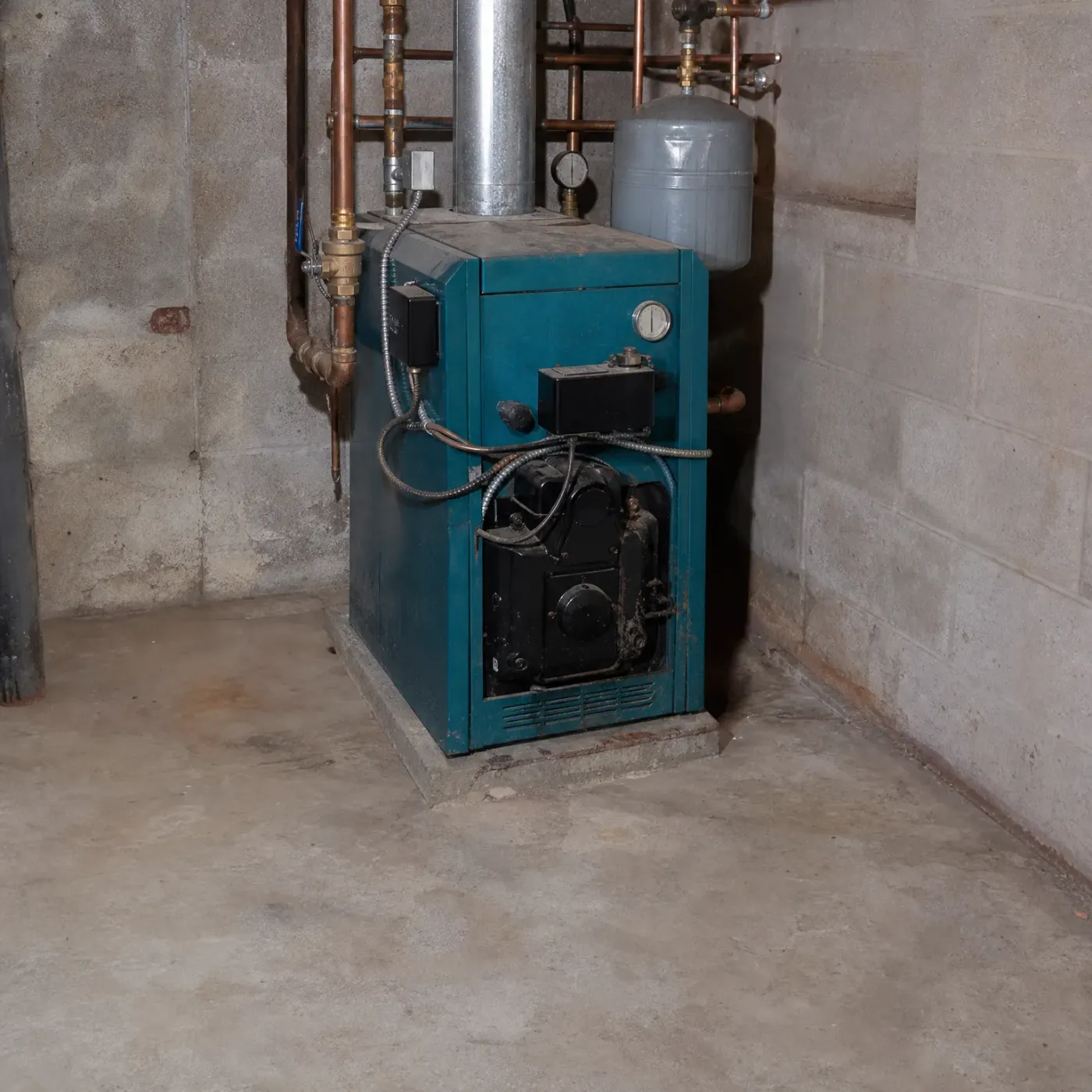
A teal boiler with a pressure gauge and black burner unit sits on a concrete pad in a basement corner, with copper pipes, a flue vent, and a gray expansion tank above against concrete block walls.
A teal relic on a bare pad, with a gauge and fittings showing their age, is asking to be looked at before January decides for you.
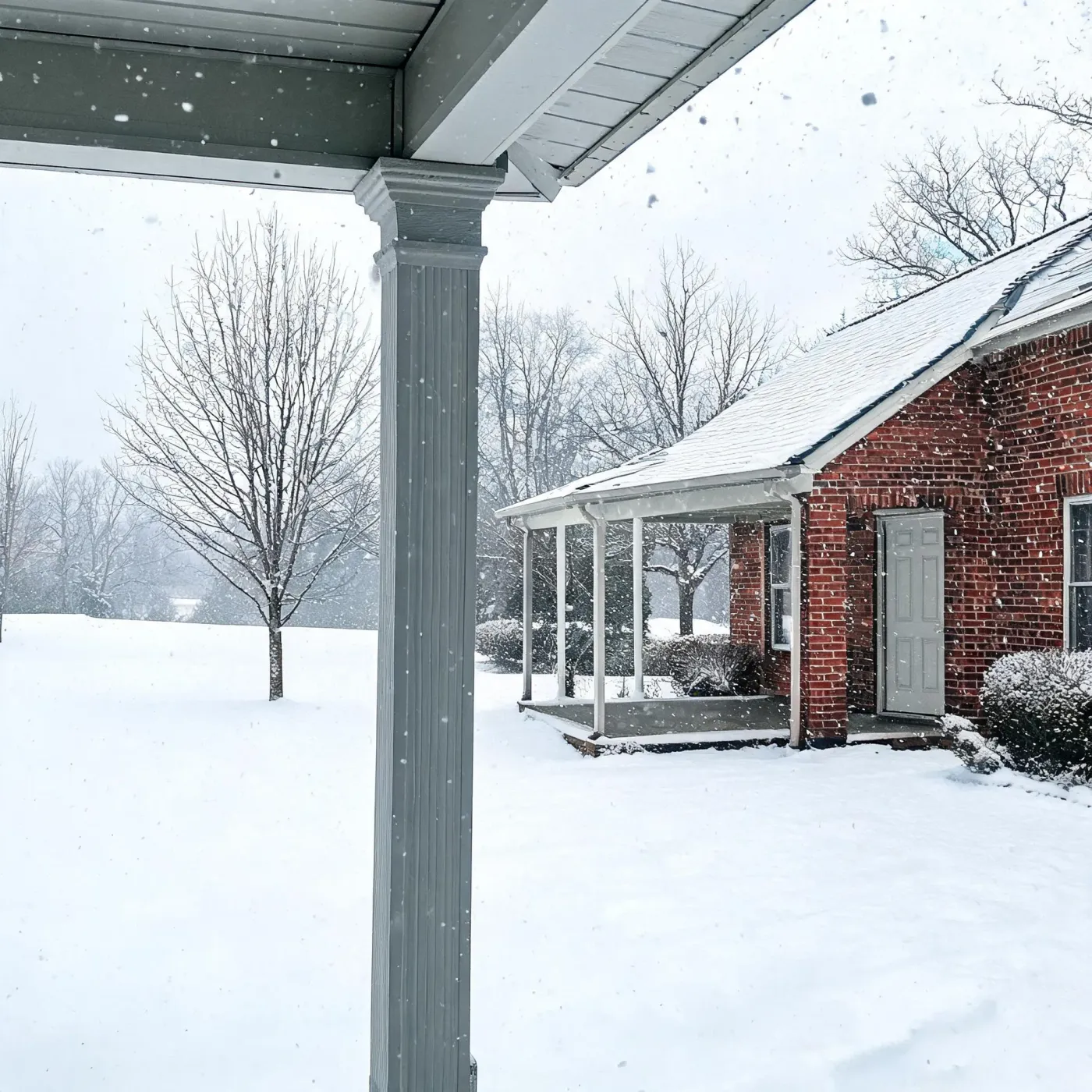
View from under a covered porch with a gray square column toward a red brick house with a white-columned porch and gray door, with falling snow covering the yard, roof, and bare trees.

Statewide, winter nights average 15°F, according to NOAA. That's the stretch your boiler has to answer for, not just a cold snap here and there but night after night where the thermostat keeps calling and the burner keeps firing. A unit in good shape handles that without much notice. One that's already losing pressure or short cycling has less room to work with, and you'll feel it as rooms that take longer to warm or never quite get there before morning. The harder a boiler works to hold 15°F outside, the sooner a small problem turns into a cold house.

NOAA nClimDiv 1991-2020 county normals weighted by homes

The signs are usually already there before the cold really sets in: pressure that won't hold, a burner that cycles too much, a pilot or igniter that won't catch clean. None of that fixes itself, and none of it gets better at 15 degrees. What you have is a system telling you what it needs, and a decision about whether to listen now or in January. Getting it looked at doesn't mean calling around to find someone who works on oil boilers, explaining the same banging noise three times, then sorting through quotes from people who've never seen your basement. It means one call to someone local who services this kind of equipment all winter and knows what a weeping fitting or a failing feed valve looks like before it becomes a cold house at six in the morning. You'll know where you stand, and so will they, because they've stood in front of a boiler like yours before.

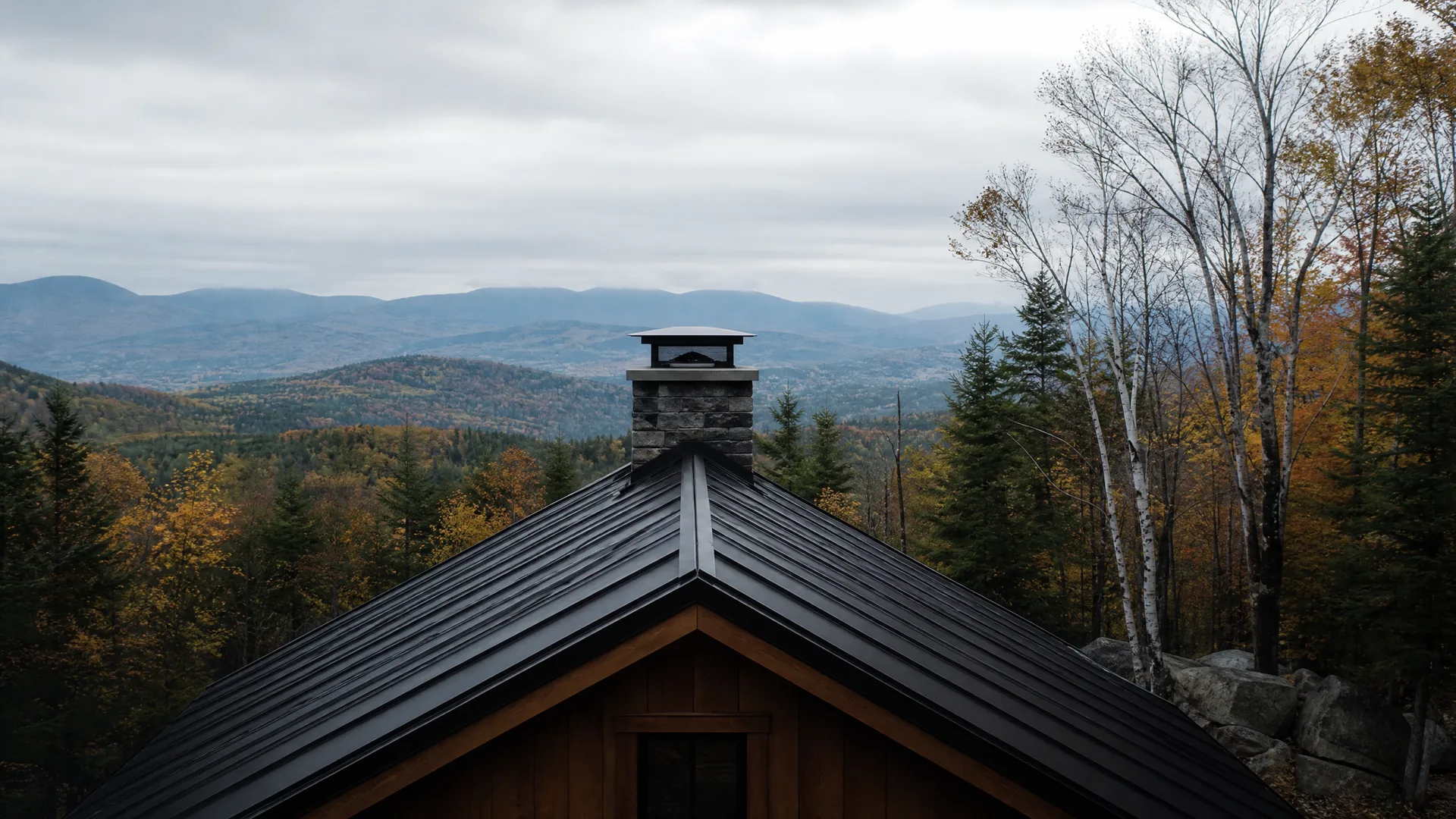
Elevated view over a dark standing-seam metal roof with a stone chimney and wood-sided gable, surrounded by conifers and autumn-colored trees with forested hills under an overcast sky.

One form, no calling around

Reach a local pro

No charge to send it. You decide if you hire them.

One request gets you a local contractor who works on boilers all winter and knows what usually gives out first. No need to call around, explain the pressure and the banging twice over, or weigh quotes from strangers. Send it before a cold night finds the weak spot for you.