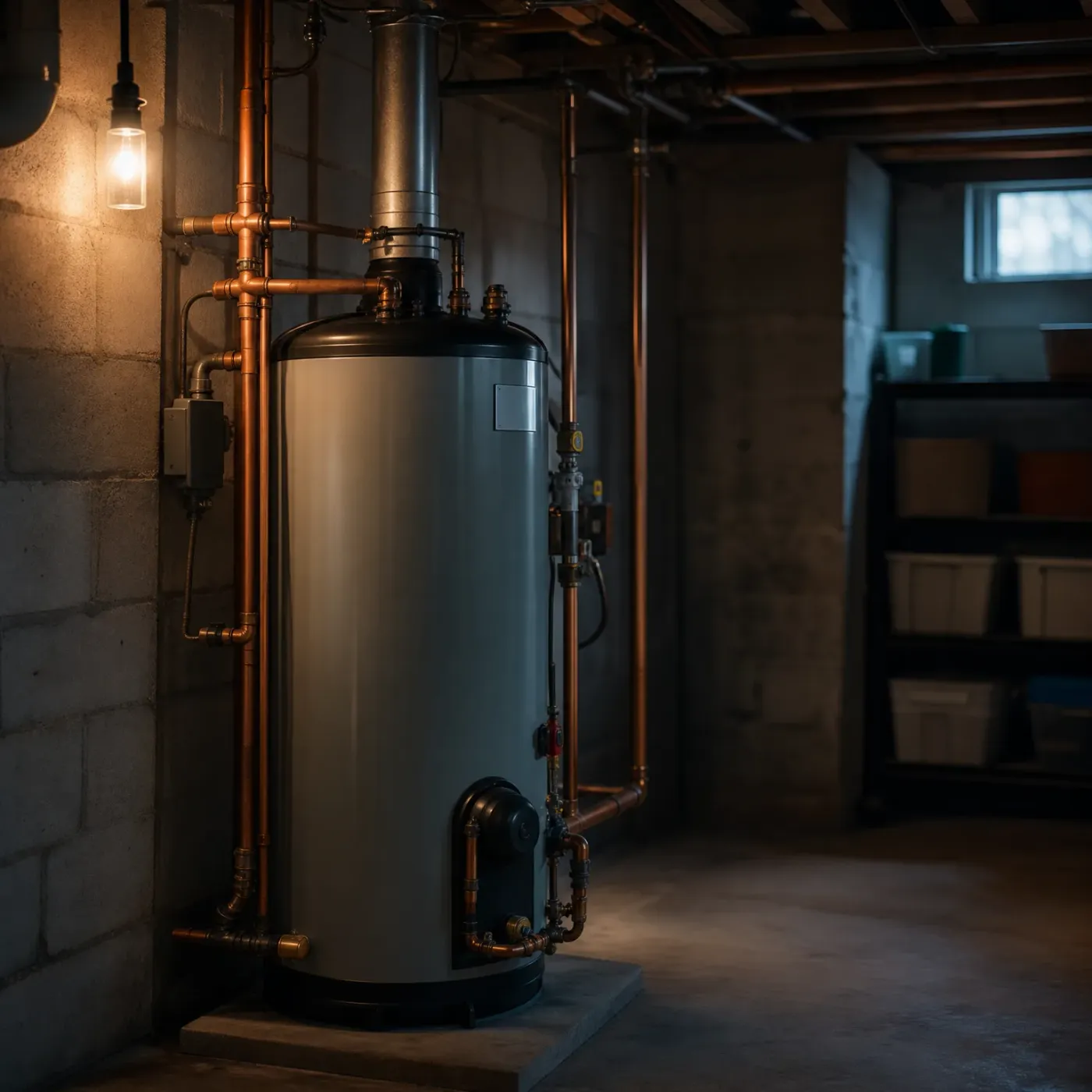








A cylindrical water heater or boiler with a flue pipe and copper piping stands on a concrete pad in a dim basement with concrete block walls, a hanging bulb at left and a shelving unit with bins at right.

Get the right pro for your boiler

What size boiler a New Hampshire home needs

The right boiler size depends on your house, not a rule of thumb. A unit too big cycles on and off and wastes oil; too small and it can't keep up on the coldest nights. This page walks through how that number gets calculated for a New Hampshire home. If you want it figured out for your house, a contractor who handles boiler installs here can look at the details and reach out.

Request a pro

There's no size you can read off a chart by square footage alone. The right boiler size comes from a heat loss calculation, a room by room look at your walls, windows, ceiling height and insulation that figures out how much heat your house actually loses on the coldest day of the year. In New Hampshire that number matters more than in milder states, because winter design temperatures here run well below zero in parts of the state, and a boiler sized off a guess tends to miss badly in either direction. Too big, and it short cycles, burning oil in bursts without ever settling into an efficient run, and wearing out its parts faster. Too small, and the house won't come up to temperature on the nights you need it most. The only way to get the number right is to have someone calculate it for your specific house.

A woman with dark hair in a bun wearing a cream knit sweater sits on a gray sofa in a bright living room, looking off to the side.
A woman wrapped in a knit blanket sits on a gray sofa in a living room, looking toward a bright window with houseplants and an armchair in the background.
A woman in a gray cowl-neck sweater sits on a light sofa with cushions, smiling and looking to the side, with a kitchen and window visible behind her.
A woman with dark hair in a bun, wearing a light linen shirt, sits on a sofa and looks to the side, with a window, houseplants and a kitchen with pendant lights blurred behind her.

Sizing starts with a Manual J calculation, not a guess based on square footage. A contractor measures your windows, ceiling height, and insulation, then weighs them against the floor plan to find how fast your house actually loses heat. Your old boiler's rating won't tell you much. Plenty of boilers installed years ago were oversized from the start, so matching the new one to the old number just repeats the mistake. Oil boilers are rated in BTUs per hour, which is the heat they need to put out on the coldest night, not an average day. That's why a contractor doing this correctly asks about your coldest room, the one furthest from the boiler or with the most exposed wall, instead of stopping at total square footage. The outdoor design temperature matters too. A boiler sized for a 0 degree night works differently than one built around a milder low, and New Hampshire's cold snaps mean that number matters more here than in a lot of places. Get the size right and it shows up later in how much oil the boiler burns to keep your house warm.

How contractors size it right

  • A Manual J calculation weighs your square footage against window count, ceiling height, and how much insulation is behind the walls.
  • Your old boiler's rating is not a starting point; it may have been oversized the day it was installed.
  • Oil boilers are rated in BTUs per hour, the amount of heat they can deliver on the coldest night of the year.
  • A contractor doing the calculation right will ask about your coldest room, not just the square footage of the house.
  • Boilers built for a 0 degree design temperature size differently than ones built for a milder outdoor low.
  • The size that heats your home also decides how much oil it burns getting there, night after night.
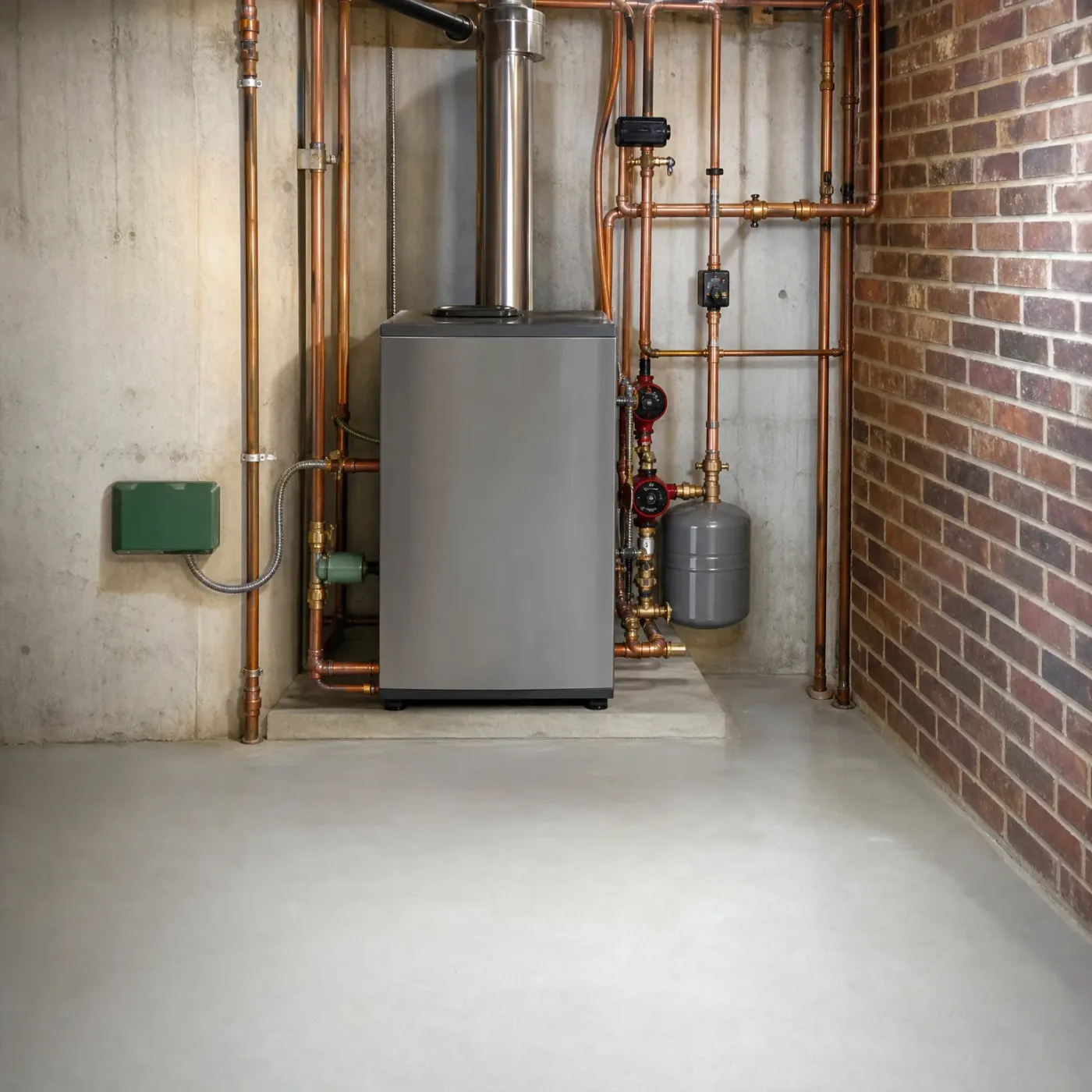
A gray boiler unit on a concrete pad in a basement corner, connected to copper piping, circulator pumps, and a ceiling-mounted expansion tank against bare concrete walls.
A properly sized boiler holds steady pressure and even heat, with the pumps and pipework behind it doing only the work the house actually needs.
A blue oil-fired boiler with a pressure gauge, burner unit and metal flue sits on a concrete pad in a basement corner, surrounded by copper and black pipes against bare concrete walls.
An oversized or aging boiler short-cycles under pressure swings it was never meant to handle, which wears the burner and drives up oil use.

What the Wrong Size Costs You

  • A boiler that's too big for your house will short-cycle, and you'll hear it kick on and off every few minutes on a cold night.
  • Short-cycling wears the pump and ignition parts faster, so repairs land sooner than they should.
  • An undersized boiler runs flat out for hours and still leaves back bedrooms colder than the thermostat reading.
  • Most New Hampshire homes burn oil, and a boiler working harder than it needs to burns more of it per month.
  • With New Hampshire power rates among the highest in the country, an oversized boiler's extra pump and burner cycling adds to that electric cost too.
  • Getting the size wrong once means living with uneven heat or higher bills for as long as that boiler stays in the basement.

You notice the wrong size in the house before you ever see a number on paper. A boiler that's too big for the place heats it fast, shuts off, then has to start again twenty minutes later because the rooms cooled off before the thermostat caught up. That on off pattern is short-cycling, and it's hard on the parts that do the starting: the igniter, the pump, the circuit board. They wear out doing a job they weren't built to do that often. Go too small the other way and the boiler just runs. It'll run for hours on the coldest nights and the bedroom at the far end of the house still won't hit the number on the thermostat, because the unit never had the output to cover that much house to begin with.

Either mistake shows up on the oil bill, since that's how most houses here are heated, and a boiler working outside its design point burns more fuel doing less for you. The oversized one adds something else: more pump starts and more burner cycling means more electricity drawn to run them, and that cost lands harder here than almost anywhere else in the country.

None of this corrects itself. Whatever size goes into the basement this time is what you're living with, cycle after cycle, bill after bill, until someone replaces it again.

A smiling older woman with gray hair in a cream knit sweater stands in a dimly lit kitchen beside a window showing snow outside, with a round loaf of bread on the counter in the foreground.
A woman and a child wrapped together in a thick knitted blanket on a sofa, both with eyes closed, with a lit table lamp and houseplant in the dim background.

A boiler sized right for your house will run long, steady cycles even on a night in January. That steady run is what keeps rooms at the far end of the house even with the ones near the thermostat.

Get the size wrong and that evenness goes with it. Rooms upstairs or at the end of a hallway lag behind, and with oil prices and New Hampshire power costs what they are, you're paying for heat that isn't reaching the people in the house.

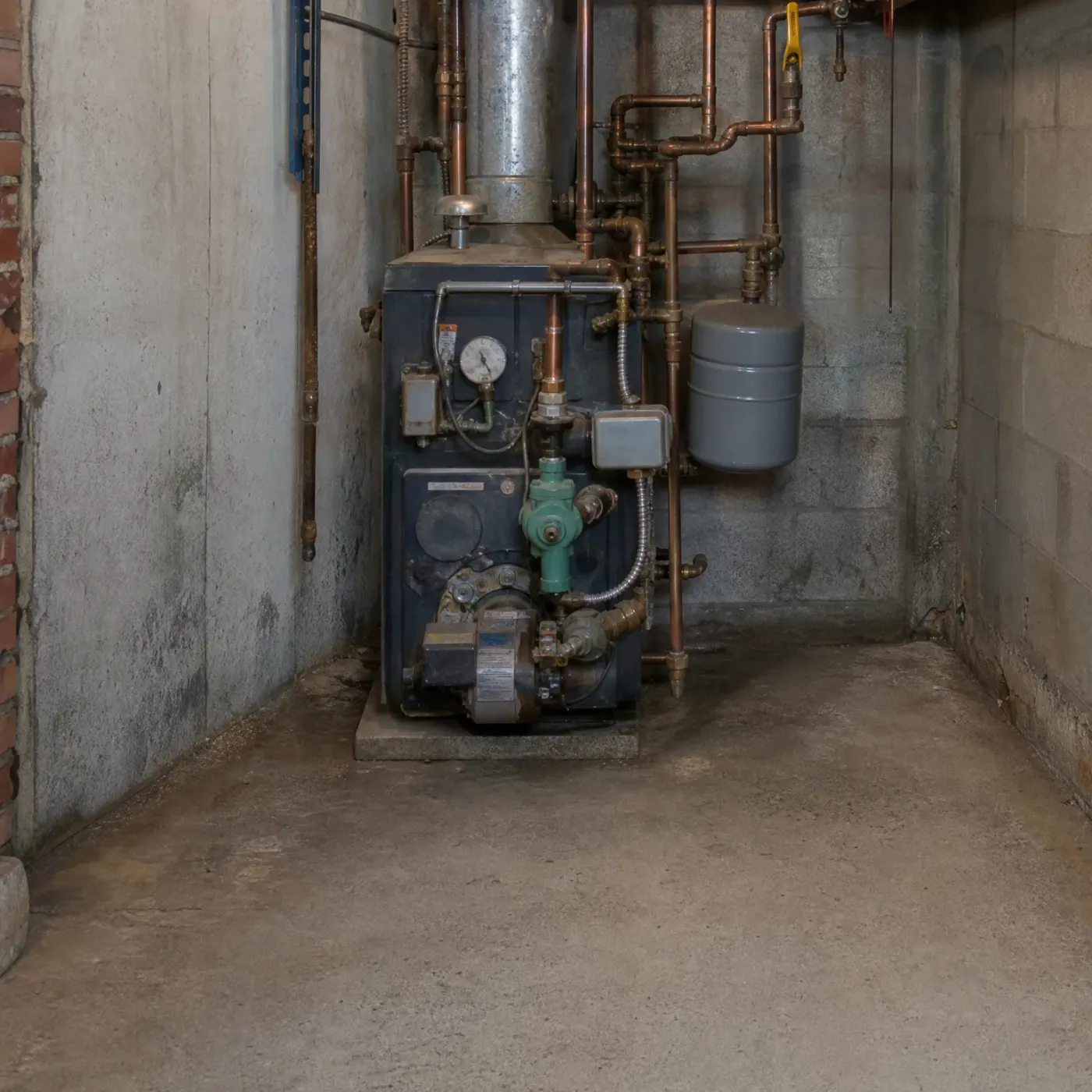
A dark cast-iron boiler with copper piping, pressure gauge, and a gray expansion tank sits on a concrete pad in a basement corner with concrete block and brick walls.
Before you get your boiler installation
A gray boiler on a concrete pad in a basement, connected to copper piping, valves, pumps and a gray expansion tank, with a concrete wall on the left and a brick wall on the right.
After you get your boiler installation
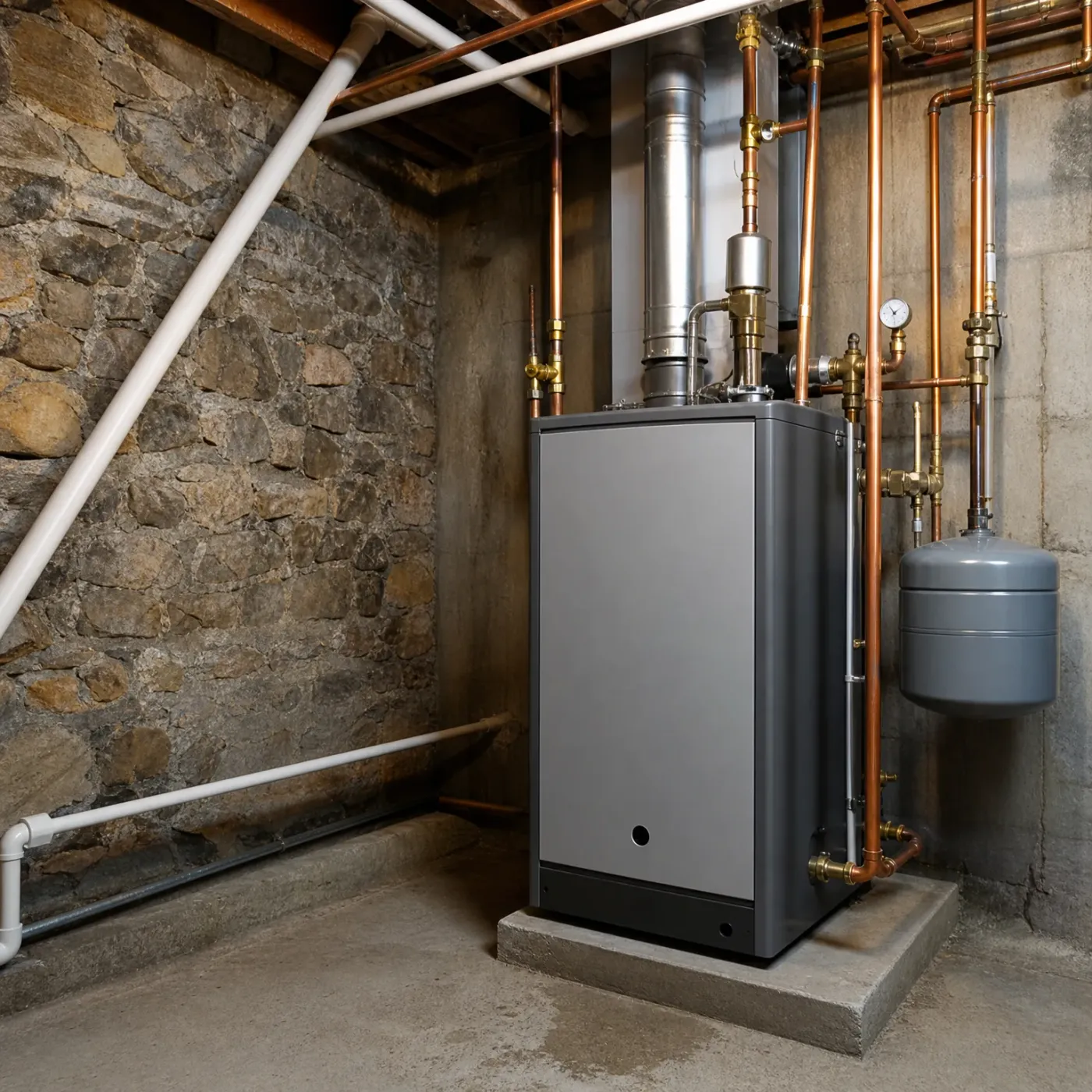
A gray floor-standing boiler on a concrete pad in a basement, connected to copper piping, a metal flue, a gauge, and a gray expansion tank, beside a stone wall and white insulated pipes.

A pro who works on boilers

Skip the round of in-home estimates for a new boiler.

A local installer who puts in boilers gets your project.

Answer a few questions

You're not committing to anything by asking.

Oversized vs. Undersized Boiler

Oversized

  • It heats the house fast, then shuts off, so burners fire in short bursts rather than long even ones.
  • Short-cycling wears the pump, the igniter and the relay faster than a boiler running normal cycles.
  • You pay for a bigger unit and a bigger install without getting more comfort for it.
  • Rooms near the thermostat satisfy quickly while rooms further off barely catch up before the next cycle ends.
  • Oil gets burned less efficiently in short bursts, which matters more here with most homes heating on oil.
  • A bigger boiler usually means bigger near term costs on an already expensive power market.

Undersized

  • It runs flat out on the coldest nights and still falls short of keeping the house at temperature.
  • Rooms farthest from the boiler lag behind, and that gap shows up most on the nights you need heat the most.
  • Running at full output constantly puts more wear on the boiler than normal cycling would.
  • The oil bill climbs because the boiler is working at its limit instead of modulating.
  • A boiler that can't keep pace in January is doing the one job it has to do, and missing it.
  • Replacing it sooner becomes likely if it's pushed past what it was built to handle.
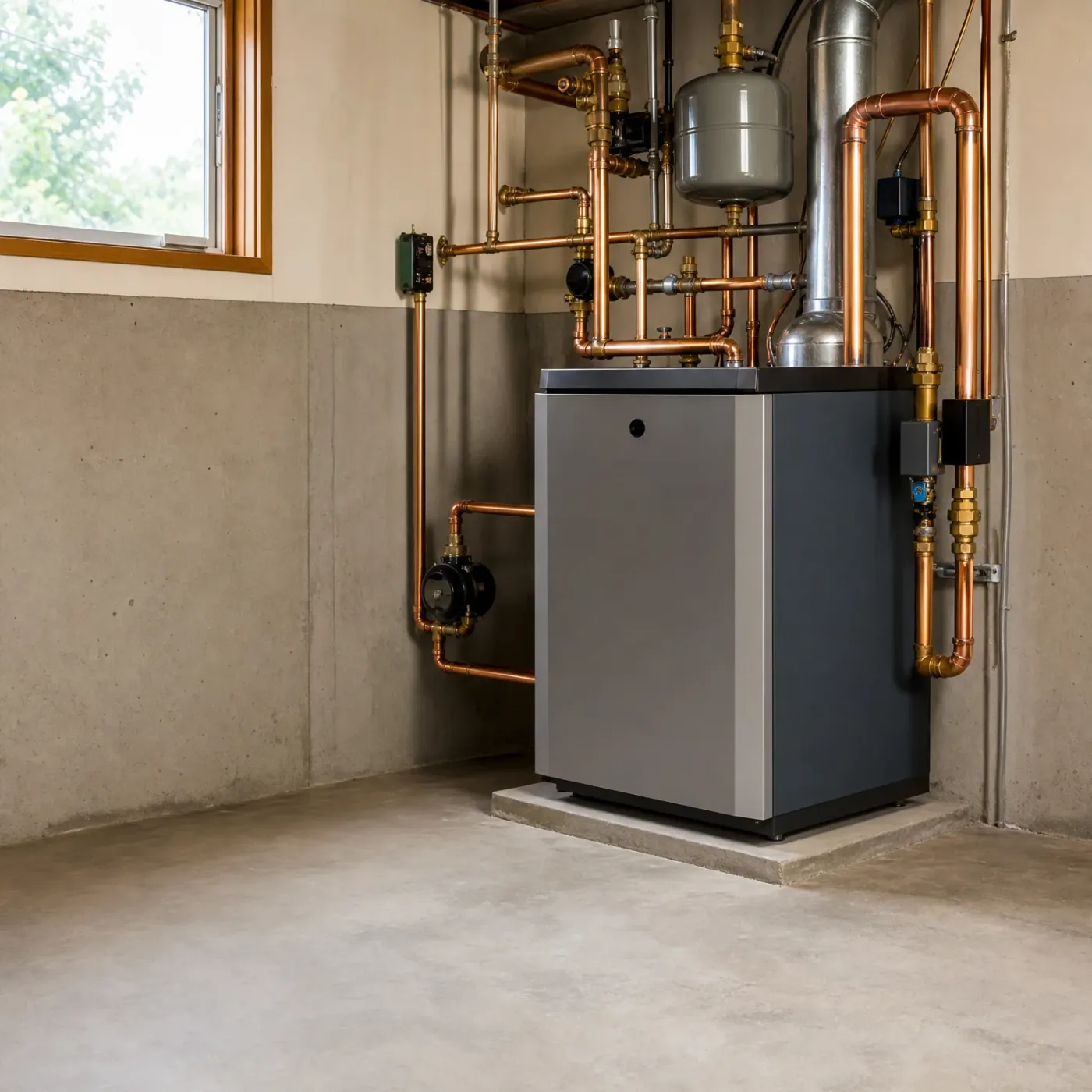
A gray floor-standing boiler on a concrete pad in a basement corner, connected to copper piping, brass valves, a circulator pump, an expansion tank, and a metal flue, with a window at upper left.

Sized right

This is what a correctly sized boiler looks like: steady, quiet, running long cycles through a cold night. The circulator pump and expansion tank behind it are only doing the work your house actually calls for, so the pipework stays under even pressure instead of getting pushed hard every few minutes.
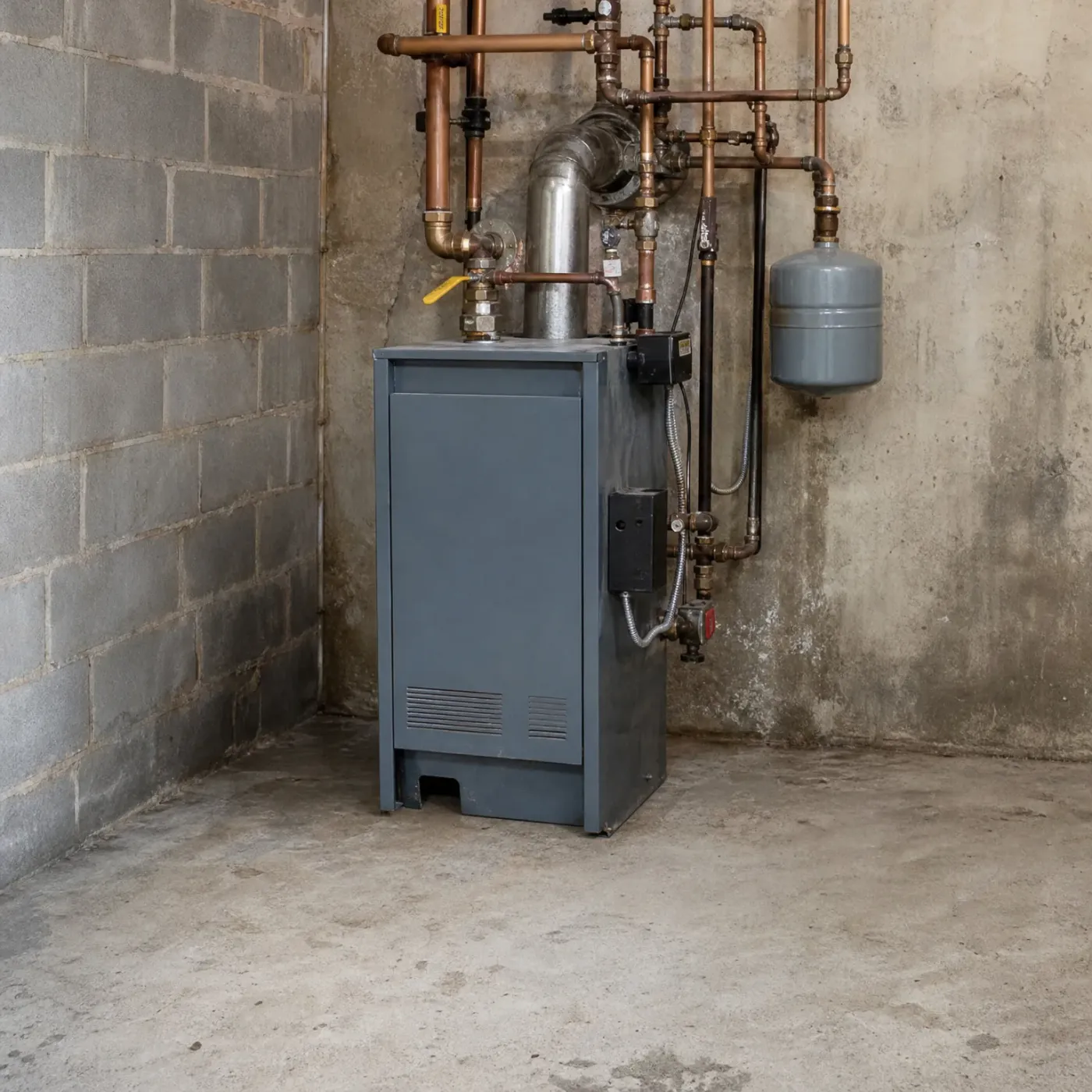
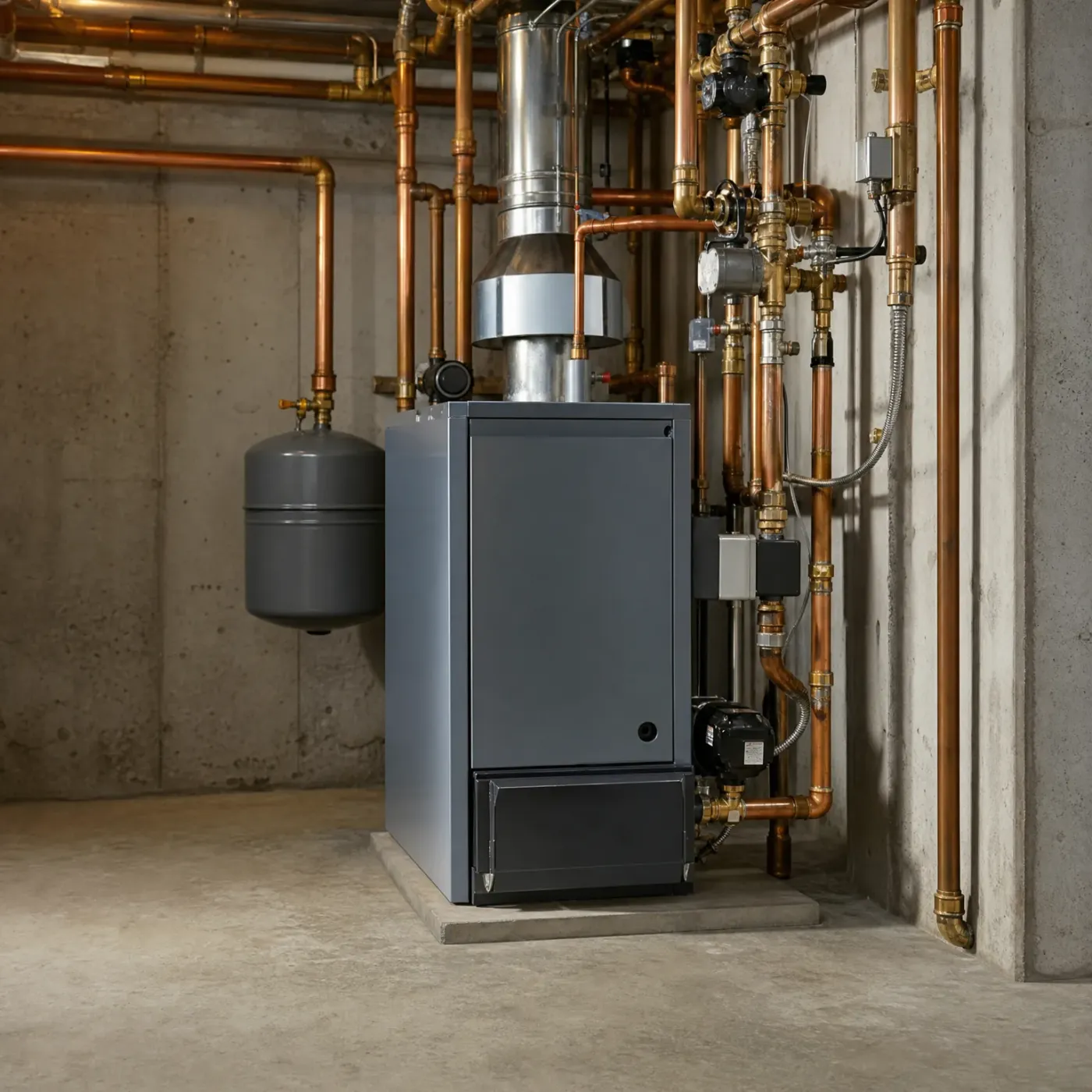
A gray floor-standing boiler in a basement corner with copper and black piping above it, a flue vent, and a gray expansion tank mounted on the concrete wall beside a concrete block wall.

Sized wrong

This is the same kind of room with a boiler that doesn't match the house. It might be undersized and straining on the coldest nights, or oversized and firing in short bursts. Either way the pump and piping take the wear, and that gray expansion tank on the wall feels it first.

Winter nights average 15°F statewide

That average includes the mild nights. On the cold snaps your boiler has to hold the house through single digits or worse, not just 15°F, and that's the load the sizing calculation has to cover.

NOAA nClimDiv 1991-2020 county normals weighted by homes

A gray boiler on a concrete pad in a basement, connected to copper piping, valves, circulator pumps, a metal flue, and a wall-mounted expansion tank.

Running clean

Copper lines, brass fittings and circulator pumps all tied into a boiler that's sized for the house behind it. The flue draws steady, the expansion tank holds its pressure, and nothing in that utility room is working harder than it has to.

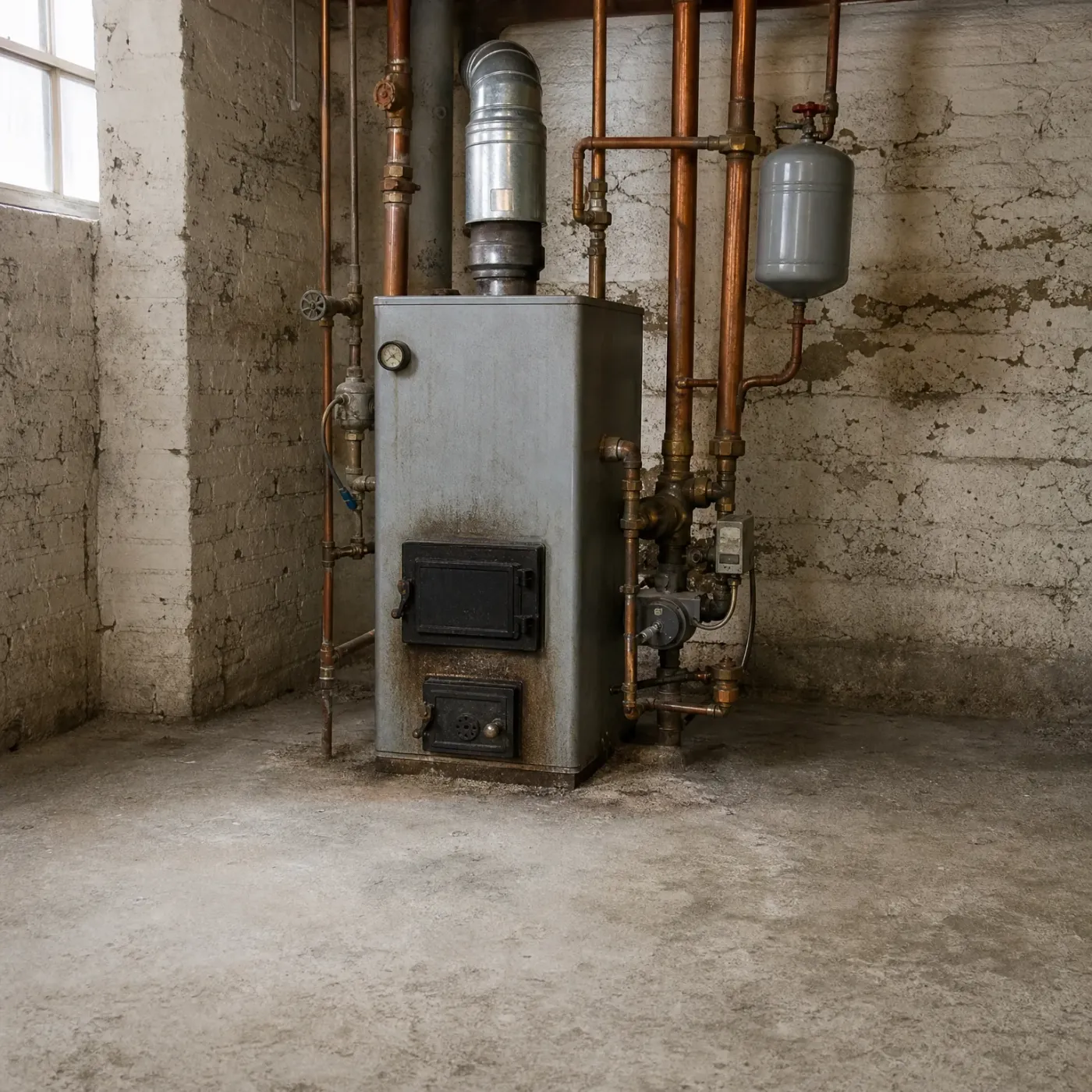
An old gray boiler with copper piping, a flue duct, pressure gauge and an expansion tank stands in the corner of a basement with painted masonry walls and a bare concrete floor.

Running old and wrong

Cast iron in the corner, still tied into the same valves and fittings it always had, just older and likely oversized for what the house needs now. That mismatch is what a heat loss calculation catches before a new boiler goes in.

How does the contractor figure out what size boiler I need?

You want to know what actually happens when a contractor comes out to size your boiler. Not the chart on the wall, but the real steps someone takes in your house before they write down a number. You've got oil heat to think about, and power in New Hampshire isn't cheap, so getting this right the first time matters more than guessing and hoping it works out.

A room by room heat loss calculation, not your square footage

A contractor measures every room: wall area, window size and type, ceiling height, how much insulation is behind the drywall. Each of those numbers gets weighed against the coldest temperatures your part of New Hampshire sees, since that's the load the boiler has to cover, not an average day. Add it all up and you get the heat loss for the whole house in BTUs, and that number is what the boiler gets sized to. A contractor who skips this and just matches your old boiler's rating, or sizes off square footage alone, is guessing. The walk-through takes time because it has to, room by room, before any number gets written down.

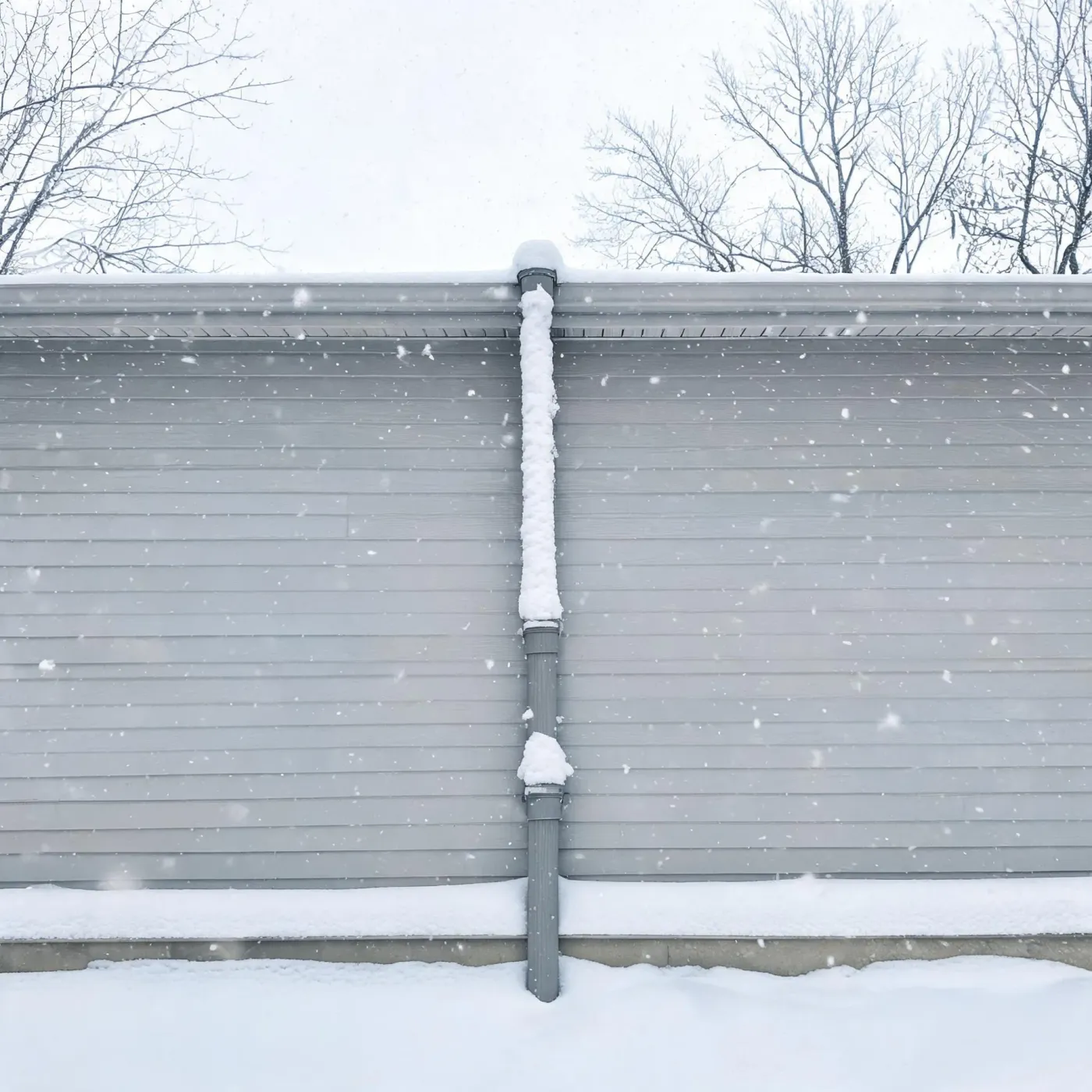
Gray horizontal lap siding on a house exterior with a snow-encrusted downspout running from the gutter to the ground, bare trees behind the roofline, and snow falling.

New Hampshire winter nights average 15°F across the state, according to NOAA. That's the baseline your boiler is sized against, not the coldest it'll see, but the number a correct heat loss calculation has to hold against for hours at a stretch. On a night like that, a properly sized boiler runs long and steady, not short bursts. You'd notice it less, not more: no cold room at the far end of the house, no clanking as the burner fires over and over trying to catch up. That steadiness is what oil bills and comfort both depend on through a New Hampshire winter.

NOAA nClimDiv 1991-2020 county normals weighted by homes

A woman stands in the open black front door of a white-sided house with a dark shingled roof while a man in a navy jacket approaches along the walkway, with lantern wall lights, a potted shrub, and flowering garden beds nearby.

The right size comes from your house, not a guess

A boiler sized for your house runs long, even cycles and holds every room through a cold New Hampshire night. One sized off the old unit or a square footage chart runs short, wears parts faster, and still leaves rooms uneven when it matters. The only way to know the number is a heat loss calculation done on your walls, windows and insulation, not someone else's.

Getting that calculation done right means finding a contractor who will actually walk your house room by room instead of quoting off the old boiler's tag. That's the part that takes the calling around and the comparing quotes. Once you're matched with a contractor who handles installs like yours, they reach out to you directly, and the rest of that work is off your plate.

A wooden table holding a stone vase with a bare branch, two stacked books and a small dark bowl, beside a window with green foliage outside and a sofa in the dim background.
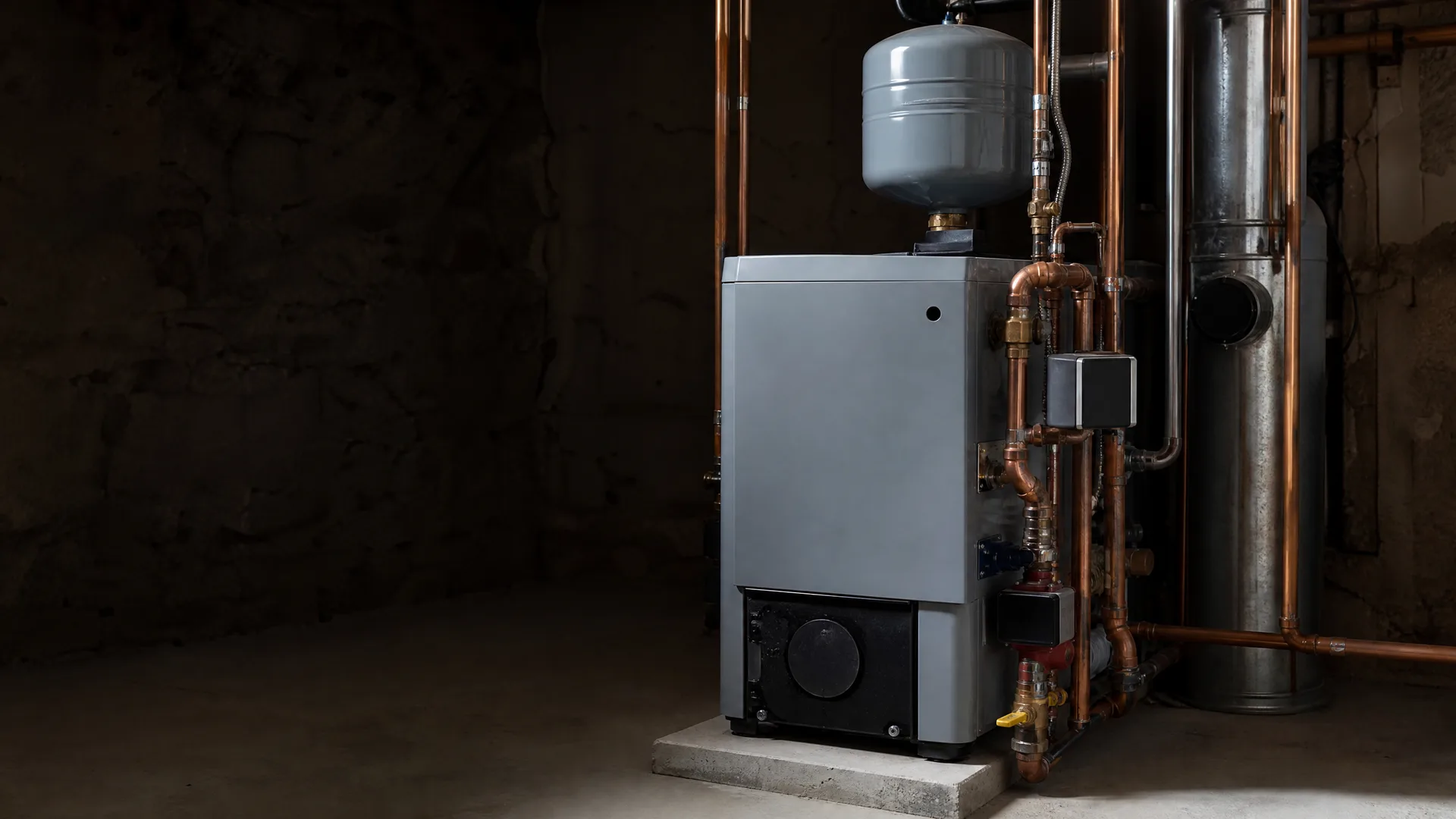
A gray residential boiler on a concrete pad in a dim basement, connected to copper piping, a gray expansion tank overhead, and a metal flue pipe along the wall.

Get your boiler to the right pro

Step 1 of 3: Equipment