 Find a pro near me
Why your boiler is kettling in New Hampshire
Tell a local repair pro what your boiler is doing.
That rumbling or popping sound coming from your boiler isn't normal, and it isn't going to fix itself. It's called kettling, and it means something inside the boiler is making the water boil locally before it can circulate, the same way a kettle on a stove sounds right before it screams.
Most boilers in New Hampshire run on oil, and they run hard from fall through spring. That kind of steady use is exactly when scale and sludge build up inside the heat exchanger, and that buildup is usually what's behind the noise. Once part of the exchanger is coated, heat can't move into the water evenly there. That spot gets hotter than the rest, and the water flashes to steam against the metal.
Left alone, kettling wears on the heat exchanger. And with electricity costs in New Hampshire among the highest in the country, a boiler working harder than it should to push heat through a partly blocked exchanger is not a small thing on your bill.
You don't need to figure out whether this is scale, a circulation problem, or something else before you do anything. That part isn't on you. What matters right now is getting someone who works on boilers for a living to look at yours, the specific unit, the specific noise, in your house.
Once you send the form, you're not the one tracking this down anymore. A contractor who covers your area and works on what you have gets matched to your situation and reaches out to you. You've already done the hard part, which is noticing the sound and taking it seriously instead of turning the thermostat down and hoping it quiets on its own.
The rest of this page walks through why kettling happens and what it means for a boiler like yours. But if you already know what you need, the next step is right below.
Kettling happens when limescale or sludge builds up on the heat exchanger inside your boiler. That layer traps heat against the metal, so the water right there flashes to steam while the water around it stays cool. The steam collapses back into water and that's the banging and rumbling you hear. It's not the boiler shaking itself apart, but it is a sign the heat exchanger isn't transferring heat the way it should. Left alone, that trapped heat stresses the exchanger itself, and a cracked one is a far bigger repair than cleaning out the buildup now. Most homes in New Hampshire heat with oil, and oil boilers build up this kind of scale and sludge over years of normal use, especially if the system hasn't been flushed in a while. Catching it now, while it's still just noise, is the cheap part of this problem.


A boiler pro near you
Send the request and finding a pro stops being your problem.
Describe your boiler job, and a local pro who handles it gets in touch.
You're not committing to anything by asking.




What's Really Happening Inside
- The boiling happens right at the heat exchanger surface, not throughout the water in the tank.
- Scale builds fastest in hard water areas, but sludge from rusting iron pipes causes the same trapping effect.
- Each cycle of local boiling and collapsing steam pits and stresses the metal a little more.
- A boiler that kettles is losing efficiency even on the days it sounds quiet.
- Left alone, the heat exchanger can crack, which turns a repair into a full replacement.
- The noise usually shows up first on cold starts, when the burner is working hardest to bring water up to temperature.
The heat exchanger is the part of your boiler that takes the burner's flame and passes that heat into the water. It only works if water keeps moving across its surface, carrying the heat away as fast as the burner makes it. Scale or sludge sitting on that surface stops the water from doing its job right where it matters most. The metal underneath gets hotter than the water around it, and the thin layer of water touching it boils before anything else does. That's the pop or rumble you're hearing. It's not the whole tank boiling, it's a small, violent event happening over and over against one surface, hundreds of times while the burner runs.
Oil-fired boilers push a lot of heat through that exchanger fast, especially on a cold start after the house has sat overnight. That's why the noise is often loudest first thing, before the system settles into a steady run. Every cycle of boiling and collapsing steam hits the metal with a small shock. One of those does nothing. Years of them pit the surface, thin it out, and eventually open a crack. A cracked exchanger isn't a repair anymore, it's a new boiler. And long before it cracks, that same trapped layer is making the burner work harder to deliver the same heat to your rooms, which shows up on the oil bill before it shows up as a bigger problem.
Winter nights average 15°F statewide
At 15 below to 15 above most winter nights, your boiler is firing long and often to keep up. A heat exchanger already coated with scale or sludge has to work harder through those hours, and that's when kettling gets loud enough to notice.
NOAA nClimDiv 1991-2020 county normals weighted by homes
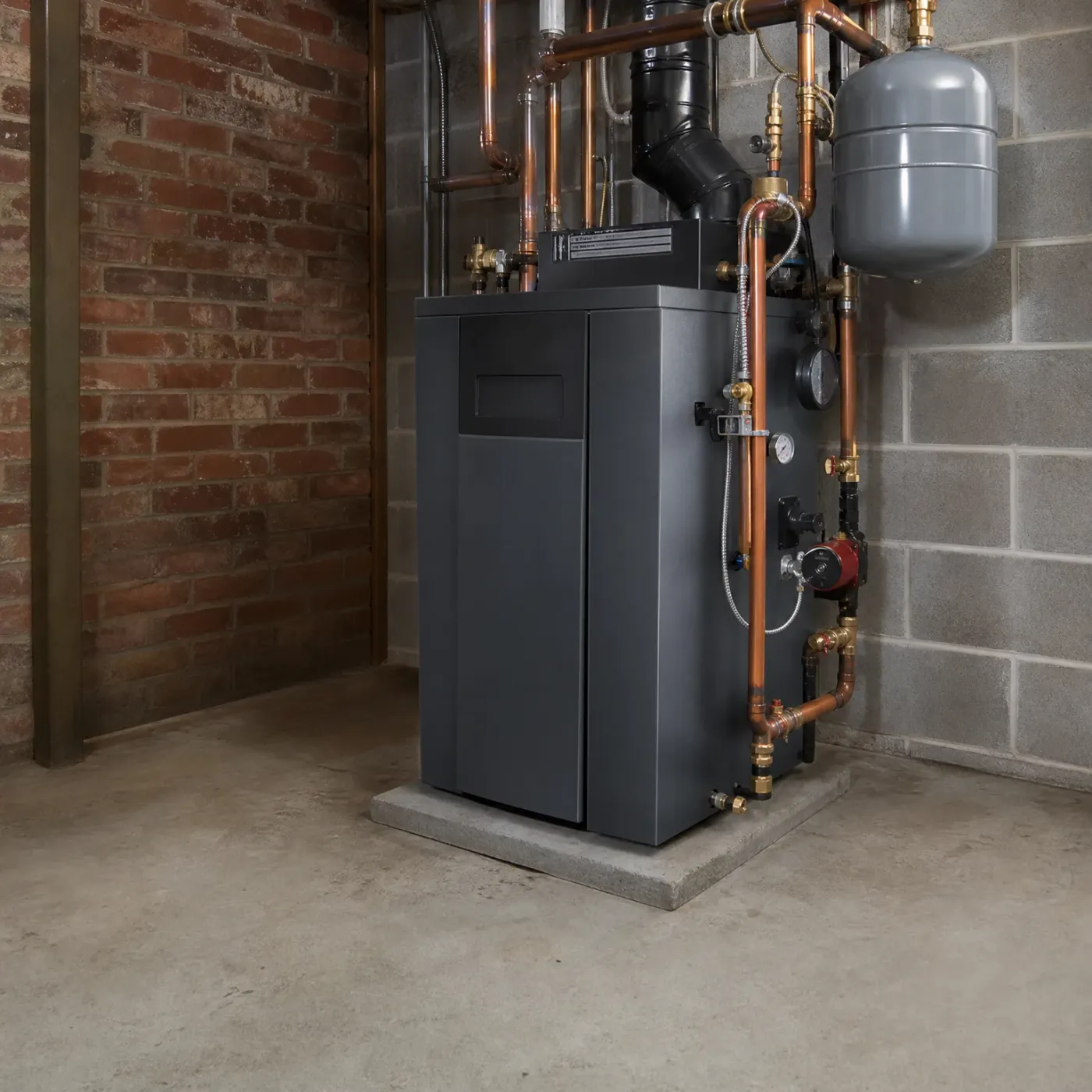

Scale or sludge coats part of the heat exchanger surface
Trapped water at that spot heats faster than the water around it
That pocket flashes to steam while nearby water stays liquid
Steam bubbles collapse back into water against the cold metal

Kettling is scale talking, not the boiler breaking down
The noise is the heat exchanger telling you it's coated with scale or sludge, and that layer only gets thicker while you wait. Oil heat in New Hampshire runs hard from the first frost to the last one, and every hour it fires, that coating traps a little more heat against the metal. Left alone, a boiler working that hard against a blocked surface wears sooner than it should, and with power costs what they are here, a less efficient heat exchanger shows up on the bill before it shows up anywhere else.
None of that means you have to figure out how bad the buildup is or what it will take to clear it. Send in what you're seeing and you'll be matched with a contractor who works on boilers like yours, and they'll reach out to you directly. From there, getting it looked at stops being something you have to chase down yourself.

A local pro for your boiler repair
After this form, you can stop searching for a boiler pro.