







Why your boiler is leaking water in New Hampshire

Step 1 of 3: Equipment

Why is my boiler leaking water?

A puddle under the boiler or water dripping from a pipe fitting is unsettling, especially with a New Hampshire winter ahead and oil heat already costing enough to run. You want to know whether this is a quick fix or something that means the boiler is on its way out, and whether it's safe to leave it alone until someone can look at it.

Usually a worn valve, a bad seal, or too much pressure in the system

Most leaks come from one of a few places. The pressure relief valve lets water out because the system is holding too much pressure, often from a faulty expansion tank. A circulator pump seal wears out and starts weeping at the pump housing. Pipe joints and valves corrode over years of heating and cooling and eventually give way. None of these mean the boiler itself is failing, but left alone, a slow leak drops the system's pressure and can cause it to shut down or run poorly right when you need heat most. With oil heat and high power costs here, a boiler that's cycling wrong or losing water costs you more every week it runs that way.

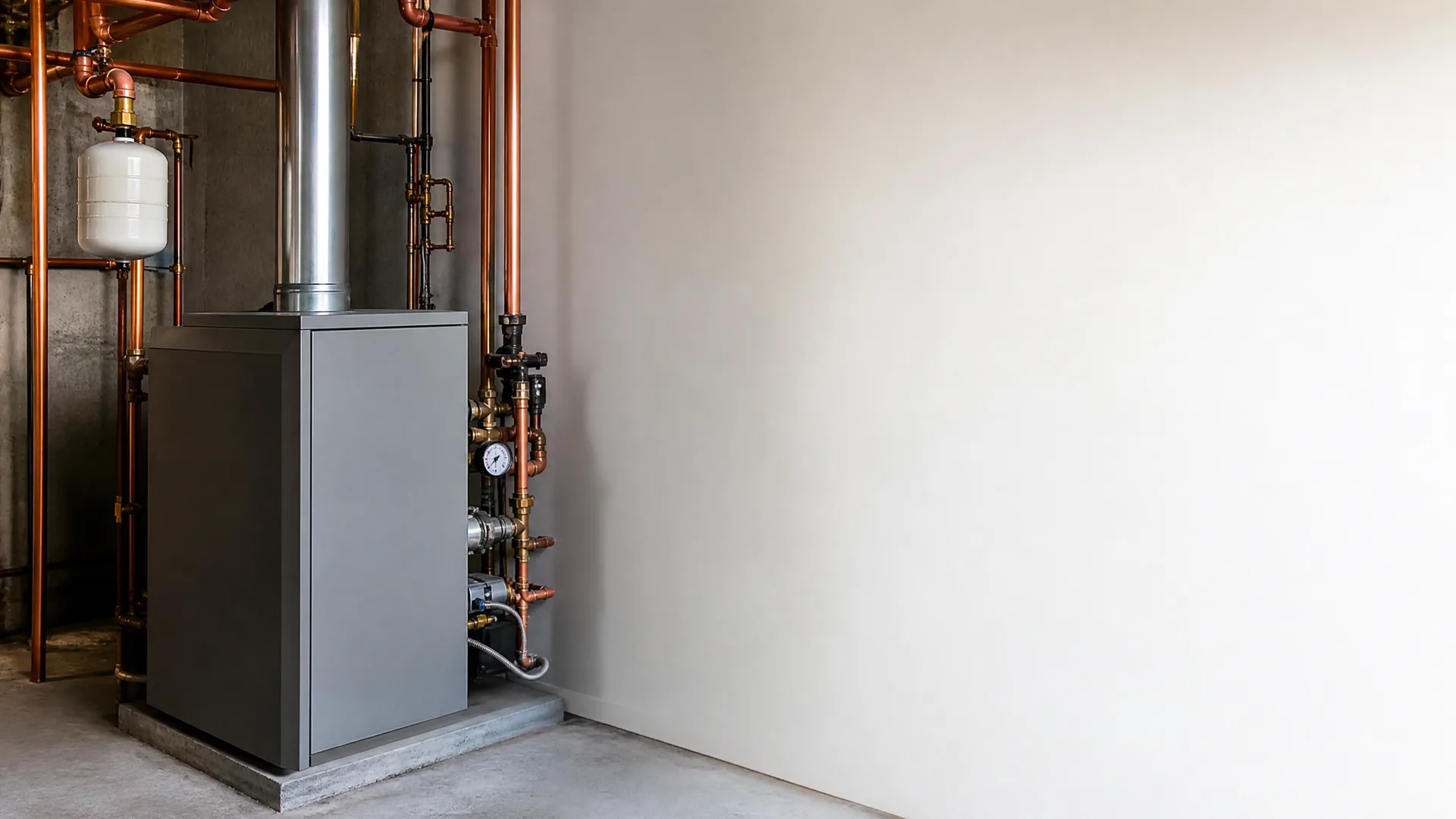
A grey floor-standing boiler with a metal flue and copper pipework, valves and a pressure gauge stands in the corner of a room with plain light walls and a concrete floor.

Where the leak usually starts

A boiler leak most often traces back to the pressure relief valve, the circulator pump seal, or a cracked section in the cast iron. The relief valve lets water out when pressure climbs too high, which can mean a faulty valve or a bigger problem feeding it. The circulator pump has a seal that wears out over years of spinning against hot water, and once it goes, water seeps out around the shaft. A cracked section is the one that usually means replacement, not repair.

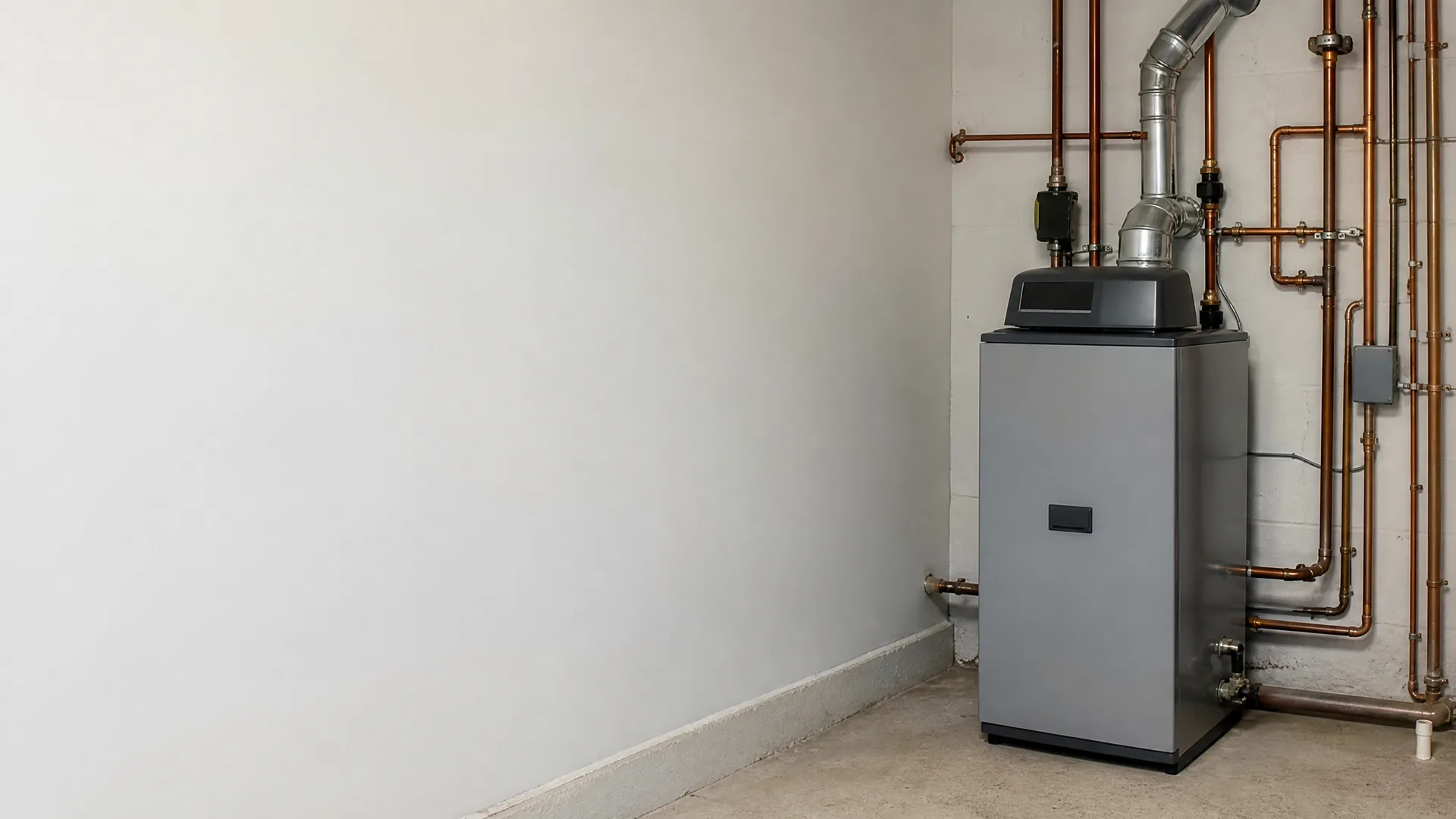
A gray floor-standing boiler with a metal flue pipe stands in the corner of a plain painted basement room, connected to copper pipes running along the wall.

Why pressure builds in the first place

Boilers run at a set pressure, usually somewhere around 12 to 15 psi when hot. If the expansion tank loses its air charge, or the feed valve lets in too much water, pressure climbs past what the relief valve is rated for, and it opens to protect the system. That's not the valve failing, that's the valve doing its job. Finding out why pressure got too high in the first place is what keeps the same leak from showing up again next heating season.

Fix It Now or Keep Watching

Call Today

  • A relief valve that's stuck open or a circulator seal that's failed will keep leaking and keep dropping your system pressure until the boiler can't hold heat.
  • A cracked cast iron section doesn't seal itself, and running the boiler on low water can warp the heat exchanger.
  • With a New Hampshire winter ahead, a boiler that loses pressure overnight can leave you without heat on the coldest morning.
  • Oil heat already costs enough to run without a leak forcing the system to work harder to reach temperature.
  • A local contractor who services boilers all season knows which of these parts tends to go first and can often diagnose the leak from where the water collects.
  • Leaving a leak alone risks water reaching the wiring or the burner assembly, which turns a valve repair into a bigger job.

Wait and Watch

  • A damp spot that hasn't grown in a few days might be condensation from a recent refill rather than an active leak.
  • If the boiler is holding pressure steady on the gauge, the leak may be minor enough to monitor through the week.
  • A slow weep at a pipe fitting sometimes stops on its own once the system settles after being drained or bled.
  • Warm, humid New Hampshire summers aren't putting much demand on the boiler, so a small leak noticed now carries less urgency than one found in January.
  • Watching the pressure gauge daily will tell you whether the leak is getting worse or staying put.
  • Waiting only makes sense if the leak is small and isolated, since cast iron sections don't improve on their own.
  1. Boiler pressure climbs past the relief valve's set point.

  2. The relief valve opens and lets water escape to drop pressure.

  3. Water tracks down the valve's discharge pipe onto the floor.

  4. A worn circulator seal lets water seep out around the pump shaft.

A man with grey hair and stubble in a dark sweater sits on a grey sofa indoors, looking off to the side, with a potted plant and a sunlit window behind him.
A man with gray hair, a beard and glasses, wearing a dark green sweater, sits on a gray sofa in a sunlit living room with a potted plant, table lamp and wooden sideboard behind him.
A middle-aged man with graying hair and a short beard sits on a blue sofa in a living room, looking toward a window, with a bookshelf, lamp and framed picture in the background.
A man with graying curly hair and a dark green sweater sits on a gray sofa in a sunlit living room, looking off to the side, with a framed picture, shelving, an armchair and a window with sheer curtains behind him.

One request and it's handed off

Your request goes to one pro, not a list of companies.

Sending the form costs nothing.

What the leak costs you day to day

A boiler losing water doesn't stay still. Every gallon that drips out has to be replaced by the autofeeder, and that fresh water carries oxygen and minerals that work on cast iron and steel from the inside. You'll likely see the pressure gauge creeping, or the boiler short cycling as it struggles to hold steady heat. With oil prices what they are in New Hampshire, a boiler that's working harder to make up for lost water and lost pressure is burning more oil to do the same job. Left alone through a full winter, that's real money going into a puddle on the floor instead of heat in your rooms.

What happens if you wait

A small drip rarely stays small. The relief valve or circulator seal that's weeping now can fail outright in the middle of a cold snap, and a cracked section only widens over time. If the water finds its way near the burner, wiring, or the flue connection, that's a safety problem, not just a maintenance one. Letting the boiler run low on water risks damage to the heat exchanger that a tightened fitting or new seal won't fix later. The sooner a licensed tech sees it, the more likely this is a part swap instead of a boiler replacement before the cold really sets in.

A woman with shoulder-length brown hair wearing a beige knit cardigan sits in a gray upholstered armchair near a window, looking off to the side with a slight smile, with bookshelves blurred in the background.
A woman and a sleeping child wrapped together in a cream knitted blanket on a couch, with a potted plant, framed photo and lit lamp in the background.
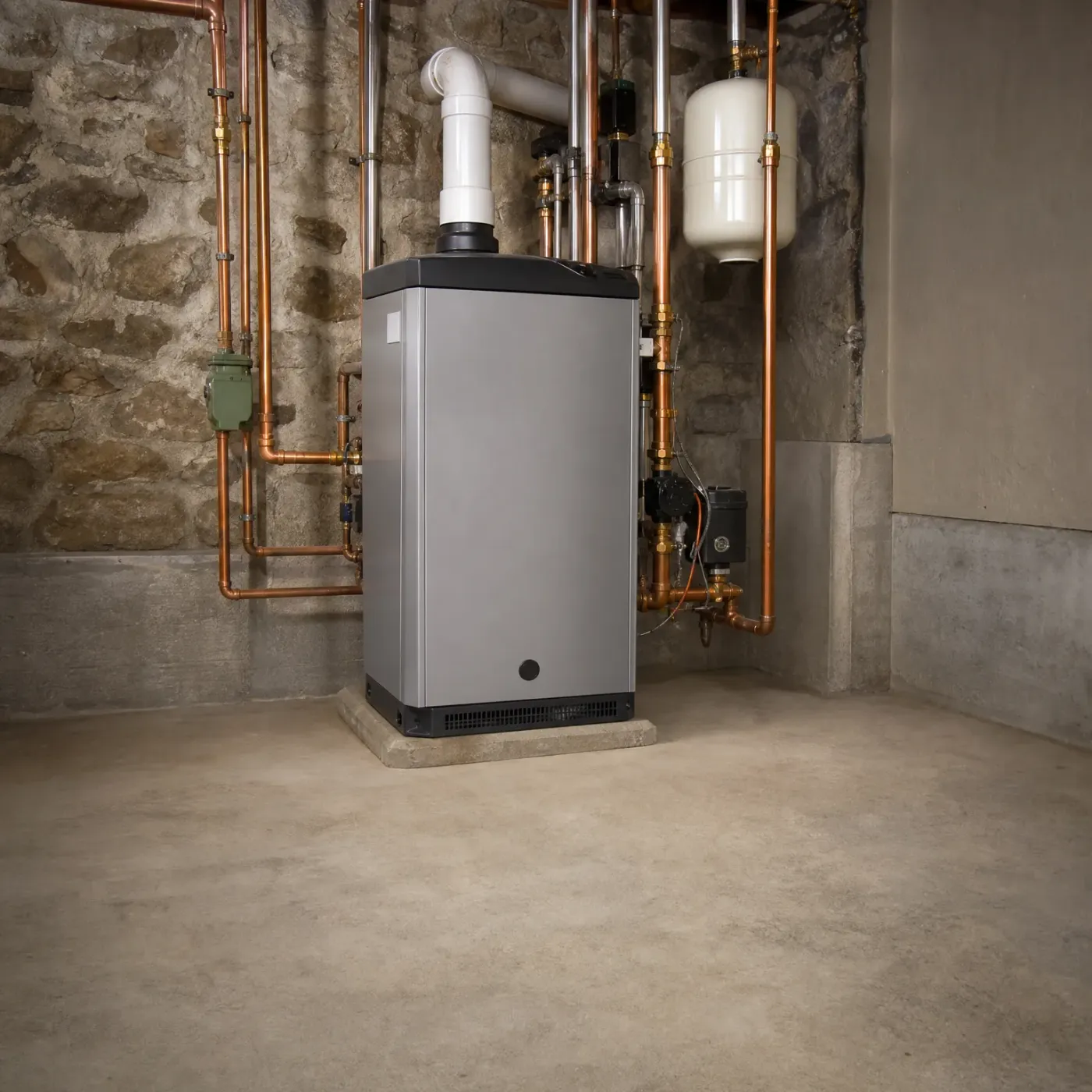
A gray floor-standing boiler on a concrete pad in a basement, connected to copper pipes, a white expansion tank, and a white PVC vent against a stone and concrete wall.

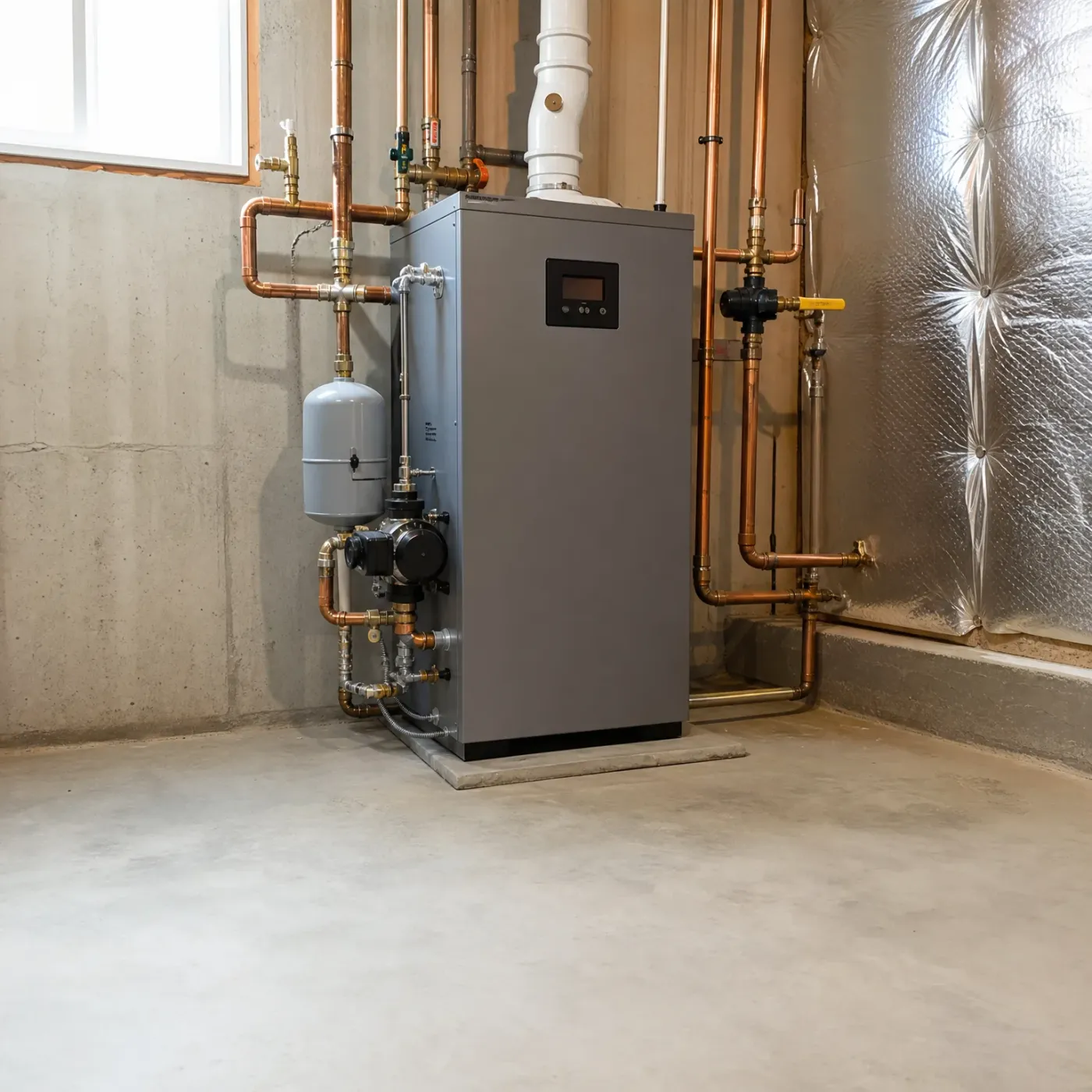
A boiler holding pressure

Copper pipes and brass fittings run clean and dry from the unit, the expansion tank, and the circulator pump. No water on the pad, no stains on the stone floor underneath. The relief valve stays shut because pressure never climbs past its set point.
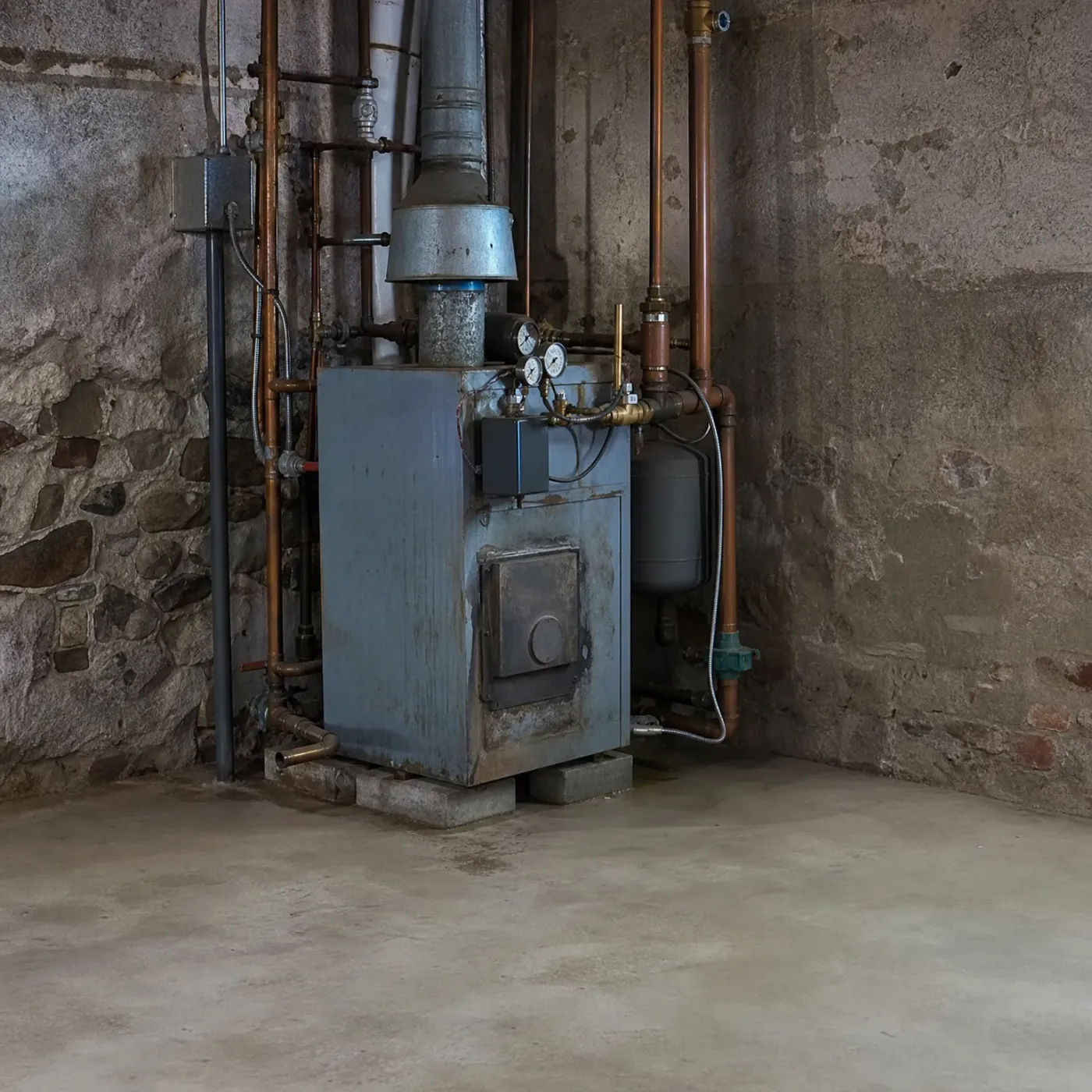
An older gray boiler with a metal flue, copper piping, pressure gauges and an expansion tank sits on concrete blocks in a basement corner with stone and concrete walls.

A boiler losing water

An old cast iron boiler like this one has had decades to develop a crack in a section, and once that starts it doesn't stop on its own. Gauges and valves can hide a slow seep until the pad underneath is wet and pressure won't hold.

What are you seeing near your boiler right now

You might find a damp ring on the floor by the boiler, or water beading along a pipe joint and dripping onto the basement slab. Sometimes it's rust colored, left behind after the water dries and leaves mineral stains on concrete or stone. You may hear a hiss near the relief valve, or notice the autofeeder running more than it used to, topping off pressure that keeps dropping. If the boiler sits near wood framing or stored belongings, standing water can soak into what it touches. Left alone, a slow leak wears at the cast iron section from the inside, and a section that cracks open isn't something a seal or a valve swap fixes.

A gray boiler unit with a digital display stands on a concrete basement floor, connected to copper piping, a gas valve, a circulator pump and an expansion tank, beside a concrete wall and foil-faced insulation.
A sealed system like this holds its pressure for years, with every joint and fitting bone dry.
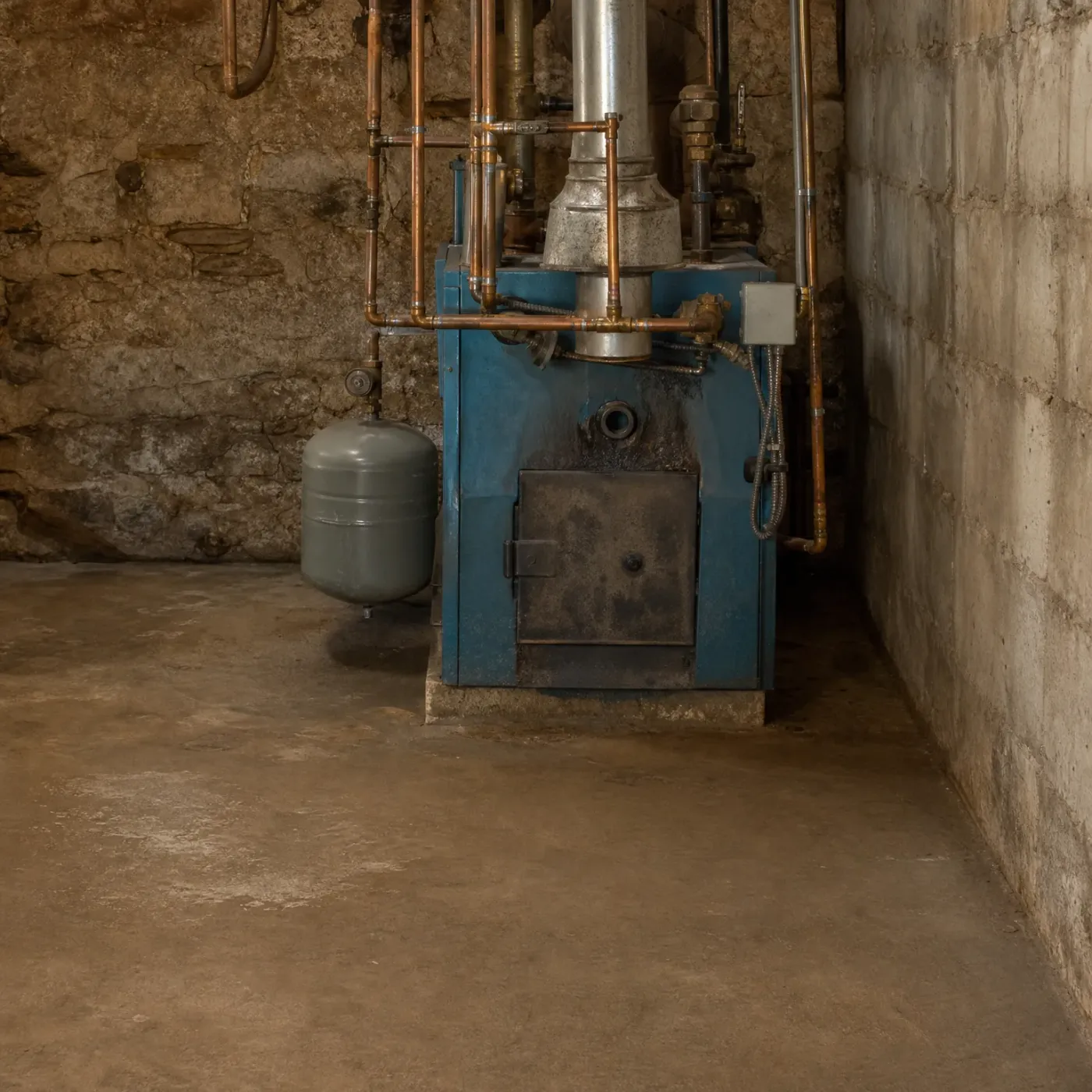
A blue cast-iron boiler with a metal flue pipe and copper piping stands against a stone and concrete block basement wall beside a gray expansion tank on a bare concrete floor.
Corrosion like this around the access door usually means the leak has been going on longer than anyone noticed.

Winter nights average 15°F statewide

Nights here average 15°F in December, January and February, and your boiler runs long hours to keep up through those nights. A leak that only drips at 40 degrees won't stay small once temperatures drop that far, and a boiler running low on water loses its grip on heat exactly when you need it most.

NOAA nClimDiv 1991-2020 county normals weighted by homes

A boiler leak comes down to one of a few things: the relief valve, the circulator seal, or a crack in the cast iron, and each one tells you something different about what happens next. What matters now is getting someone to look at it before those December and January nights push the system harder than it can handle on low water. A licensed heating contractor working in New Hampshire sees this leak every winter, on this same style of cast iron boiler, and knows which of those three it usually turns out to be before the panel even comes off. Once you send the request, it goes to one contractor, not a handful of companies competing for the job, so you're not fielding calls all afternoon trying to sort out who to trust. You get someone local who already knows oil heat systems and what tends to fail on them here, and from there it's off your plate.

Kitchen corner with cream upper cabinets, oak lower cabinets, white marble-look countertop, beige tile backsplash, a ceramic vase of greenery, a wooden cutting board and bowl, and a black-framed window at right.
Interior corner of a room with a white-framed window and wide sill, beige walls with panel molding, a wooden cabinet holding a ceramic vase with a green leafy plant, and blurred shrubs and trees outside.
A wood-framed armchair with beige cushions and a woven lumbar pillow sits in a corner beside a large window overlooking green trees, with a tall ceramic vase holding leafy branches on the left and plaster walls and wood flooring.
Interior corner with a white-framed window above a sill, beige walls with baseboard molding, a greige shaker-style cabinet with brass knobs and a potted plant on top, light wood flooring and a woven jute rug.
A dark-framed six-pane window with white trim and sill set in gray horizontal lap siding, with hydrangea shrubs below and a white column and shingled roof section at left.

Done looking for a boiler pro

The pro who reaches out is licensed in New Hampshire.

Find a local pro

You're not committing to anything by asking.