

Under 12 psi
A slow drop like this usually points to a pinhole leak somewhere in the system or a relief valve that's letting go under normal pressure. Both need a look before the next cold snap.
Tell a local repair pro what your boiler is doing.
Get a boiler proYou keep topping off the pressure gauge and it drops again a few days later. With oil heat running long hours through a New Hampshire winter, a boiler that won't hold pressure means the system is working harder than it should, and that costs you on a fuel bill that's already steep.
Most of the time pressure drops because water is getting out, through a loose fitting, a failing valve, or the pressure relief valve venting off when it shouldn't. A pinhole leak in a pipe can lose enough water over a week to drop the gauge without ever leaving a visible puddle. The expansion tank matters too. If it's waterlogged, the system can't absorb normal pressure changes as the water heats, and it ends up venting through the relief valve to compensate. None of these fix themselves, and running the boiler low on water risks damage to the heat exchanger, which gets expensive fast once a New Hampshire winter is underway and the boiler can't afford downtime.
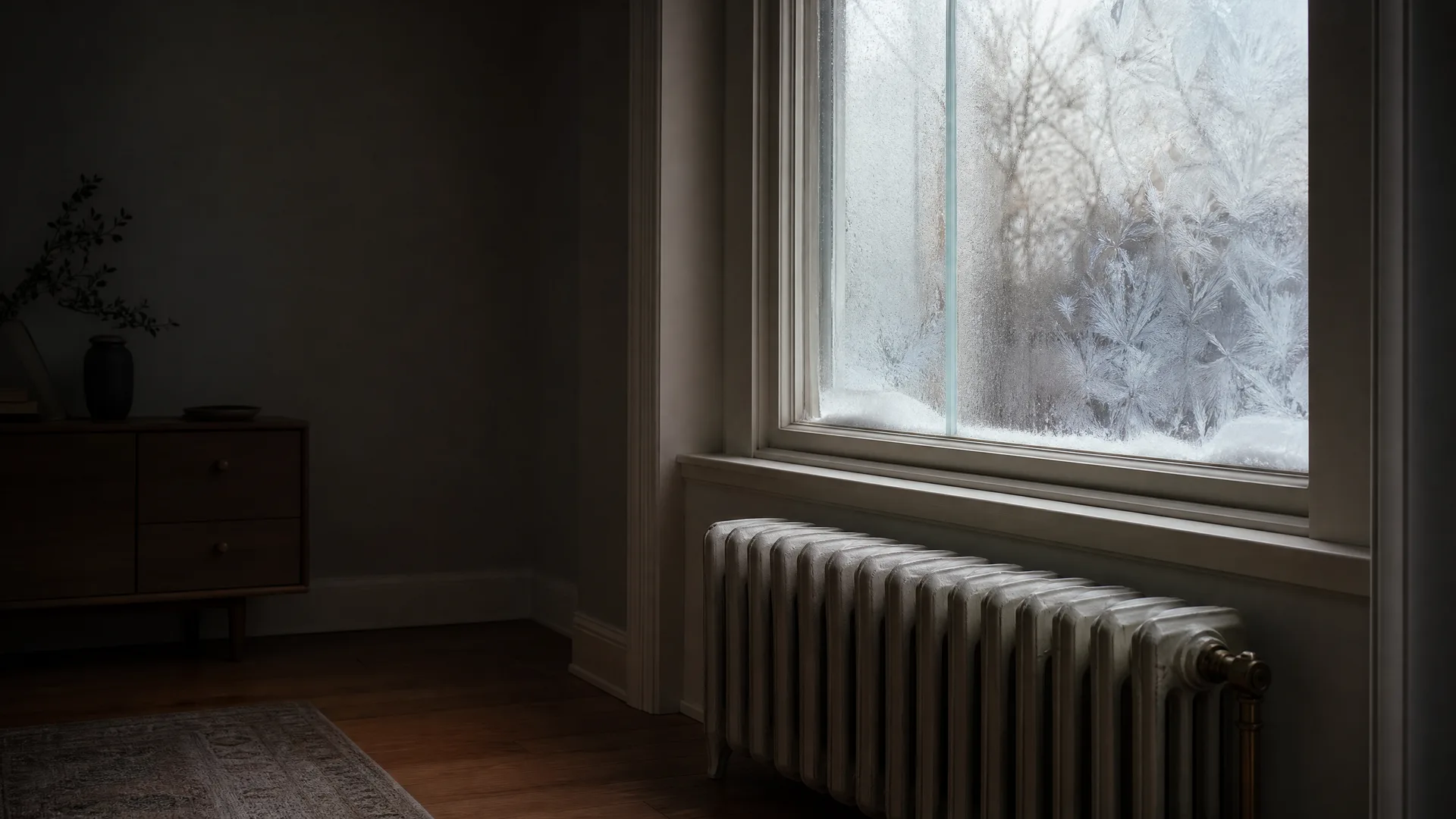
You come downstairs before the sun is up and the living room is cold enough to see your breath. The radiator under the window ticks as it tries to heat up, but the top half stays cold to the touch. Ice has formed on the inside of the glass, a thin white film in the corner of the pane. You check the gauge on the boiler and it's sitting below the line again, lower than when you filled it three days ago. The oil burner kicks on in the basement, running longer than it should to push heat through a system that keeps losing water somewhere you can't see.
You check the gauge and it reads low, maybe under 12 psi, when it should sit closer to 15. Some days there's a puddle near the boiler base or a damp patch on the floor you can't explain. You might hear a gurgle in the pipes or notice the pressure relief valve has a few drips under it. Radiators that used to heat evenly now run cold at the top while the bottom stays warm, a sign air or low water is getting into the system. None of this fixes itself. A boiler running low on pressure during a long New Hampshire winter can shut itself off to protect the heat exchanger, and you find that out at the worst time, on a night when the oil burner needs to run for hours straight.




A boiler that keeps losing pressure doesn't fix itself, and running it low through a New Hampshire winter puts strain on parts that are expensive to replace once they fail outright. With oil prices and electric rates what they are here, a system fighting a slow leak or a failing valve is already costing you more than it should every time it runs. Pinning down whether it's a pinhole leak in a pipe, a bad relief valve, or air trapped in the lines takes someone who can look at the actual system, not a guess from a gauge reading. Submit your information once and it goes to a single contractor suited to this kind of repair, not out to a handful of companies fishing for the job. From there, it's off your plate. You don't have to keep tracking the gauge, topping it off, and wondering if tonight is the night it drops too low to keep the heat running.
A boiler that's losing water somewhere in the system has to keep refilling, and every refill brings in oxygen that wasn't there before.
That oxygen goes to work on the cast iron sections and steel fittings inside, and it doesn't stop until the leak does.


A slow drop like this usually points to a pinhole leak somewhere in the system or a relief valve that's letting go under normal pressure. Both need a look before the next cold snap.
This points to a bigger leak or a failed component, not a slow weep. With oil heat carrying your home through a New Hampshire winter, this is the one that can't wait.
At 15°F, the water in your boiler's loop is working against a real gap between inside and out. A system already losing pressure has less water to carry that heat, so it strains more on the coldest nights, right when your radiators need to be at their best.
NOAA nClimDiv 1991-2020 county normals weighted by homes
A boiler that keeps losing pressure is telling you something is wrong, whether that turns out to be a pinhole leak, a bad relief valve, or a failing expansion tank. The gauge doesn't lie, and ignoring it just means more oxygen pulled into the system and more strain on the cast iron with every refill. You don't have to figure out which one it is before you call. Once you send the form, you're done hunting for someone to look at it, and the search for a contractor is off your plate. A cold January morning with a radiator that won't heat past the halfway mark is not something to live with until spring. The gauge sitting low is the system asking for a look before the next hard freeze finds the weak spot on its own. Getting it checked now, while you can still choose when, beats waiting for the night it quits.

The right pro for this job



