




Profile view of a bearded man wearing a black baseball cap and a dark gray T-shirt against a plain light background.

Why your boiler won't turn on in a New Hampshire winter

Step 1 of 3: Equipment

A boiler that won't fire on a cold New Hampshire morning is usually stuck on a safety switch, not actually broken. Most oil boilers here won't start if the burner loses ignition, if the oil nozzle is clogged or sooted, or if the low water cutoff thinks the tank is dry. A full oil tank doesn't rule out a bad fuel line or a failed igniter. The reset button on the burner will get it running again once or twice, but if it keeps tripping, something is actually wrong and pressing reset just delays dealing with it. Some boilers also shut down from a closed water valve or a thermostat that's lost power, both easy to check before assuming the worst. Whatever the cause, a boiler that won't start on a night below freezing isn't something to let sit until morning.

A dark gray floor-standing boiler in a concrete-walled basement, connected to copper piping, circulator pumps, a gray expansion tank, and a cream-colored storage tank to the left.
Pumps are moving water and the burner fires on its own schedule, no clicking or short cycling.
A gray residential boiler with a metal flue pipe stands in a concrete-block basement corner, surrounded by copper piping, valves and a gray expansion tank.
The reset button has been pushed twice and it still won't catch, so a contractor needs to see it before pipes get cold enough to worry about.
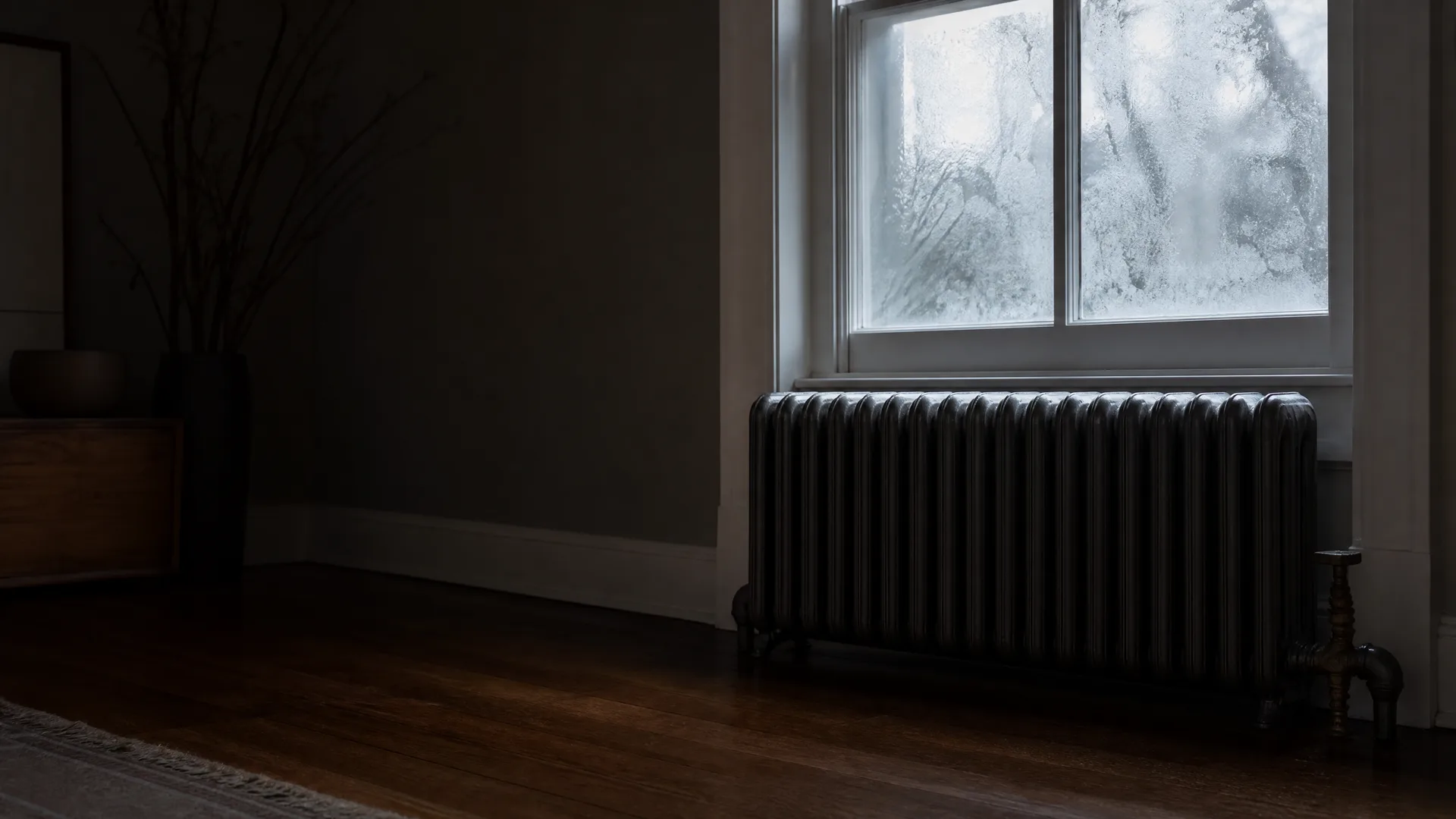
A cast-iron column radiator stands beneath a frosted window in a dim room with dark walls, a wood floor, and a vase of bare branches on a low cabinet at left.

You wake up before the thermostat does anything about it. The living room is colder than the hallway, and the window over the radiator has gone white at the edges, ice on the inside of the glass. You put a hand on the radiator anyway, out of habit, and it tells you nothing you didn't already know. Outside it's still dark, the kind of January morning where the car won't be much warmer than the house. You go down to the boiler before you make coffee, because last week it skipped a beat and caught itself, and this time the light isn't even on.

Try It Yourself or Call for Help

Try first

  • Check the reset button on the burner once, not repeatedly, since pushing it more than twice can flood the chamber with oil.
  • Look at the oil tank gauge, since a boiler that lost prime from an empty tank won't fire until someone bleeds the line.
  • Check the thermostat batteries and the setting itself, since a dead thermostat can leave a working boiler sitting idle.
  • Look at the water pressure gauge on the boiler, since a reading near zero will stop most units from running at all.
  • Check the emergency switch at the top of the basement stairs or near the boiler, since it's easy to bump off by accident.

Call a contractor

  • The reset button has been pushed twice and the burner still won't catch, which usually means a clogged nozzle or an ignition problem a homeowner can't reach.
  • The boiler makes a repeated clicking or humming sound without ever lighting, which points to an igniter or oil supply issue inside the burner.
  • There's oil smell in the house or soot around the burner door, which means the nozzle or combustion chamber needs a professional look.
  • The low water cutoff keeps tripping even after the pressure gauge reads normal, which can mean a faulty sensor or a leak somewhere in the system.
  • Pipes or radiators have already gone cold for more than a few hours, since New Hampshire winters don't leave much room to wait on a guess.
A smiling man in a gray long-sleeved shirt stands in a kitchen looking to the side, with open shelves of dishes, a white mug on the counter, a potted plant, and a view through a doorway into a living room.
A smiling bearded man in a green sweater sits at a white marble kitchen island with a mug, potted plant and bowl of fruit, in a bright white interior with open shelving and an arched doorway.
A smiling man with dark curly hair and a beard, wearing a dark green knit sweater, stands at a white marble kitchen counter with a dark blue mug, with open shelving, pendant lights and a houseplant behind him.
A smiling man in a green ribbed sweater stands behind a wooden table holding a ceramic mug of coffee in a kitchen with white subway tile, shelves of potted plants, and a bowl of fruit.

What's actually happening right now in your house

The thermostat is calling for heat and nothing answers. No hum from the burner, no clicking, no smell of oil firing. Radiators that should be warm to the touch are cold, or only the one closest to the boiler has any heat in it. If you go down and look at the boiler itself, the reset button may already be tripped, or you'll hear it try and fail, a brief rumble that cuts out. Left alone overnight in weather like this, pipes on outside walls or in a basement that isn't fully heated are what's at risk, especially if the house is going to sit empty for even a day while you sort this out.

A gray boiler with a metal flue pipe stands in a basement against concrete and concrete-block walls, connected to copper piping, a circulator pump, and two gray expansion tanks.

Running the way it should

Copper lines run tight to the circulator pump, pressure holding steady on the gauge. The burner fires on the thermostat's call and shuts off clean, no cycling, no delay. Both expansion tanks are doing their job quietly. Nothing here needs a second look until the next scheduled check.


A gray boiler on a concrete pad in a basement with painted concrete block walls, copper piping, a metal flue, and electrical control boxes.

Stuck and not firing

The flue and supply lines are still connected, but the burner inside that control box isn't answering the thermostat. On an older unit like this, a sooted nozzle or a tripped safety switch is often why nothing lights. It sits on a concrete pad for a reason, and it needs a contractor's hands before the house loses more heat.

Why does my boiler only click but never fire up?

That clicking is the igniter trying to spark, over and over, with nothing to light. You hear it, you wait for the whoosh of the burner catching, and it never comes. The reset button hasn't been pushed yet and the boiler isn't dead quiet, so it's easy to think it's about to start. Usually it isn't going to on its own.

The igniter is sparking but the oil isn't reaching it, or isn't lighting when it does

A clicking boiler with no fire usually means the electrode is working and the fuel side isn't. A clogged or sooted nozzle will stop oil from spraying right, so the spark has nothing to catch. An oil tank that's run low or lost prime does the same thing: the pump has nothing to send. Sometimes it's the electrodes themselves, sitting too far from the nozzle or coated in soot after months of burning, so the spark can't reach the oil at all. None of this clears itself by pushing the reset again. Oil heat is common across New Hampshire, and a sooted nozzle or a low tank is one of the more ordinary reasons a boiler clicks all morning and never actually lights.

A gray boiler unit on a concrete pad in a basement corner, connected to copper piping, valves and a metal flue against painted concrete block walls.

What a working boiler looks like

The pad stays dry and the flue draws straight up without rattling. Pressure on the gauge holds where it should, and the expansion tank beside it isn't waterlogged or sweating. No oil smell, no soot ring around the burner door.

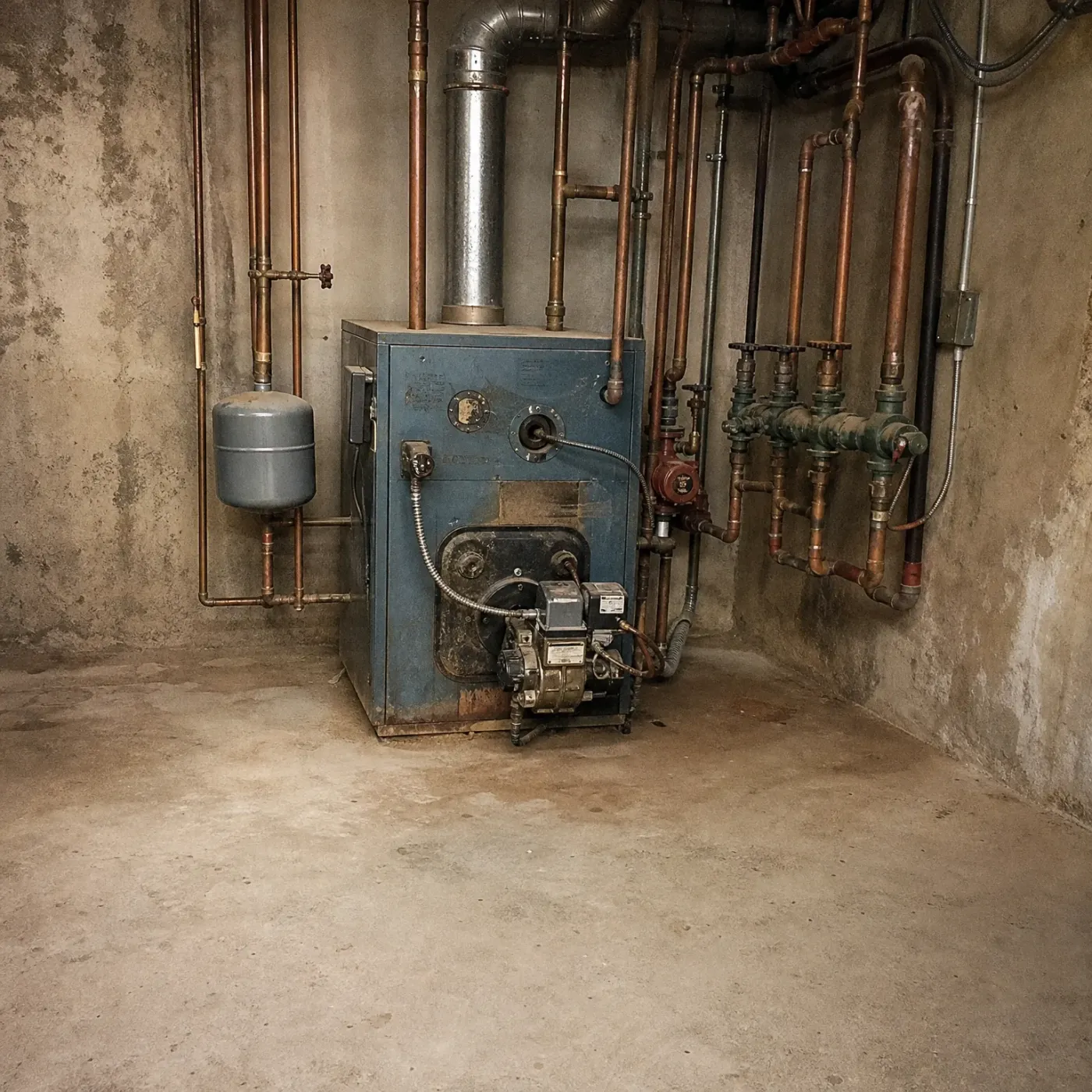
A blue oil-fired boiler with a burner unit sits on a concrete pad in a basement corner, with copper piping, valves and a gray expansion tank overhead against concrete block walls.

What trouble looks like

That blue paint is old enough that the burner has likely been relined or replaced once already. Black iron fittings like these corrode slower than copper, but once a joint starts weeping, it won't stop on its own. A boiler this age earns a second look before it strands you without heat.

A man in a blue T-shirt sits on a light gray sofa, laughing while looking at an open laptop in the foreground, with a framed picture, lamp and potted plant behind him.
A bearded man in a blue and brown plaid flannel shirt stands indoors looking out a window at snow-covered trees, with a ceramic mug on the windowsill.

Finding a pro stops being your job

Skip searching for a boiler pro and answer a few questions instead.

No charge to send it. You decide if you hire them.

An oil burner needs a spark, fuel, and a draft pulling air past it at the same time. Lose any one of those three and the safety control shuts the burner down before it floods the chamber.

That's why pushing the reset button a third or fourth time doesn't help. The control already decided something's wrong, and only a contractor checking the nozzle, the igniter, and the draft can tell you what.

Winter nights average 15°F statewide

15°F is the average overnight low here from December through February, not the coldest it gets. A boiler that hesitates at 15 can fail outright on the nights below it, so a reset button that stops holding tonight is worth a call now, before the harder cold arrives.

NOAA nClimDiv 1991-2020 county normals weighted by homes

A closed silver laptop and a ceramic mug of dark coffee sit on a wooden table in front of two chair backs, with a kitchen counter, tiled backsplash, wooden cutting boards, a vase of greenery and a potted plant by a window behind.

What a dead boiler does to your house overnight

Pipes run through outside walls and closets in most New Hampshire houses, and those are the first to go once the boiler stops. Oil heat doesn't coast the way a furnace running on reserve heat might. Once the burner quits firing, the water in those baseboards and radiators cools fast, and so does the room around them. A few hours without heat on a night in the teens is enough to put a wall cavity at risk if a pipe runs along it.

You don't need to spend the evening calling around to figure out who can come look at it. Most people in this spot start dialing oil companies and repair outfits one at a time, waiting on hold, repeating the same description of the clicking burner to each one, then comparing whoever calls back. Send one form here and that search is done. You're not shopping anymore, you're waiting for someone qualified to show up.

Interior corner of a room with a window and sheer curtain at left, a gray upholstered sofa with a cushion at right, and a round wooden table holding stacked books and a round vase with an olive branch.
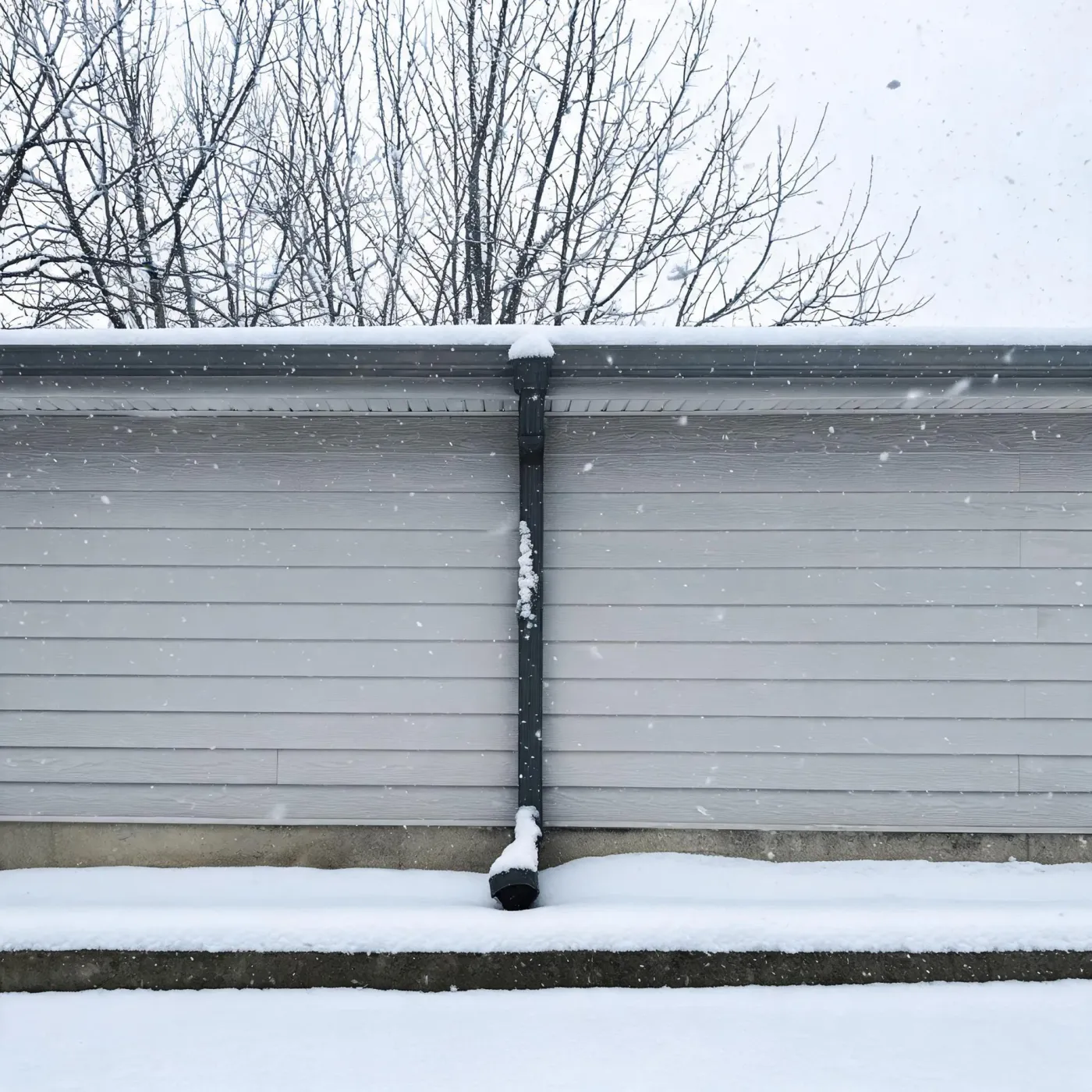
Exterior wall of a building with light gray horizontal siding and a dark downspout running to the ground, with snow on the roofline, steps, and ground, and bare trees behind during falling snow.

Winter nights average 15°F statewide, according to NOAA climate data, and that's the average, not the low. Oil thickens as it cools, and a tank in an unheated garage or basement corner feels every degree of that. Below freezing, the oil moves slower through the line, and a burner that was already lighting late starts missing more often. You'll notice the reset button getting pushed more than once some mornings, or the burner taking a second try to catch where it used to catch on the first. That's the cold working on fuel that was already borderline, not a new problem showing up out of nowhere.

NOAA nClimDiv 1991-2020 county normals weighted by homes

An older blue boiler with a burner unit stands in a concrete basement corner, connected to copper and steel piping, valves and a gray expansion tank on the wall.
Before you get your boiler repair
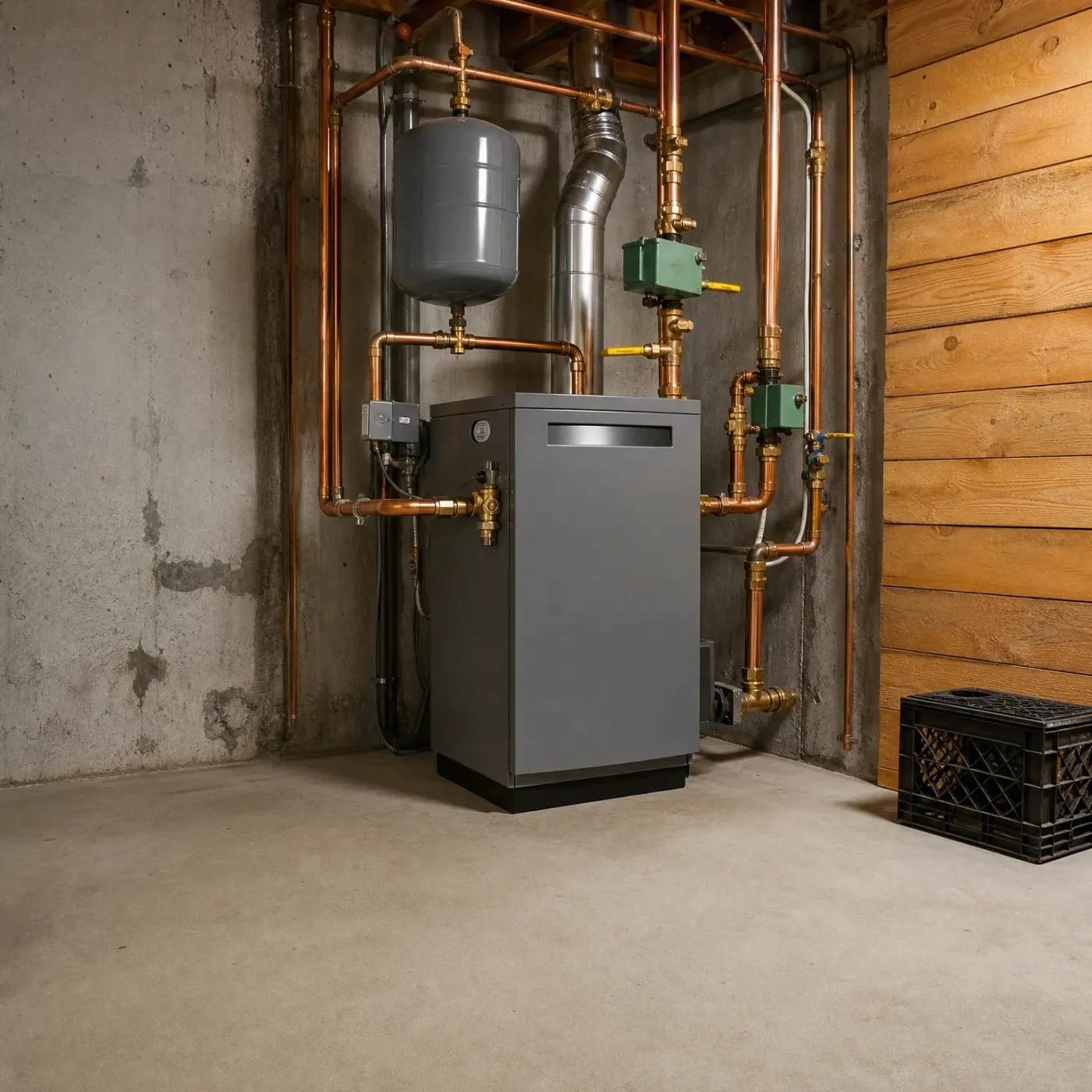
A gray boiler unit in a basement corner with copper piping, brass valves, a gray expansion tank, a metal flue duct, concrete walls and a wood-paneled wall, with a black plastic crate on the floor at right.
After you get your boiler repair

Where this leaves you tonight

  • A boiler stuck on safety is the most common reason it won't fire on a cold New Hampshire morning, not a broken machine.
  • The reset button, the oil tank gauge, and the sound of the pumps tell you most of what's wrong before anyone shows up.
  • Pushing the reset more than twice or letting pipes sit cold while you search for help only adds risk to the night.
  • A boiler that lost ignition, draft, or fuel needs a contractor to find out which, not a guess from across the room.
  • Sending one form means you're not calling around, re-explaining the same problem twice, or sorting through quotes while the house gets colder.
  • Once someone's lined up to look at it, the only thing left to track is your own radiators warming back up.

Most of the time, a boiler that won't start hasn't broken. It's tripped a safety switch meant to stop a worse problem: a clogged nozzle, a burner that lost its spark, a low water cutoff doing its job. The reset button, the gauge on the oil tank, and whether the pumps are running quietly or short cycling tell a contractor most of what they need before they even walk in. What they don't tell you is which of the three things a burner needs (spark, fuel, draft) is actually missing, and that's not something to guess at from across the room while pushing a reset button a third time.

The part you can control tonight isn't the diagnosis. It's how much time you lose finding someone who can make it. Normally that means calling a few places, explaining the same cold radiators and the same reset button that stopped holding, then waiting on quotes while the house keeps losing heat through the walls and closets where the pipes run. Sending one form instead means that search is done. You're not re-explaining the problem to a third contractor or comparing estimates with the thermostat still calling for heat and nothing answering. Someone gets lined up to come look at it, and from there the only thing left to watch is whether the radiators start coming back up to temperature, which is the part that was never yours to chase down in the first place.

A dark wood cabinet with a paneled door and a ceramic pot of green foliage on top stands in a beige-walled room with white baseboard, a window at left, hardwood floor, and a patterned area rug.
A dark wood glass-front cabinet holding folded towels, woven baskets and a ceramic vase stands in a bathroom corner beside a window, with a potted fern and stacked towels on top and a freestanding tub partly visible at left.
A woven basket holding a green cushion and a cream fringed knit throw sits on a wood floor in a room corner beside a window and a dark wooden cabinet.
Corner of a room with a dark wood cabinet topped by a round vase, a linen curtain at a window, white baseboard, oak plank flooring with sunlight patches, and a woven jute rug in the foreground.
A dark wood sideboard against a pale wall holds a shallow stone bowl and a round ceramic vase with leafy branches, with sunlight from a curtained window falling across the wall, wood floor and woven rug.

Let someone else find the pro

One form replaces the calls you'd make to find a boiler pro.

Hand it over

There's no charge for the request.