Tell us about the job
Takes about a minute. No obligation.
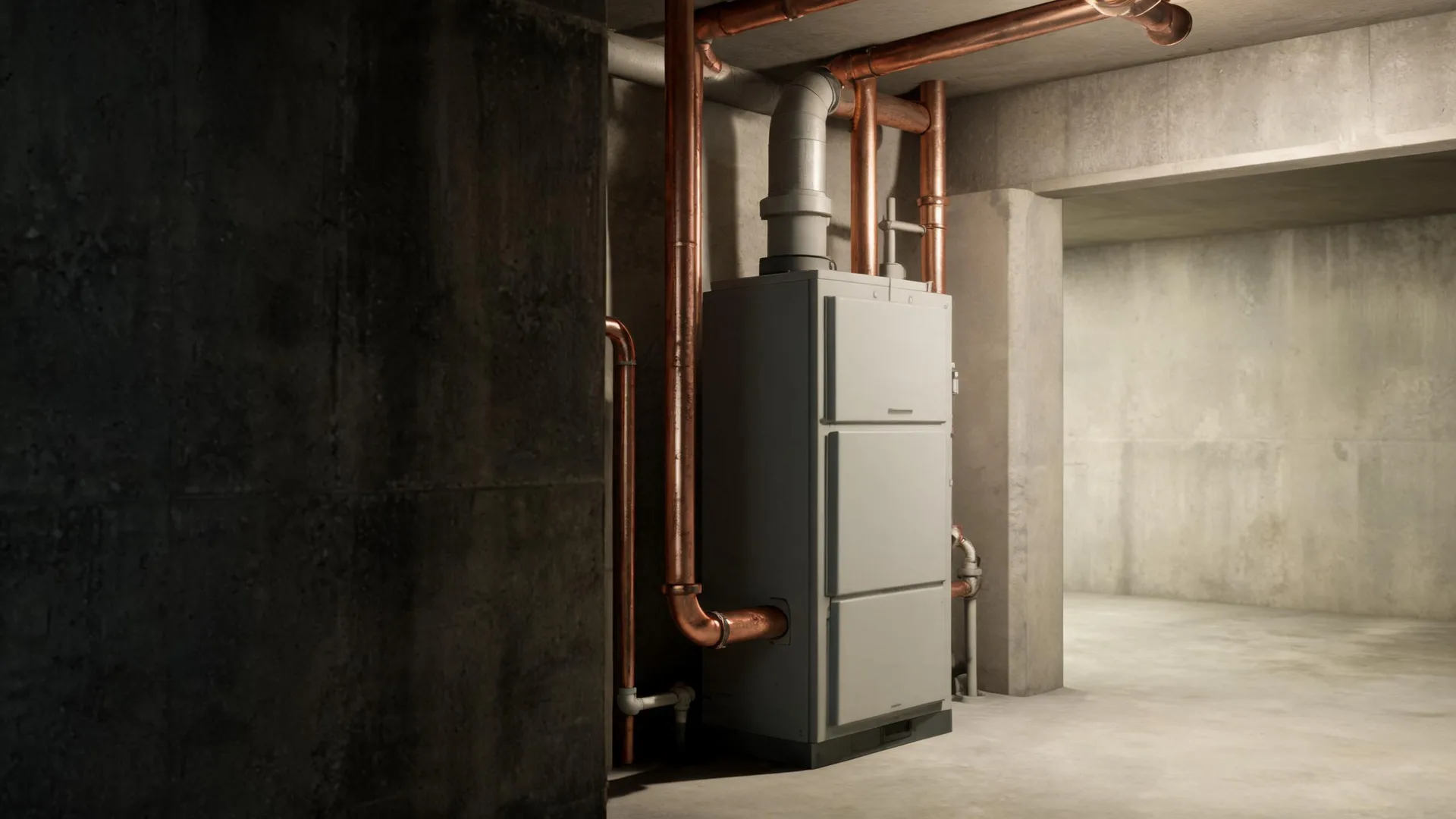
Boiler repair in Cheshire County starts with the parts that cycle hardest: the burner, the ignition system, and the heat exchanger. Homes in Cheshire County, NH run heat about nine months a year, from September through May. Each firing cycle stresses the igniter and the burner assembly, and a system that has been running through cold snaps since September has put those parts through a long sequence of starts and stops by the time May arrives. A contractor assessing a mid-season breakdown checks the ignition components and heat exchanger surfaces first, because that is where accumulated wear shows up. Corrosion at a cracked exchanger or a degraded igniter is not a surprise finding on older equipment here.
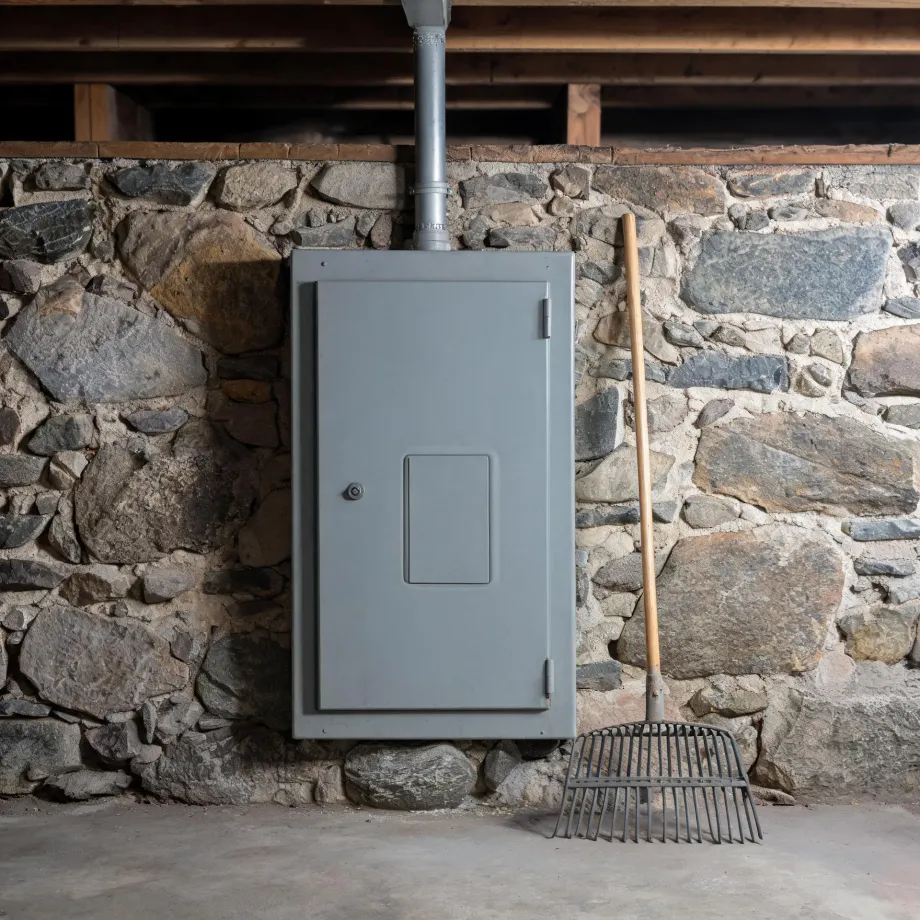
Boiler repairs in housing as old as this one spend their time on parts availability. Half the homes in Cheshire County, New Hampshire were built in 1972 or earlier (2020-2024 ACS 5-year). A system installed into a house of that vintage has likely been replaced at least once, but the replacement equipment still skews old, and the components it takes narrow as the years go on. A contractor who opens the unit to find a failed heat exchanger or a seized circulator pump then has to confirm whether the part is still manufactured, and in what lead time. That answer, more than the diagnosis itself, is what decides how long a homeowner is without heat.
The Parts of a Boiler a Contractor Checks First
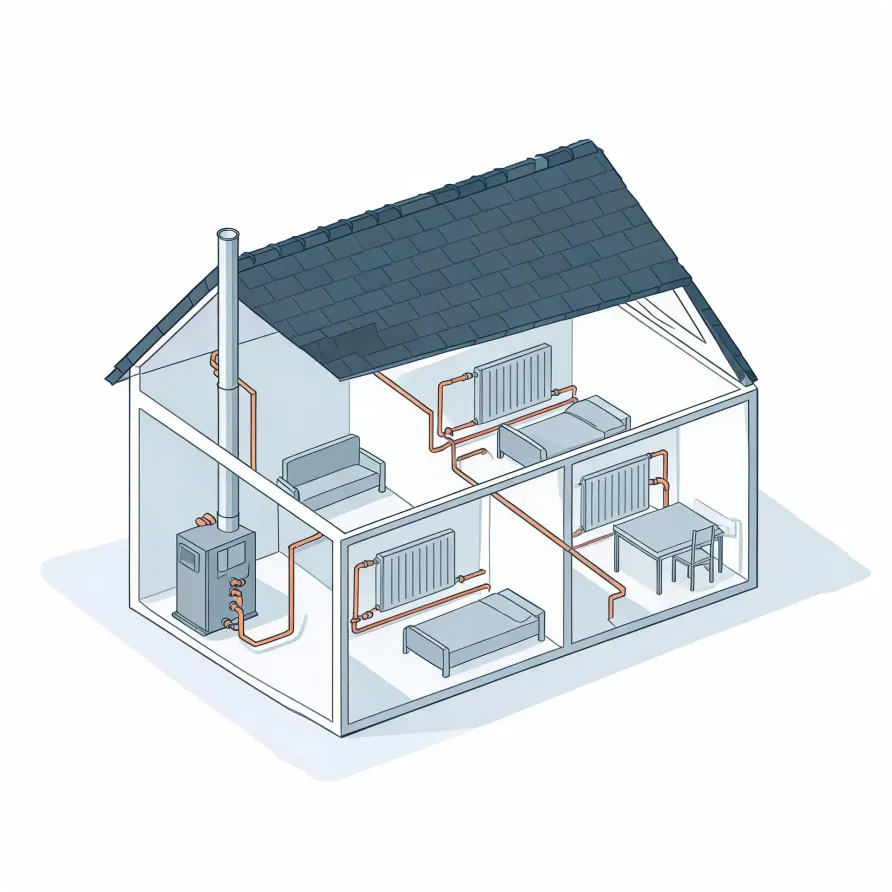
The boiler itself sits in the basement or a utility room and is where water gets heated. When it stops producing heat or cycles on and off erratically, the burner assembly, heat exchanger, or the pressure relief valve are where a contractor starts. Each of those sits inside or directly on the unit.
From the boiler, pipes carry hot water to radiators or baseboard units throughout the house, and a circulator pump keeps that water moving. The expansion tank, usually mounted near the boiler, absorbs pressure changes in the system. A failed pump or a waterlogged expansion tank are common reasons heat stops reaching certain rooms.
The drawing shows a typical boiler layout, and a licensed contractor determines what applies to your specific system.
Find a contractor in Cheshire CountyCheshire County, by the numbers
247 severe weather events were recorded in Cheshire County, New Hampshire between 2015 and 2024.
NOAA National Centers for Environmental Information, Storm Events Database, bulk CSV export, events 2015-01-01 through 2024-12-31.Half the homes in Cheshire County, New Hampshire were built in 1972 or earlier (2020-2024 ACS 5-year).
U.S. Census Bureau, 2020-2024 American Community Survey 5-Year EstimatesCheshire County, New Hampshire holds 35,899 housing units (2020-2024 ACS 5-year).
U.S. Census Bureau, 2020-2024 American Community Survey 5-Year EstimatesOwners occupy 72.7% of the occupied homes in Cheshire County, New Hampshire (2020-2024 ACS 5-year).
U.S. Census Bureau, 2020-2024 American Community Survey 5-Year EstimatesCodes & Standards Governing Boiler and HVAC Repair in Cheshire County, New Hampshire2 sourced rules and standards
Licensing Rules for HVAC Repair in Cheshire County, New Hampshire
New Hampshire's mechanical licensing board issues nine credentials — hearth system, four fuel gas endorsements, domestic appliance technician, and master, journeyman and apprentice plumber — and a licensee may not work outside the specialty their licence names. None of the nine is an HVAC licence.
New Hampshire does not license HVAC as a trade, and says so where it matters: the plumbing licence expressly does not reach a person installing heating, cooling, air conditioning or domestic water heating systems, whether solar, oil, gas or electric. The gas piping on a gas-fired system is a separate matter and needs a fuel gas fitter licence.
Severe Weather Events in Cheshire County
Extreme weather puts real strain on boiler systems, and that strain accumulates over time. How often conditions push equipment to its limits is a local fact, and it shapes what repair work in Cheshire County actually looks like.
247 severe weather events, 2015–2024. Source: NOAA National Centers for Environmental Information, Storm Events Database.