Tell us about the job
Takes about a minute. No obligation.
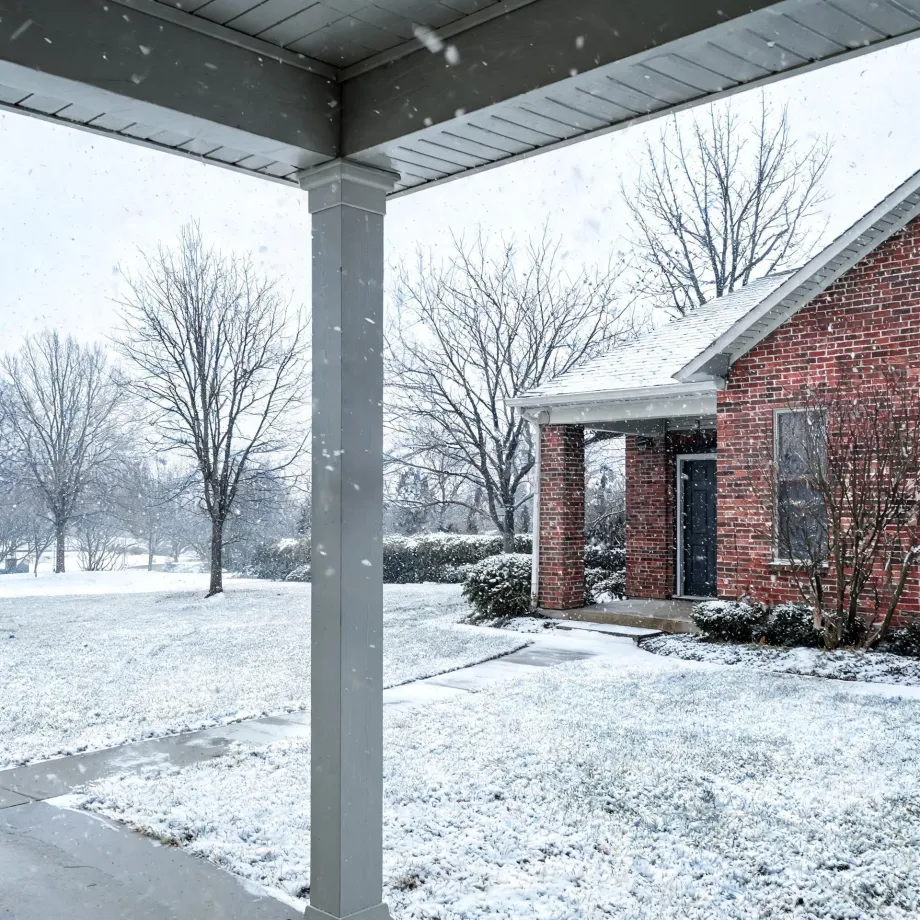
Sizing a boiler for Coos County means accounting for a burner and ignition system that cycle almost without pause from early fall through late spring. Homes in Coos County, NH run heat about ten months a year, from September through June. The heat exchanger and ignition components carry that load directly, and a unit that was undersized at installation runs harder to keep up, shortening the time before something gives out. A contractor quoting a new boiler here treats output capacity and installation quality as the variables that matter, because there is little idle time to mask a poor fit.
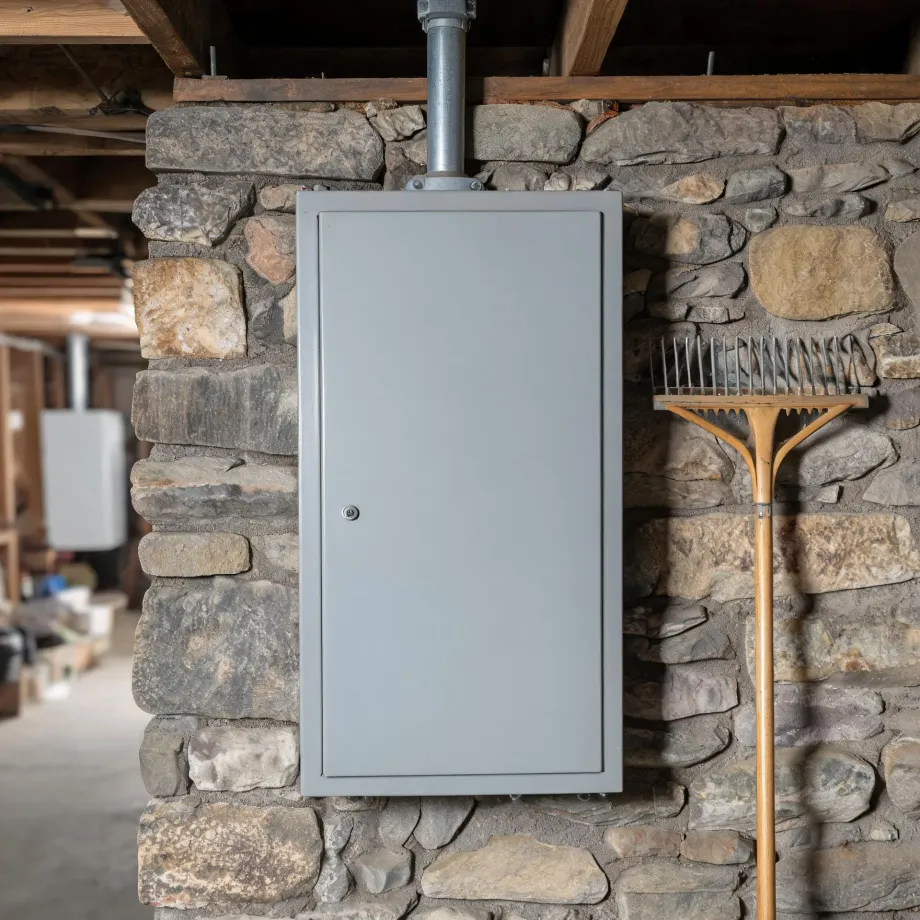
Ductwork and electrical service laid in for one generation of equipment and quietly adapted since are what a contractor is sizing a new boiler against in Coos County. Half the homes in Coos County, New Hampshire were built in 1969 or earlier (2020-2024 ACS 5-year). That depth of age in the housing stock means the wiring and the runs were never designed around what a modern unit draws, and a contractor quoting the job has to assess both before the equipment choice means anything. What the house already carries either fits the new load or it does not, and that answer comes from what is in the walls, not from the spec sheet.
What a Boiler Installation Covers
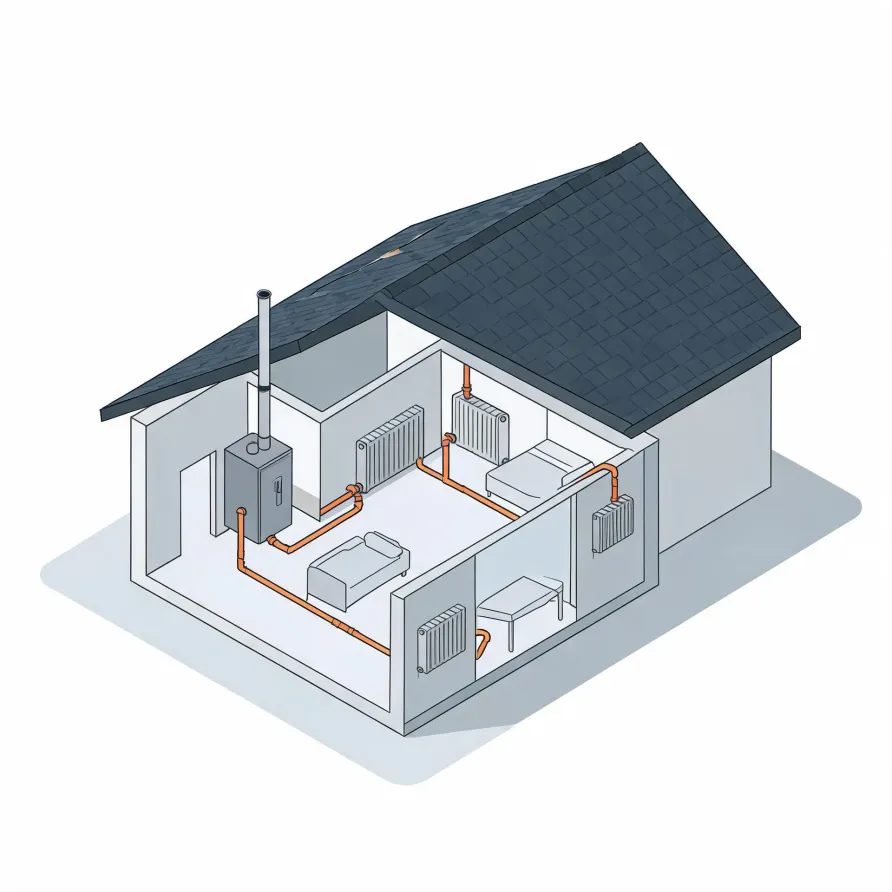
The boiler itself sits in a mechanical room, basement, or utility closet and is the central unit a contractor brings in and connects. It heats water that then travels out through the system. The expansion tank mounts close by and absorbs pressure changes as the water heats and cools.
Copper or steel supply and return pipes run from the boiler to each zone of the house, carrying hot water to the radiators, baseboard convectors, or radiant floor loops that release heat into each room. A circulator pump, mounted on the piping near the boiler, moves the water through those runs.
The drawing shows a general layout of these components, and a licensed contractor determines exactly what applies to your house.
Find a contractor in Coos CountyCoos County, by the record
184 severe weather events were recorded in Coos County, New Hampshire between 2015 and 2024.
NOAA National Centers for Environmental Information, Storm Events Database, bulk CSV export, events 2015-01-01 through 2024-12-31.Half the homes in Coos County, New Hampshire were built in 1969 or earlier (2020-2024 ACS 5-year).
U.S. Census Bureau, 2020-2024 American Community Survey 5-Year EstimatesCoos County, New Hampshire holds 20,637 housing units (2020-2024 ACS 5-year).
U.S. Census Bureau, 2020-2024 American Community Survey 5-Year EstimatesOwners occupy 74.2% of the occupied homes in Coos County, New Hampshire (2020-2024 ACS 5-year).
U.S. Census Bureau, 2020-2024 American Community Survey 5-Year EstimatesBoiler Installation Rules for Coos County, New Hampshire2 sourced standards and codes
Licensing Rules for HVAC Work in Coos County, New Hampshire
New Hampshire's mechanical licensing board issues nine credentials — hearth system, four fuel gas endorsements, domestic appliance technician, and master, journeyman and apprentice plumber — and a licensee may not work outside the specialty their licence names. None of the nine is an HVAC licence.
New Hampshire does not license HVAC as a trade, and says so where it matters: the plumbing licence expressly does not reach a person installing heating, cooling, air conditioning or domestic water heating systems, whether solar, oil, gas or electric. The gas piping on a gas-fired system is a separate matter and needs a fuel gas fitter licence.
Severe Weather Events in Coos County
Coos County winters put heating equipment under real pressure, and weather events compound that load in ways that vary from year to year. A boiler sized and installed for local conditions holds up better than one spec'd without it.
184 severe weather events, 2015–2024. Source: NOAA National Centers for Environmental Information, Storm Events Database.