Tell us about the job
Takes about a minute. No obligation.
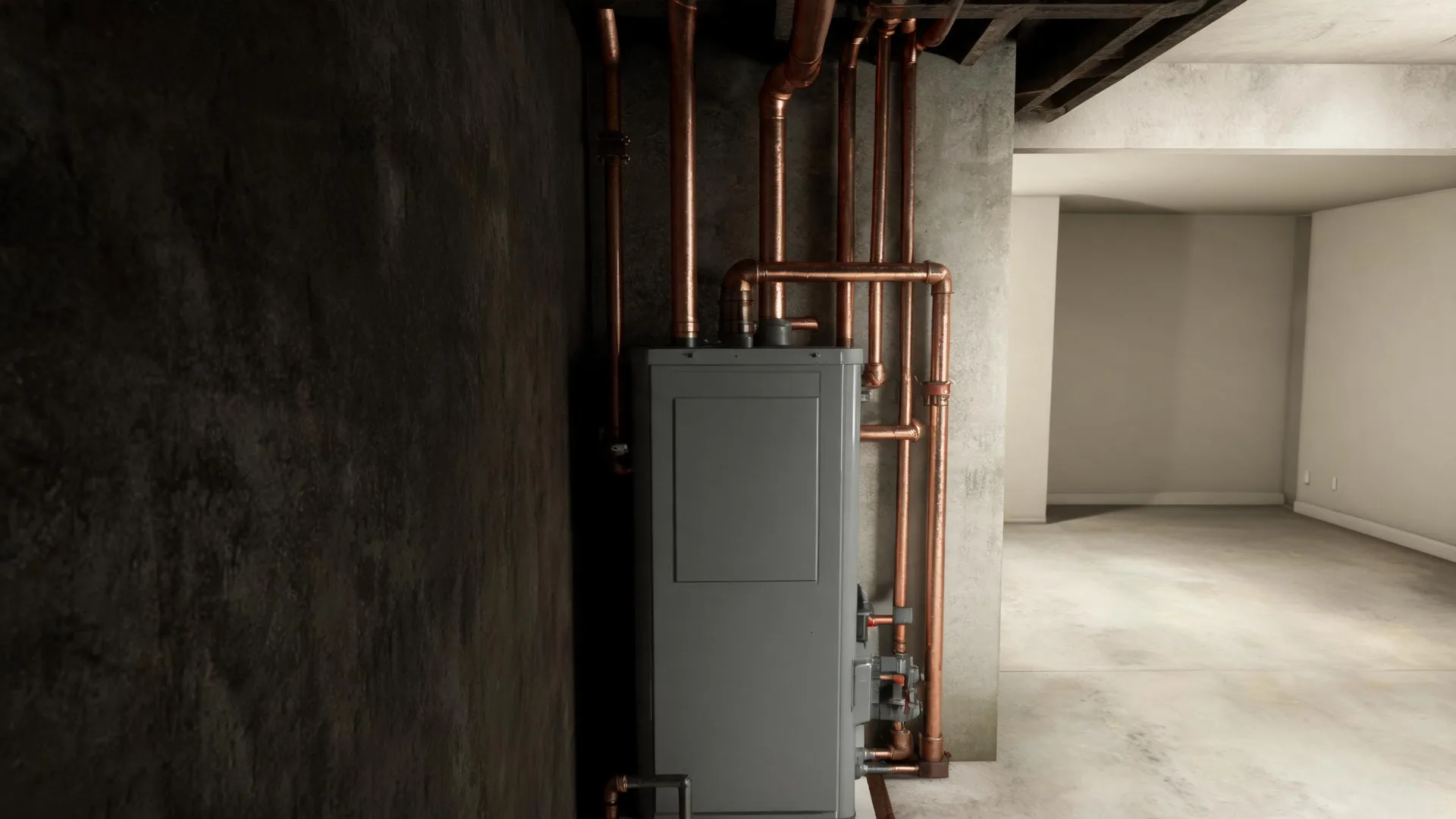
Sizing a boiler for a Grafton County home is not a step a contractor can afford to approximate. Homes in Grafton County, NH run heat about nine months a year, from September through May. The burner, the heat exchanger, and the ignition system cycle through nearly the entire calendar year, and a unit that is undersized pushes those components harder every time outdoor temperatures drop. An installer who skips a proper load calculation leaves a boiler working at the edge of its capacity with almost no off-season to recover. The heat exchanger in particular accumulates fatigue from repeated thermal expansion and contraction, and a poor fit accelerates that process from the first winter on.
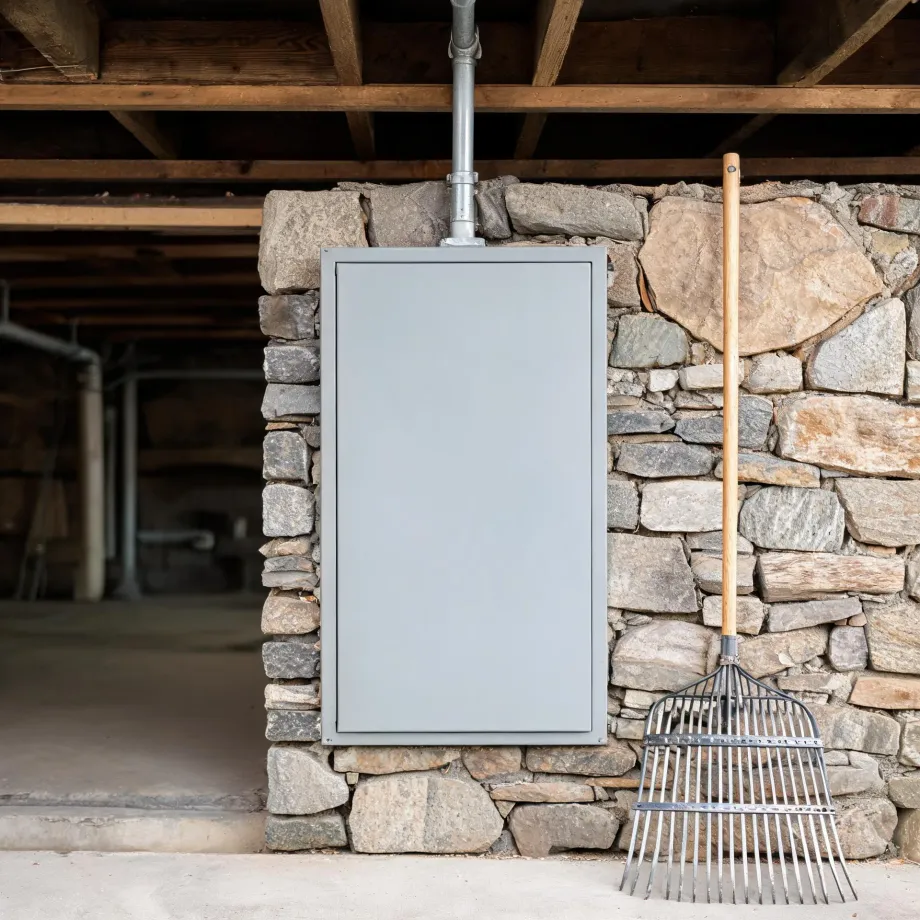
Ductwork laid down for an earlier system carries assumptions about airflow, routing, and load that a new boiler may not share. Half the homes in Grafton County, New Hampshire were built in 1981 or earlier (2020-2024 ACS 5-year). A contractor pricing a boiler installation here looks at what that existing ductwork can actually handle before the equipment conversation starts, because the answer shapes the whole scope. Some of it fits; some of it needs rerouting or replacement to carry the new system without starving zones or creating pressure problems. The electrical side follows the same logic: the service a house was wired with reflects the load that was expected of it, and a new boiler may draw differently.
What a Boiler Installation Covers
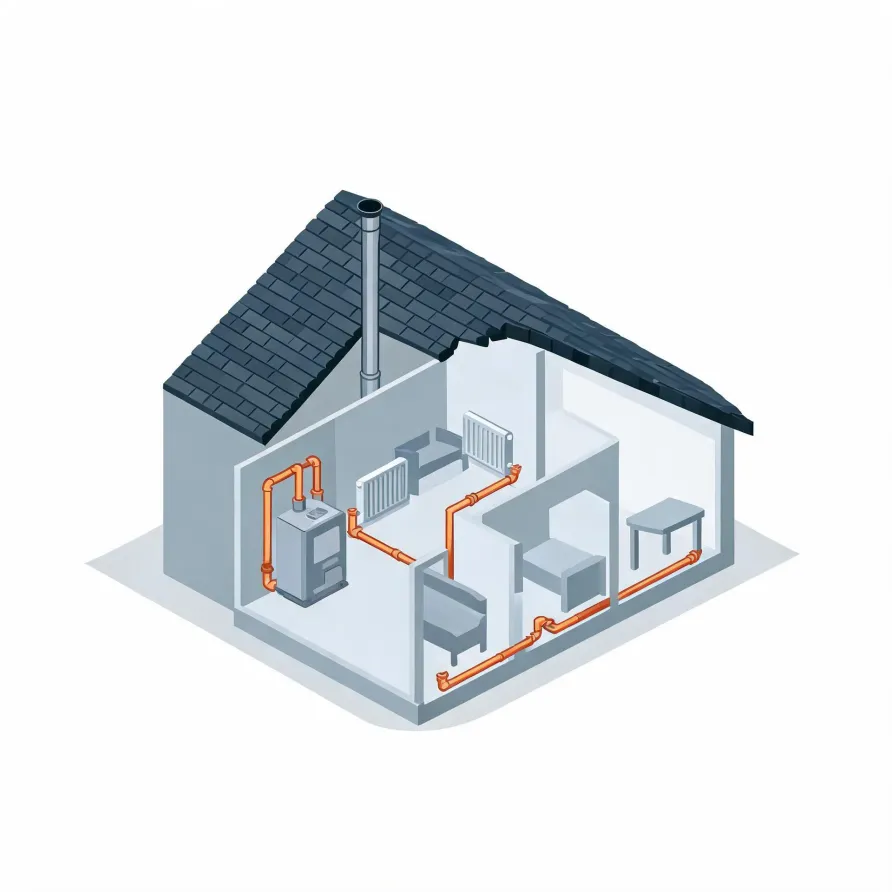
The boiler itself sits in a utility space, most often a basement or mechanical room, and is the unit a contractor installs first. It heats water that the rest of the system carries through the house. Alongside it goes the expansion tank, which absorbs pressure changes in the water as it heats and cools.
From the boiler, supply and return pipes run through the structure to the heat emitters, whether those are baseboard units or radiators positioned along exterior walls or in rooms that need heat. A circulator pump, mounted directly on the piping near the boiler, moves the heated water through that loop. A pressure relief valve and a fill valve are fitted to the boiler as part of the same installation.
The drawing shows a typical layout, and a licensed contractor determines what applies to this particular house.
Find a contractor in Grafton CountyGrafton County, by the numbers
242 severe weather events were recorded in Grafton County, New Hampshire between 2015 and 2024.
NOAA National Centers for Environmental Information, Storm Events Database, bulk CSV export, events 2015-01-01 through 2024-12-31.Half the homes in Grafton County, New Hampshire were built in 1981 or earlier (2020-2024 ACS 5-year).
U.S. Census Bureau, 2020-2024 American Community Survey 5-Year EstimatesGrafton County, New Hampshire holds 51,920 housing units (2020-2024 ACS 5-year).
U.S. Census Bureau, 2020-2024 American Community Survey 5-Year EstimatesOwners occupy 71.3% of the occupied homes in Grafton County, New Hampshire (2020-2024 ACS 5-year).
U.S. Census Bureau, 2020-2024 American Community Survey 5-Year EstimatesBoiler Installation Rules on Record for Grafton County, New Hampshire2 sourced standards and codes
Licensing Rules for HVAC Work in Grafton County, New Hampshire
New Hampshire's mechanical licensing board issues nine credentials — hearth system, four fuel gas endorsements, domestic appliance technician, and master, journeyman and apprentice plumber — and a licensee may not work outside the specialty their licence names. None of the nine is an HVAC licence.
New Hampshire does not license HVAC as a trade, and says so where it matters: the plumbing licence expressly does not reach a person installing heating, cooling, air conditioning or domestic water heating systems, whether solar, oil, gas or electric. The gas piping on a gas-fired system is a separate matter and needs a fuel gas fitter licence.
Severe Weather Events in Grafton County
Grafton County winters put real load on heating equipment, and the stress compounds when a system is sized or installed without the local climate in mind. A boiler that handles an ordinary season can fall short when the weather turns hard, which makes the installation decision a question specific to this area.
242 severe weather events, 2015–2024. Source: NOAA National Centers for Environmental Information, Storm Events Database.