Tell us about the job
Takes about a minute. No obligation.
Sizing a boiler for a Carroll County home is not a shortcut job. Homes in Carroll County, NH run heat about nine months a year, from September through May. Burner ignition cycles, heat exchanger expansion, and circulator pump starts add up across a season that leaves the equipment little time off. A contractor who skips a room-by-room load calculation and installs a unit that short-cycles will see those hours compress into fewer years of service life. Combustion efficiency and flue sizing both depend on the actual heat loss of the house, numbers a proper install establishes before the equipment is ever ordered.
Ductwork laid out for an earlier system shapes what any new boiler installation has to work around. Half the homes in Carroll County, New Hampshire were built in 1982 or earlier (2020-2024 ACS 5-year). A house that has been heated by successive systems over that span accumulates compromises in its distribution: runs rerouted, sections added, sizing that made sense for something no longer there. A contractor quoting a boiler here has to trace what is actually in the walls and floors, because the layout inherited from a prior system decides where the new one can go and what it will cost to get heat where the house needs it.
What a Boiler Installation Covers
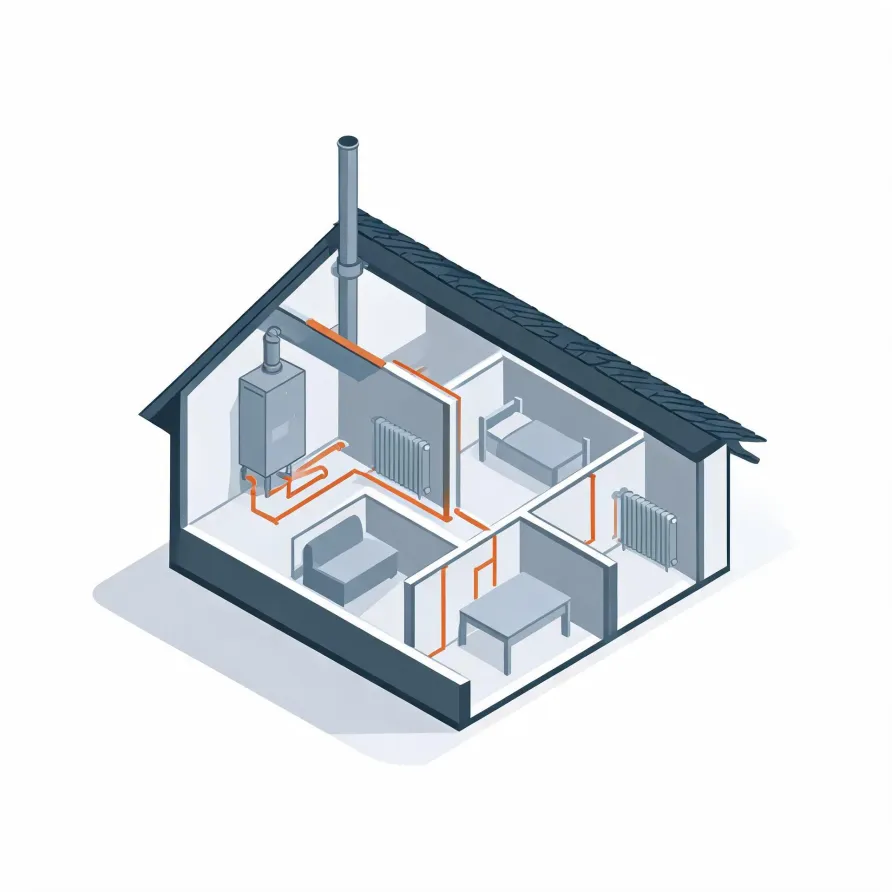
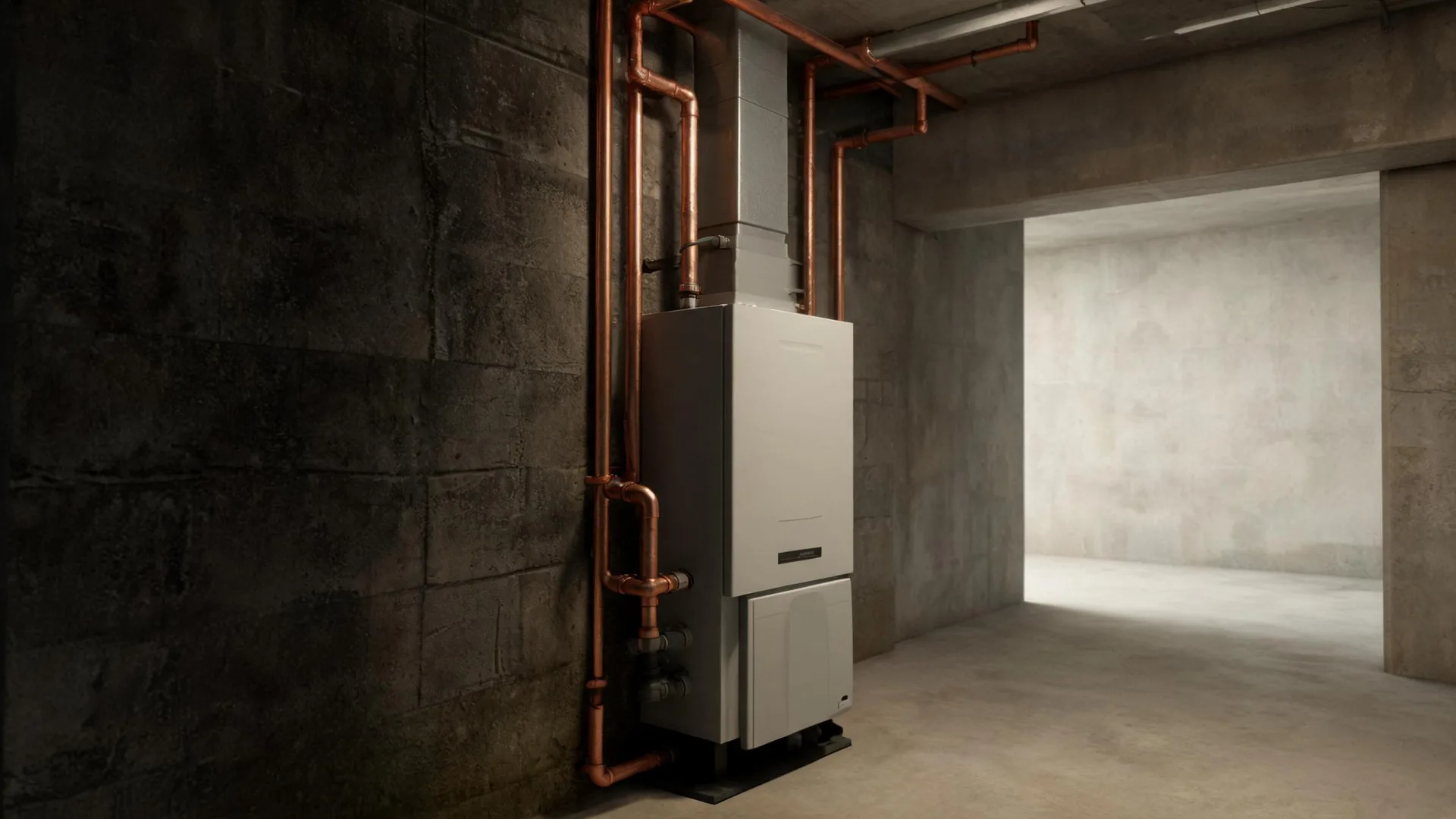
The boiler itself sits in a mechanical room, basement, or utility closet and is the unit a contractor brings in and sets in place. It holds and heats water, and every other piece in the system depends on it being correctly positioned and connected before anything else can happen.
Radiators or baseboard units occupy the living spaces and receive hot water through supply pipes that run from the boiler through walls and floors. An expansion tank, usually hung near the boiler, absorbs pressure changes in the system, and a circulator pump moves water through the loop.
The drawing shows a typical layout, and a licensed contractor determines exactly what applies to your home.
Find a contractor in Carroll CountyCarroll County by the Numbers
214 severe weather events were recorded in Carroll County, New Hampshire between 2015 and 2024.
NOAA National Centers for Environmental Information, Storm Events Database, bulk CSV export, events 2015-01-01 through 2024-12-31.Half the homes in Carroll County, New Hampshire were built in 1982 or earlier (2020-2024 ACS 5-year).
U.S. Census Bureau, 2020-2024 American Community Survey 5-Year EstimatesCarroll County, New Hampshire holds 40,421 housing units (2020-2024 ACS 5-year).
U.S. Census Bureau, 2020-2024 American Community Survey 5-Year EstimatesOwners occupy 83.4% of the occupied homes in Carroll County, New Hampshire (2020-2024 ACS 5-year).
U.S. Census Bureau, 2020-2024 American Community Survey 5-Year EstimatesBoiler Installation Rules for Carroll County, New Hampshire2 sourced standards and codes
Licensing Rules for HVAC Work in Carroll County, New Hampshire
New Hampshire's mechanical licensing board issues nine credentials — hearth system, four fuel gas endorsements, domestic appliance technician, and master, journeyman and apprentice plumber — and a licensee may not work outside the specialty their licence names. None of the nine is an HVAC licence.
New Hampshire does not license HVAC as a trade, and says so where it matters: the plumbing licence expressly does not reach a person installing heating, cooling, air conditioning or domestic water heating systems, whether solar, oil, gas or electric. The gas piping on a gas-fired system is a separate matter and needs a fuel gas fitter licence.
Severe Weather Events in Carroll County
Carroll County's weather puts real demands on heating equipment, and those demands shape what a boiler installation here needs to handle. Sizing, materials, and system capacity are all local decisions, not generic ones.
214 severe weather events, 2015–2024. Source: NOAA National Centers for Environmental Information, Storm Events Database.