Tell us about the job
Takes about a minute. No obligation.
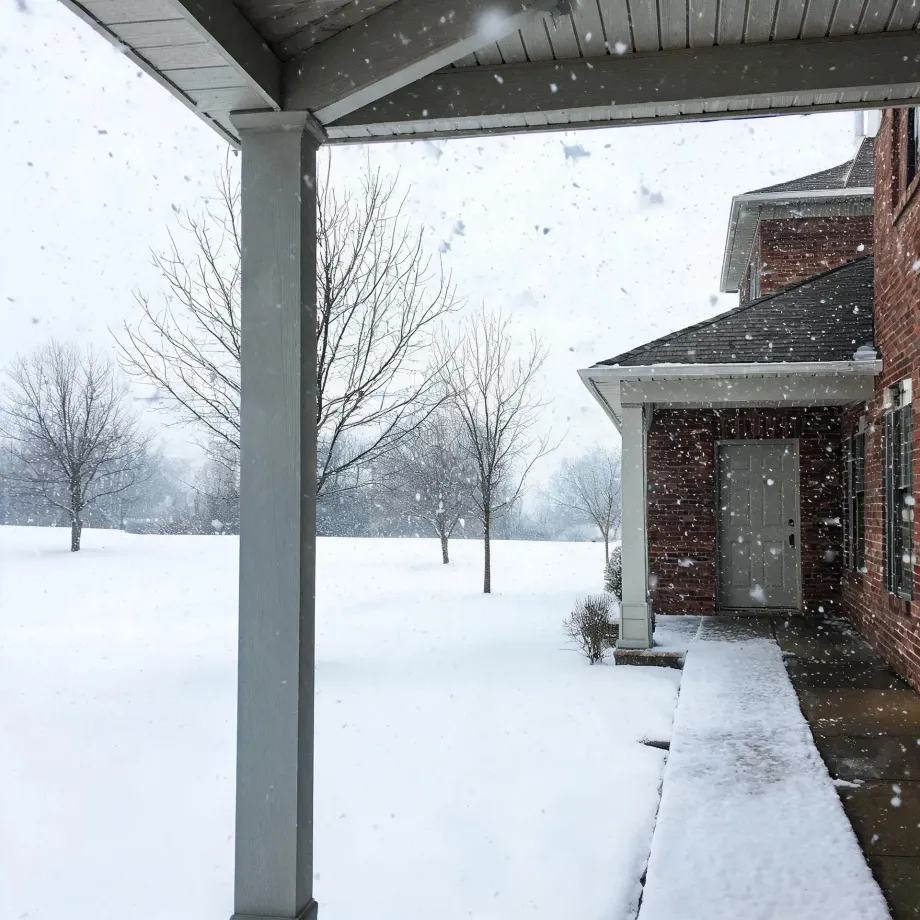
Sizing a boiler for a Belknap County home is not a decision a contractor can generic-spec their way through. Homes in Belknap County, NH run heat about nine months a year, from September through May. The burner and heat exchanger cycle repeatedly across those months, and a unit that was undersized from the start accumulates stress on those components steadily, with little off-season slack to mask it. A contractor quoting a replacement here has to establish the actual heat load of the house before settling on output, because an underspec'd install fails visibly and early under that kind of sustained demand.
Ductwork laid out for one heating system rarely lines up with what a new boiler needs. Half the homes in Belknap County, New Hampshire were built in 1979 or earlier (2020-2024 ACS 5-year). That means a contractor quoting a boiler installation is pricing two things: the equipment itself, and whatever the existing runs, connections, and distribution layout will or will not carry. Where the ductwork falls short, the scope grows before the new unit is ever ordered.
What a Boiler Installation Covers
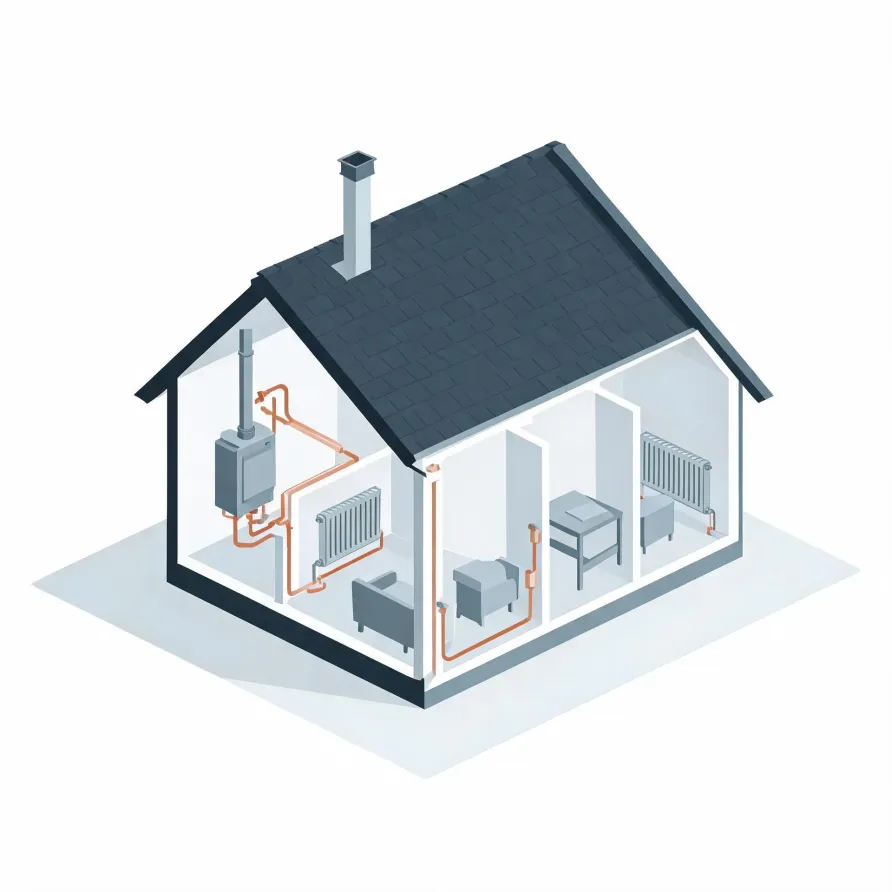
The boiler itself sits in a mechanical room, basement, or utility closet and is the system's heat source. A contractor sets the unit in place, connects it to the fuel supply, and ties it into the home's existing piping. The expansion tank, which absorbs pressure changes in the water, mounts close by.
The circulator pump moves heated water out through the supply pipes and pulls cooled water back through the return line. Thermostats and zone valves sit at various points in the house and tell the system when and where to send heat. Pressure and temperature controls mount directly on the boiler and keep the system within safe operating limits.
The drawing shows a general layout of these components, and a licensed contractor determines exactly what applies to your house.
Find a contractor in Belknap CountyBelknap County, by the numbers
96 severe weather events were recorded in Belknap County, New Hampshire between 2015 and 2024.
NOAA National Centers for Environmental Information, Storm Events Database, bulk CSV export, events 2015-01-01 through 2024-12-31.Half the homes in Belknap County, New Hampshire were built in 1979 or earlier (2020-2024 ACS 5-year).
U.S. Census Bureau, 2020-2024 American Community Survey 5-Year EstimatesBelknap County, New Hampshire holds 39,003 housing units (2020-2024 ACS 5-year).
U.S. Census Bureau, 2020-2024 American Community Survey 5-Year EstimatesOwners occupy 80.1% of the occupied homes in Belknap County, New Hampshire (2020-2024 ACS 5-year).
U.S. Census Bureau, 2020-2024 American Community Survey 5-Year EstimatesBoiler Installation Rules on Record for Belknap County, New Hampshire2 sourced rules and standards
Licensing Rules for Belknap County, New Hampshire
New Hampshire's mechanical licensing board issues nine credentials — hearth system, four fuel gas endorsements, domestic appliance technician, and master, journeyman and apprentice plumber — and a licensee may not work outside the specialty their licence names. None of the nine is an HVAC licence.
New Hampshire does not license HVAC as a trade, and says so where it matters: the plumbing licence expressly does not reach a person installing heating, cooling, air conditioning or domestic water heating systems, whether solar, oil, gas or electric. The gas piping on a gas-fired system is a separate matter and needs a fuel gas fitter licence.
Severe Weather Events in Belknap County
Boiler systems carry the full load of winter in Belknap County, and weather events push that load harder and faster than a mild season ever would. How often conditions spike here shapes what a boiler needs to handle, which makes local weather history a practical input for any installation decision.
96 severe weather events, 2015–2024. Source: NOAA National Centers for Environmental Information, Storm Events Database.